 Pin it
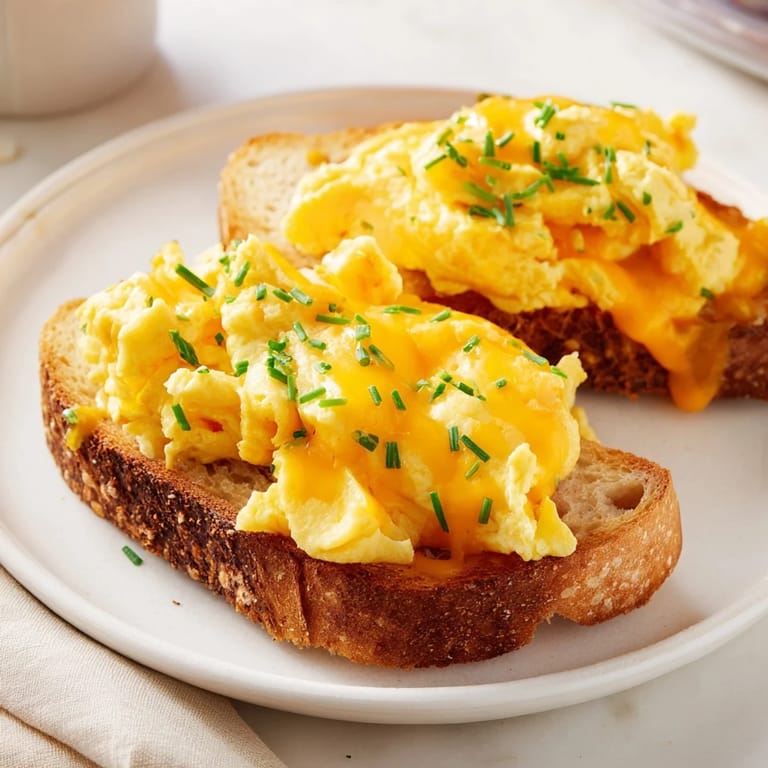
 There's something magical about cooking breakfast in one pan—it's the kind of meal that feels like you've pulled off something fancier than you actually have. I discovered this sandwich one morning when I was running late and didn't want to dirty up a toaster, so I threw the bread right into the skillet with melted butter and just... kept going. The eggs went in next, and within minutes, I had this impossibly golden, cheesy, perfectly set breakfast that tasted like someone who actually knew what they were doing had made it.
My partner watched me make this the first time and kept asking if I was sure I knew what I was doing, which made me second-guess myself about four times. But when I slid that sandwich onto a plate and it held together, cheese melted perfectly and eggs still creamy at the edges, they went quiet in that specific way that means food just got good. We split it without talking much, just making appreciative sounds between bites—the kind of breakfast moment that stays with you.
Ingredients
- 3 large eggs: Room temperature if you can manage it—they scramble more evenly and the texture stays silkier.
- 2 tablespoons milk: This keeps the eggs tender; cream is richer but milk is the honest choice.
- Salt and black pepper: Don't oversalt—you can always add more, and cheese brings its own salt to the party.
- 2 slices sturdy sandwich bread: Sourdough holds up best, but whole wheat works beautifully too; avoid thin white bread or it'll disintegrate.
- 1 tablespoon unsalted butter: Unsalted lets you control the salt game, and the butter browns just enough to add flavor without burning.
- 2 slices cheddar cheese: Or whatever cheese you love—sharp cheddar, gruyère, even a melty jack if you're feeling adventurous.
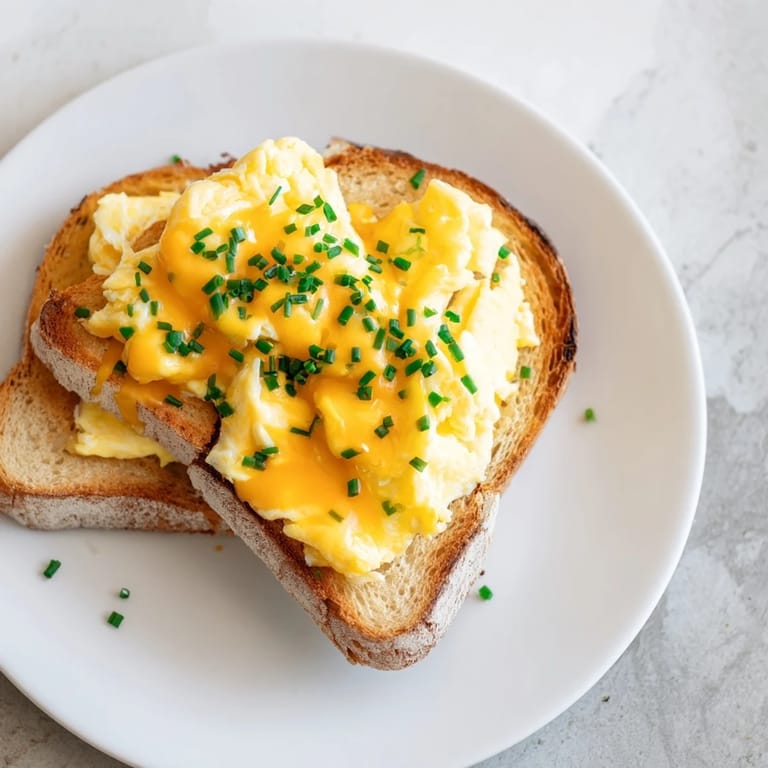
- 2 tablespoons chopped chives or green onions: Optional, but they add a brightness that reminds you this is a real meal, not just carbs and fat.
Tired of Takeout? 🥡
Get 10 meals you can make faster than delivery arrives. Seriously.
One email. No spam. Unsubscribe anytime.
Instructions
- Whisk your eggs like you mean it:
- Combine the eggs with milk, salt, and pepper in a bowl—whisk until the mixture is uniform and slightly pale, about 20 seconds of actual effort. This breaks up the yolks evenly so every bite stays consistent.
- Get your pan hot and buttery:
- Heat a large nonstick skillet over medium heat and let the butter melt completely, swirling it around so it coats the whole bottom. You want the pan hot enough that the bread sizzles the moment it hits, but not so violent that the butter browses immediately.
- Toast the bread in the pan:
- Place both slices of bread side by side in the hot butter and let them sit undisturbed for 1 to 2 minutes until the bottom is golden and crispy. Flip them gently—the underside should be toasted but still sturdy enough to hold up what's coming next.
- Pour the eggs over the bread:
- Pour that whisked egg mixture directly over and around the bread slices, working slowly so it settles evenly. Let it sit for about 10 to 15 seconds to set slightly on the bottom, then you can start gently pushing it around with a spatula.
- Scramble gently and let edges cook:
- Use a spatula to push the eggs toward the edges of the bread, letting the uncooked egg from the top flow underneath to contact the hot pan. This takes maybe 30 seconds of gentle attention—you're not making scrambled eggs, you're making a cohesive layer that hugs the bread.
- Add cheese when eggs are almost set:
- Once the eggs look mostly cooked but still have a slight shine on top, lay one slice of cheese on each piece of bread. The residual heat will melt it while you finish cooking.
- Fold and stack:
- Use your spatula to fold any excess cooked egg onto the bread slices, then carefully slide one slice on top of the other to form a sandwich. You're looking for a neat stack, not a tumble.
- Final press and melt:
- Cook the stacked sandwich for another 1 to 2 minutes, pressing down gently with your spatula to help the cheese melt and encourage the layers to stick together. The outside should turn golden and the cheese should ooze slightly at the edges—that's your sign it's ready.
- Remove and serve:
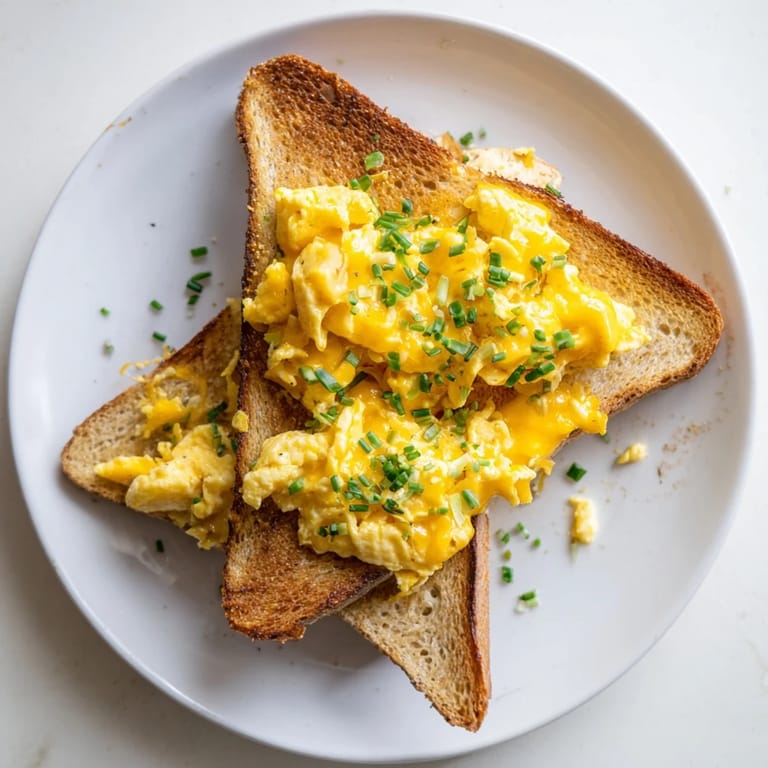
- Slide it onto a plate, cut in half if you want, sprinkle with chives if you're using them, and eat it while it's still warm enough to have personality.
 Pin it
 There's a moment, right when you're about to fold that second slice of bread over, where you realize you've made something that looks almost restaurant-worthy in your own kitchen at 7 AM. That's the moment this breakfast stops being just food and becomes evidence that you can pull off something elegant without pretending.
Why One Pan Changes Everything
Cooking breakfast in a single pan isn't just about saving dishes—it's about how the bread gets to interact with the butter and the eggs all at once, creating this golden, slightly crispy exterior while staying creamy inside. You can't replicate that texture by toasting bread separately and then adding eggs; you lose the dialogue between the ingredients. The butter that toasted the bread is the same butter that cradles the eggs, so every flavor builds on what came before.
Cheese Matters More Than You Think
Sharp cheddar brings a slight bite that cuts through the richness of the eggs, while something milder like Jack melts more luxuriously and coats your mouth in a friendlier way. I've done this sandwich with gruyère when I was feeling fancy and it elevated everything—the nuttiness added a dimension that made it feel less like a quick breakfast and more like something you'd order at a café. Temperature matters too; the cheese needs to melt from the residual heat rather than direct heat, or it gets greasy instead of glossy.
Add-Ins That Actually Work
Crispy bacon or ham adds a textural contrast that makes each bite more interesting, and sautéed mushrooms or spinach sneak in something green without making the whole thing feel virtuous in an exhausting way. Hot sauce drizzled over the top at the end can transform your morning from pleasant to memorable in seconds.
- Cooked bacon or ham: Cook it first, then scatter it over the eggs right before the bread goes on top.
- Sautéed vegetables: Mushrooms and spinach work best because they release their moisture quickly and won't make your sandwich soggy.
- Hot sauce or fresh herbs: A drizzle of hot sauce and a scatter of chives finishes it the way a good ending should—with a tiny kick of flavor you didn't expect.
 Pin it
 This sandwich became my defense against mornings where everything feels rushed, because it proves that taking 15 minutes to do something right tastes infinitely better than taking five minutes to do something forgettable. Make it when you need breakfast to feel like a small victory.
Recipe FAQs
- → What type of bread works best?
Use sturdy sandwich bread like sourdough or whole wheat to hold the eggs and fillings without getting soggy.
- → Can this be made vegetarian?
Yes, it is naturally vegetarian and can be enhanced with vegetables or cheese without meat additions.
- → How to avoid overcooking the eggs?
Pour the eggs over bread and gently push edges until mostly set but still moist, then add cheese and fold before finishing cooking.
- → What cheese options work well?
Cheddar is classic, but feel free to use any melty cheese like Swiss, Monterey Jack, or mozzarella.
- → Can I add extra flavors or toppings?
Yes, additions like cooked bacon, ham, or sautéed vegetables add flavor and texture to the sandwich.