 Pin it
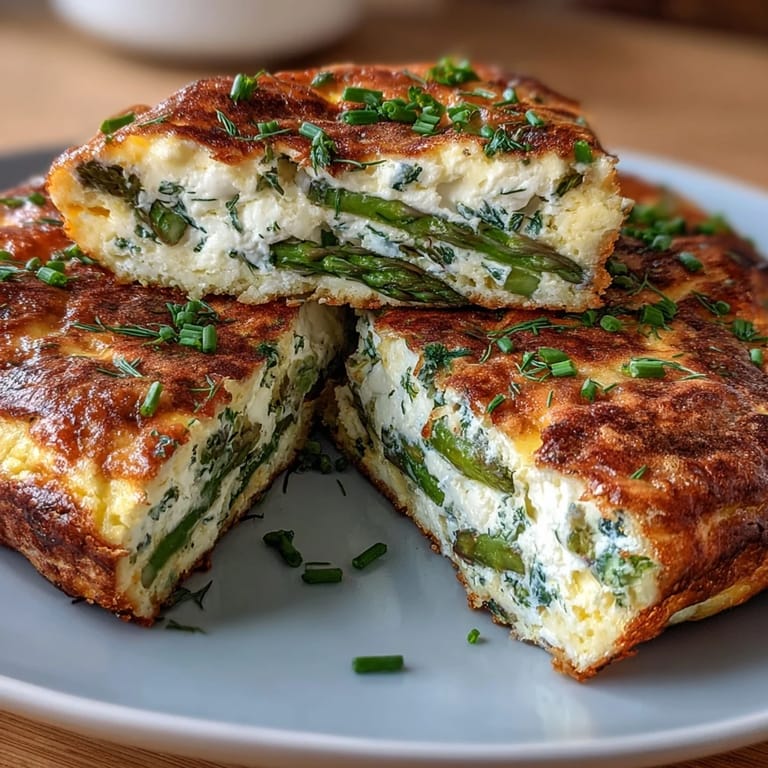
 My neighbor knocked on my door one Saturday morning with a basket of asparagus from her garden, still wet with dew, and I realized I had no idea what to do with it beyond roasting. That afternoon, I found myself standing in my kitchen watching eggs transform into something fluffy and substantial in a cast iron pan, and it clicked—this was the answer to those mornings when I wanted something that felt special but didn't require me to stand at the stove. A frittata, it turns out, is breakfast's way of saying you're worth the effort without demanding much of you at all.
I made this for my sister's birthday brunch last spring, and what struck me most wasn't the compliments—though there were plenty—but how everyone came back for seconds and told me it tasted like the season itself. She'd mentioned wanting something green and fresh after months of heavy winter cooking, and watching her face when she bit into that first wedge, how the herbs and asparagus just sang together, made me understand why people get so passionate about seasonal eating.
Ingredients
- Asparagus, trimmed and cut into 2 cm pieces: Choose stalks that snap crisply; the thinner ones cook more evenly and give you that tender-but-not-mushy texture that makes spring vegetables shine.
- Red onion, finely chopped: This adds a subtle sweetness that caramelizes gently in the olive oil, creating a flavor base that anchors everything else.
- Baby spinach, roughly chopped: It wilts almost instantly, so add it last in the pan to keep it from turning into a dark, bitter mass.
- Eggs: Room temperature eggs whisk more smoothly and create a fluffier frittata, though honestly, pulling them straight from the fridge works fine in a pinch.
- Whole milk: Just a splash makes the eggs richer without making them heavy; half-and-half works beautifully here if you have it.
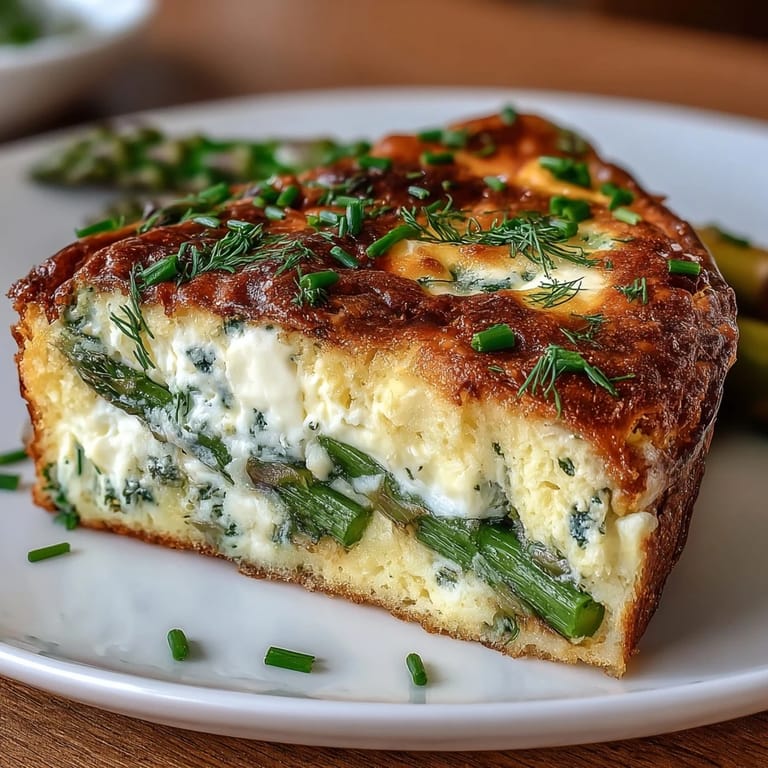
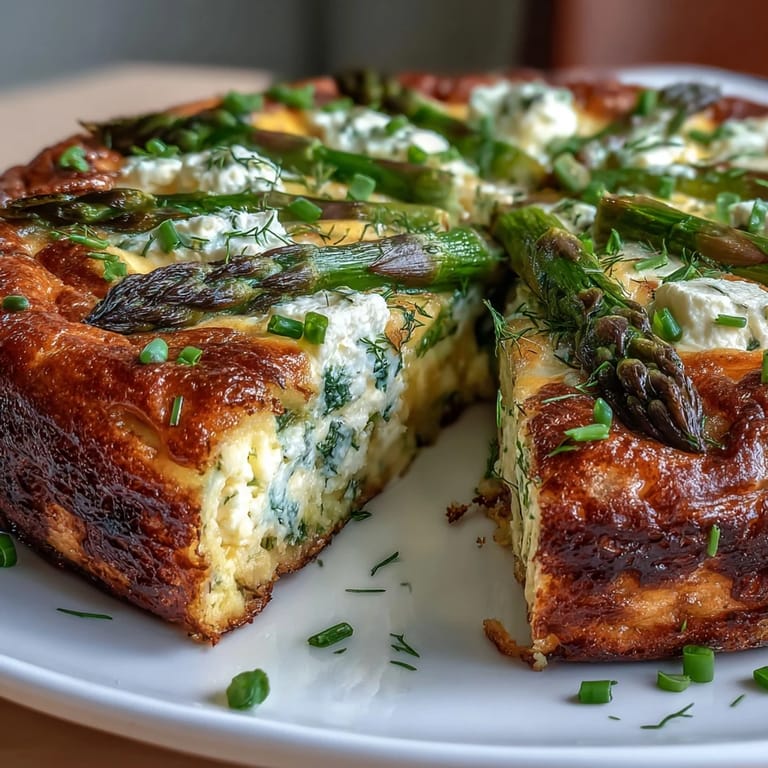
- Goat cheese, crumbled: Let it dollop unevenly across the top so you get pockets of tang in every bite instead of a uniform layer.
- Parmesan cheese, grated: This adds a nutty counterpoint to the goat cheese's brightness and helps the top turn golden.
- Fresh chives and dill: Save half for garnish at the end; the fresh brightness makes all the difference between a good frittata and one that tastes like spring on a plate.
- Olive oil and butter: The combination gives you richness from the butter and a slightly grassy depth from the olive oil.
Tired of Takeout? 🥡
Get 10 meals you can make faster than delivery arrives. Seriously.
One email. No spam. Unsubscribe anytime.
Instructions
- Get your oven ready and your pan hot:
- Preheat to 180°C while you gather everything—you want the oven singing by the time you need it. Heat your ovenproof skillet over medium heat with the olive oil until it shimmers slightly.
- Soften the onion, then build your vegetable base:
- Let the red onion go translucent and just barely caramelized, then add the asparagus and let it spend a few minutes in the heat until it's tender but still has some structure. You're looking for that moment when it's cooked through but not sad.
- Wilt the spinach and make your space:
- Toss in the spinach and stir for about a minute until it surrenders into the pan. You've just created the canvas for your frittata.
- Whisk your eggs with intention:
- In a bowl, combine the eggs, milk, salt, pepper, and half the herbs—whisk until you see no streaks of white, but don't go so far that you're incorporating tons of air. This isn't a soufflé.
- Lower the heat and pour carefully:
- Turn the burner down to low and pour your egg mixture evenly over everything, letting it settle into the nooks and crannies around the vegetables. It should look like a shallow pond at this point.
- Dot with goat cheese and Parmesan:
- Scatter the crumbled goat cheese across the top, then sprinkle the Parmesan. The goat cheese will melt into creamy pockets while the Parmesan browns and crisps.
- Let it cook undisturbed on the stovetop:
- Leave it alone for 4–5 minutes while the edges begin to set and the bottom starts to firm up, but the center is still jiggly—this is crucial. You'll notice the edges pulling slightly away from the pan.
- Finish in the oven:
- Transfer the skillet to the oven and bake for 10–12 minutes, just until the center is set and the top is lightly golden. You're looking for just a whisper of color, not a deep brown.
- Rest and garnish:
- Let it sit for 5 minutes after coming out—this helps it set slightly and makes slicing cleaner. Top with the remaining fresh herbs and a pinch of red pepper flakes if you like a little heat.
 Pin it
 There's something quietly magical about a frittata—the way it brings people together without demanding you stay in the kitchen. My best friend calls it "the dish that saved my social life" because she can actually sit at the table with guests instead of flipping things in a pan the whole time.
Why Spring Vegetables Matter Here
Spring asparagus has a sweetness and tenderness that fall or winter asparagus simply doesn't possess, and using it at its peak moment makes this dish taste like a specific time of year rather than something generic. When I buy asparagus, I look for stalks that are firm and bright green, without any woody or dried-out tips. If you're making this in another season, don't force it—swap in roasted mushrooms, sautéed leeks, or tender green beans, and let the frittata adapt to what's actually good right now.
The Cast Iron Question
I use a cast iron skillet almost exclusively for frittatas because it distributes heat evenly and retains warmth beautifully, but honestly, a good nonstick skillet works just as well and is easier to clean. The important thing is that whatever you use must be ovenproof—checking your handle is worth the 30 seconds because discovering your plastic handle at 180°C is not a discovery you want to make. If you go cast iron, season it well and it'll only get better with use.
Serving and Storing
A frittata is one of those rare things that tastes equally good warm, at room temperature, or even cold the next day, which means it's perfect for meal prep or feeding a crowd without stress. I've sliced it up the night before, stored it in the fridge, and warmed wedges in the toaster oven the next morning—not quite as ethereal as fresh, but still deeply satisfying. Pair it with a simple bitter green salad, some crusty bread, and a glass of crisp white wine or sparkling rosé, and you've got something that feels like breakfast, lunch, or a light dinner all at once.
- Store leftovers covered in the fridge for up to three days and reheat gently to keep the texture from becoming tough.
- You can make this the day before and serve it at room temperature if you're hosting brunch.
- Frittatas freeze beautifully if wrapped individually, though the texture becomes slightly less fluffy after thawing.
 Pin it
 This frittata taught me that the best meals aren't always the most complicated ones—sometimes they're just the ones where good ingredients meet a little care and a lot of confidence. Make it once, and it becomes muscle memory; make it twice, and it becomes your thing.
Recipe FAQs
- → What type of pan is best for cooking this dish?
An ovenproof skillet such as cast iron or nonstick, about 10-11 inches in diameter, works best to cook and finish the dish evenly.
- → Can I substitute goat cheese with other cheeses?
Yes, using feta or ricotta cheese can provide different but delicious flavors that complement the asparagus and herbs well.
- → How do I know when the dish is fully cooked?
The edges should be set and the center slightly golden but still moist; after baking for 10-12 minutes, it should hold together when sliced.
- → Is this dish suitable for a gluten-free diet?
Yes, the ingredients used are naturally gluten-free, but it's wise to check labels on dairy products if gluten sensitivity is a concern.
- → What herbs enhance the flavor best in this dish?
Fresh chives and dill add bright, delicate flavors that pair beautifully with the creamy goat cheese and asparagus.
- → Can I add other vegetables to this dish?
Absolutely! Peas, leeks, or other spring vegetables can be added to enhance texture and seasonal flavors.