 Pin it
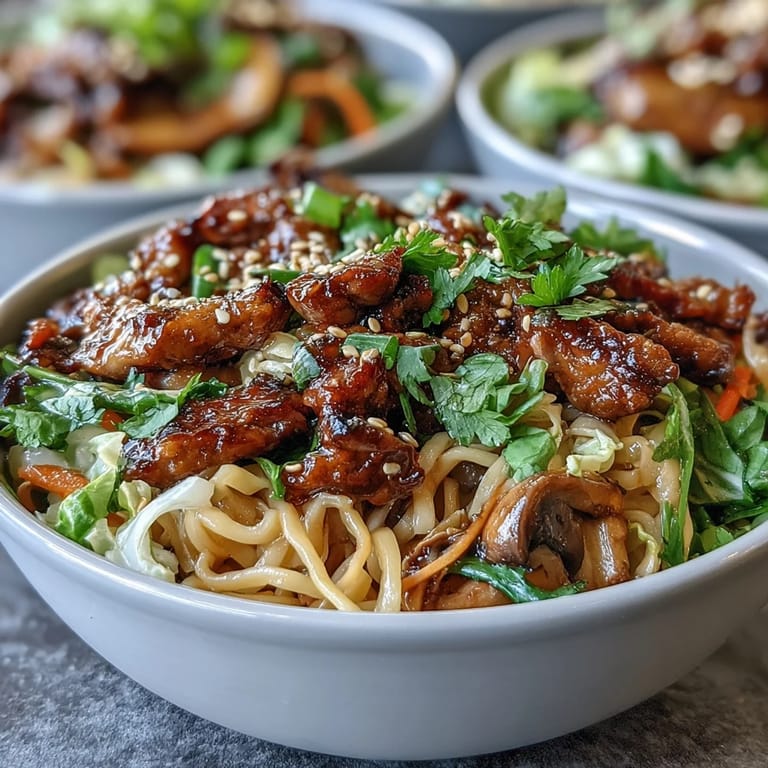
 My neighbor knocked on my door one Tuesday holding a bag of dumpling wrappers she couldn't use before they expired. I thanked her, then realized I had no energy to fold dumplings. Instead, I pulled out noodles, browned some pork with ginger and garlic, and tossed everything in the same soy-sesame sauce I'd have served with potstickers. That lazy shortcut became this bowl, and I've made it at least twice a month since.
I served this to my sister the night she helped me paint my kitchen. She was skeptical when I called it potsticker noodles, but after her second bowl she asked if I could make it every time she visits. Now I keep rice noodles and chili-garlic sauce stocked just in case she shows up unannounced.
Ingredients
- Rice noodles: They soak up the sauce without getting mushy, and they cook faster than wheat noodles, though lo mein works beautifully if thats what you have.
- Ground pork: Browning it in one layer creates crispy, caramelized edges that mimic the crust on a pan-fried dumpling.
- Soy sauce, sesame oil, and white pepper: This trio seasons the meat exactly like dumpling filling, giving it that unmistakable savory-sweet depth.
- Garlic and ginger: Freshly minced and barely cooked, they release a sharp, aromatic heat that wakes up the whole dish.
- Cabbage and carrots: Shredded thin, they soften just enough to stay crisp and add color and crunch to every forkful.
- Chili-garlic sauce: A spoonful brings the heat and tang that balance the richness of the pork and sesame oil.
- Oyster sauce: It adds umami and a subtle sweetness that rounds out the soy and vinegar.
- Toasted sesame seeds and cilantro: The final sprinkle adds nuttiness and brightness that make the bowl feel finished and fresh.
Tired of Takeout? 🥡
Get 10 meals you can make faster than delivery arrives. Seriously.
One email. No spam. Unsubscribe anytime.
Instructions
- Prepare the noodles:
- Boil them until just tender, then rinse briefly under cold water to stop the cooking. Toss with a few drops of oil so they don't clump while you work on everything else.
- Season the meat:
- Mix the pork with soy sauce, sesame oil, cornstarch, white pepper, sugar, and salt until it feels sticky and cohesive, just like dumpling filling. If you have napa cabbage, fold in a tablespoon for extra moisture and sweetness.
- Make the sauce:
- Whisk together soy sauce, rice vinegar, oyster sauce, chili-garlic sauce, sesame oil, brown sugar, and broth until the sugar dissolves. Taste it now and adjust the heat or sweetness to your liking.
- Prepare the vegetables:
- Shred the cabbage and carrots, slice the mushrooms thin, and separate the white and green parts of the scallions. Having everything ready before you start cooking makes the stir-fry smooth and quick.
- Brown the meat:
- Heat oil in a large skillet over medium-high heat, then crumble in the seasoned pork in an even layer. Let it sit undisturbed for 2 to 3 minutes so the bottom gets crispy and golden, then break it up and cook through.
- Add aromatics:
- Push the meat to one side, add a bit more oil, then toss in the garlic, ginger, and white parts of the scallions. Stir for 30 to 60 seconds until the kitchen smells sharp and fragrant, then mix everything together.
- Cook vegetables:
- Add the mushrooms first and let them soften for a few minutes, then toss in the cabbage and carrots. Stir-fry until the cabbage wilts but still has a bit of bite.
- Combine with sauce:
- Pour the sauce over the meat and vegetables, toss well, and let it simmer for a minute or two until it thickens and clings to everything. The sauce should coat the pan, not pool at the bottom.
- Add noodles:
- Toss the cooked noodles into the skillet and use tongs to mix everything gently but thoroughly. If it looks dry, add a splash of water or broth to loosen it up.
- Finish and serve:
- Taste and adjust with more soy sauce, chili-garlic sauce, or a squeeze of lime. Stir in half the green onion tops, then divide into bowls and top with the rest of the scallions, cilantro, and sesame seeds.
 Pin it
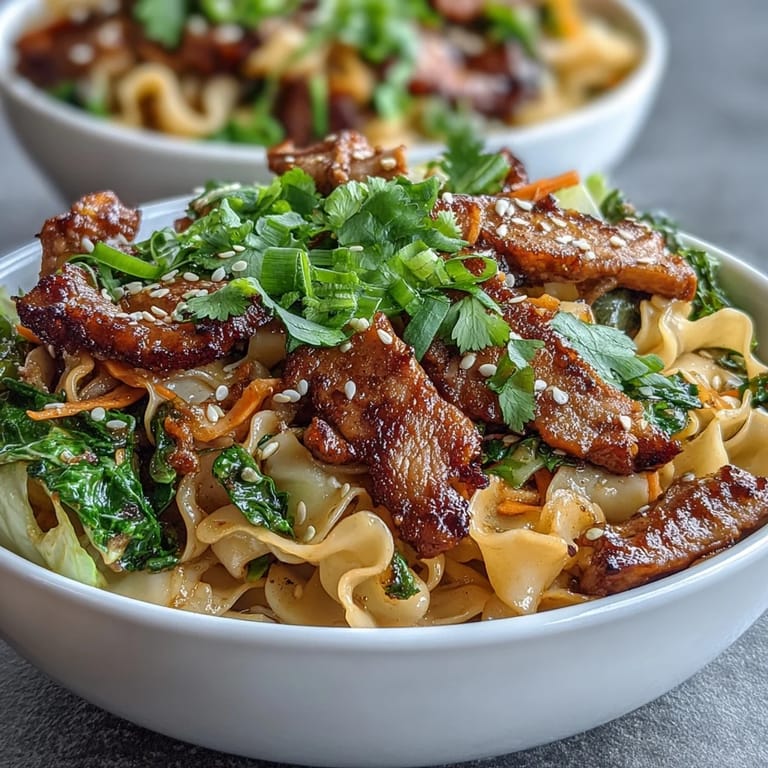
 The first time I made this for a group, I set out bowls of extra chili-garlic sauce, lime wedges, and cilantro. Everyone built their bowl differently, and it turned into this quiet, happy moment where we all just ate and talked. Thats when I realized this dish doesnt need much from me, it just needs to get out of the way and let people enjoy it.
Choosing Your Noodles
Rice noodles are my default because they cook fast and soak up sauce without getting heavy, but lo mein or even spaghetti work if thats whats in your pantry. I once used rice vermicelli by mistake and it was delicate and lovely, though it tangled more easily. Whatever you use, just cook it a minute less than the package says, it'll finish cooking when you toss it with the hot sauce and vegetables.
Swapping Proteins and Vegetables
Ground chicken or turkey make the dish lighter, and crumbled tofu or plant-based meat work beautifully if you season them the same way as the pork. I've swapped cabbage for thinly sliced bok choy, and sometimes I throw in snap peas or bell pepper if thats what needs using up. The sauce is forgiving enough that you can follow your fridge, not the recipe.
Storing and Reheating
Leftovers keep well in the fridge for up to three days, though the noodles will absorb more sauce as they sit. When you reheat, add a few tablespoons of water or broth to a skillet and warm everything over medium heat, stirring gently until its heated through and loosened up again. I sometimes crack an egg on top while its reheating and let it steam under a lid, it makes leftovers feel like a completely new meal.
- Store the garnishes separately so the cilantro and sesame seeds stay fresh and crunchy.
- If you know youll have leftovers, undercook the noodles slightly so they dont turn mushy when reheated.
- A squeeze of fresh lime right before serving brings back the brightness that fades overnight.
 Pin it
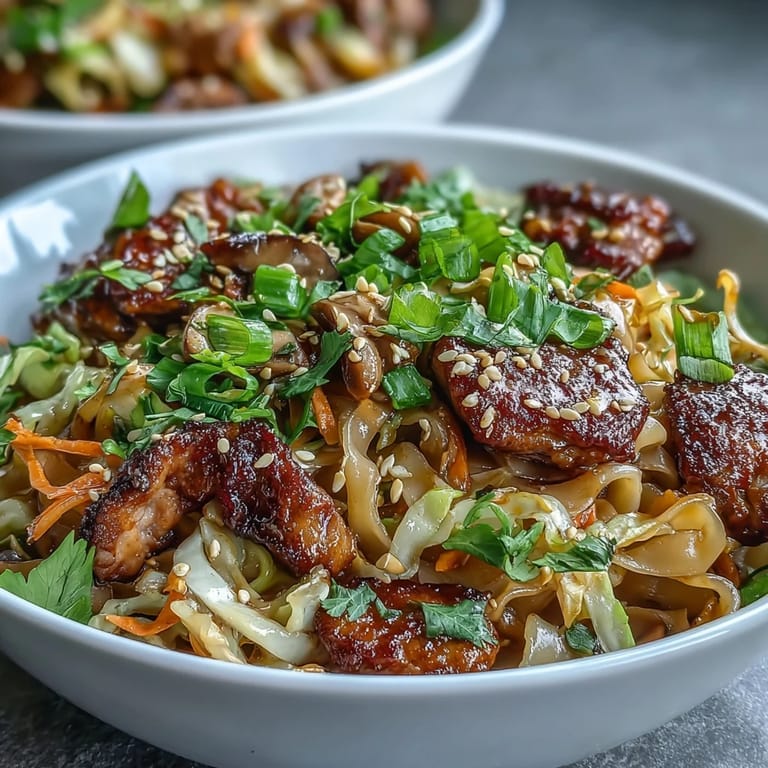
 This bowl has become my answer to nights when I want something satisfying but dont want to think too hard. It tastes like effort, but it never asks for much, and thats exactly the kind of recipe I come back to again and again.
Recipe FAQs
- → What makes this sauce authentic?
The sauce combines low-sodium soy sauce, rice vinegar, oyster or hoisin sauce, chili-garlic paste, toasted sesame oil, and brown sugar whisked into chicken broth. This blend creates the classic sweet-savory-tangy profile found in traditional potsticker dipping sauces.
- → Can I use different noodles?
Rice noodles, lo mein, or even udon work beautifully here. Rice noodles stay light and gluten-free, while wheat noodles offer more chew. Cook according to package directions and rinse with cold water to prevent sticking before tossing with the sauce.
- → How do I get the meat crispy?
Spread the seasoned ground pork in an even layer and let it cook undisturbed for 2-3 minutes before breaking it up. This technique creates golden, caramelized edges that mimic the texture of pan-fried potstickers.
- → Can I make this gluten-free?
Absolutely. Use rice noodles, gluten-free tamari instead of soy sauce, and verify that your oyster sauce is gluten-free. Many brands offer certified gluten-free versions, or substitute hoisin sauce which is naturally wheat-free.
- → How should I store leftovers?
Refrigerate in an airtight container for up to 3 days. Reheat gently with a splash of water or broth to refresh the sauce and prevent noodles from drying out. The flavors often develop even more depth overnight.