 Pin it
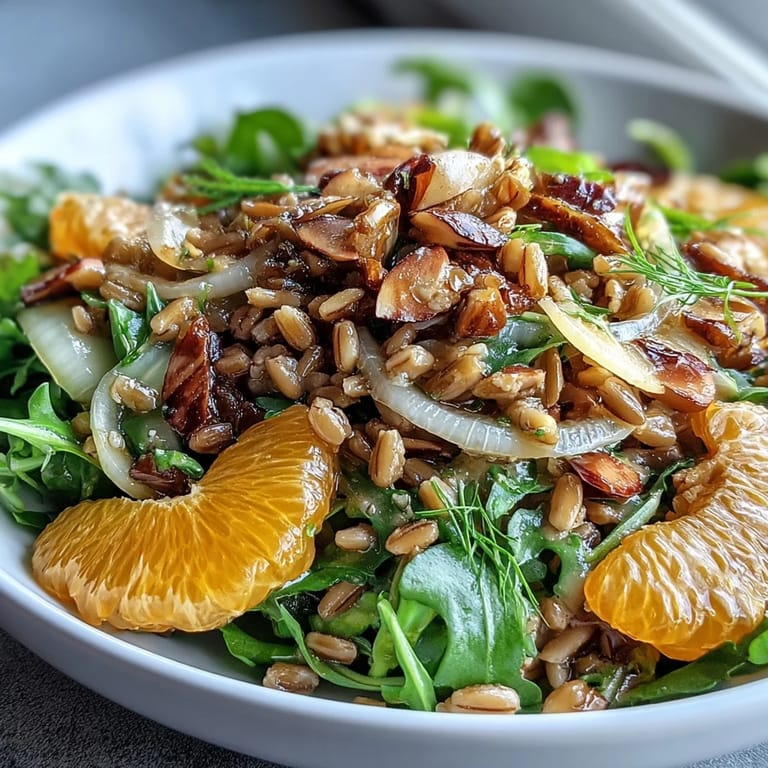
 There's something about the smell of toasted almonds that instantly pulls me back to a late January afternoon when I was experimenting with lighter lunches. I'd bought this gorgeous fennel bulb at the farmers market, and the vendor mentioned it pairs beautifully with citrus. That single suggestion sent me down a rabbit hole of testing combinations, and when I finally tossed warm farro with crisp fennel, bright orange segments, and those golden almonds, something clicked. It wasn't just delicious—it felt like the kind of meal that makes you actually want to sit down and enjoy it.
I made this for my sister when she visited unexpectedly last spring, and she kept asking what was different about it—not just the flavor, but the way it made her feel fuller and more satisfied than typical salads. When I explained it was the farro, she admitted she'd always thought grain salads were boring. Watching her eat a second bowl while sitting on my kitchen counter, chatting about nothing in particular, I realized this recipe had quietly become one of my go-to dishes for people I actually want to spend time with.
Ingredients
- Farro (1 cup): This nutty, chewy grain is the backbone of the whole salad—it holds up beautifully to dressing and stays interesting even after it cools.
- Water (3 cups) and Salt (½ teaspoon): Don't skip salting the cooking water; this is where farro gets its flavor.
- Fennel bulb (1 medium): Slice it paper-thin and don't throw away those feathery fronds—they're your secret garnish that adds an anise whisper at the end.
- Oranges (2 large): Freshly squeezed juice goes into the vinaigrette, and the segments become jewels scattered throughout.
- Red onion (1 small): Thinly sliced red onion adds a sharp bite that wakes up the whole bowl.
- Mixed salad greens (2 cups): Any tender greens work—I use whatever looks fresh, usually a mix of arugula and spinach.
- Sliced almonds (½ cup): Toast them yourself; the difference between store-bought toasted and ones you've just finished in a hot skillet is remarkable.
- Extra-virgin olive oil (3 tablespoons): This is where you use the good stuff—the vinaigrette is simple enough that quality matters.
- White wine vinegar (1 tablespoon): It's bright without being aggressive, which is exactly what this salad needs.
- Dijon mustard (1 teaspoon), Honey (½ teaspoon): These create an emulsion that helps everything come together smoothly.
Tired of Takeout? 🥡
Get 10 meals you can make faster than delivery arrives. Seriously.
One email. No spam. Unsubscribe anytime.
Instructions
- Prepare and cook the farro:
- Rinse the grains under cold water—this removes excess starch and helps them stay separate. Bring everything to a boil, then drop the heat and let it simmer uncovered for 20 to 25 minutes until the grains are tender but still have a little chew to them, which is the whole point of farro.
- Toast the almonds:
- While your farro is cooking, get a dry skillet warm over medium heat and add your sliced almonds. You'll hear them before you smell them—listen for that subtle crackling sound, and as soon as the fragrance hits you (usually 2 to 3 minutes), move them to a plate before they burn.
- Whisk the vinaigrette:
- In a small bowl, combine olive oil, fresh orange juice, vinegar, Dijon mustard, honey, salt, and pepper. Whisk everything together with real intention—you're looking for the mixture to turn pale and slightly thickened, which means the mustard is doing its job as an emulsifier.
- Build the salad:
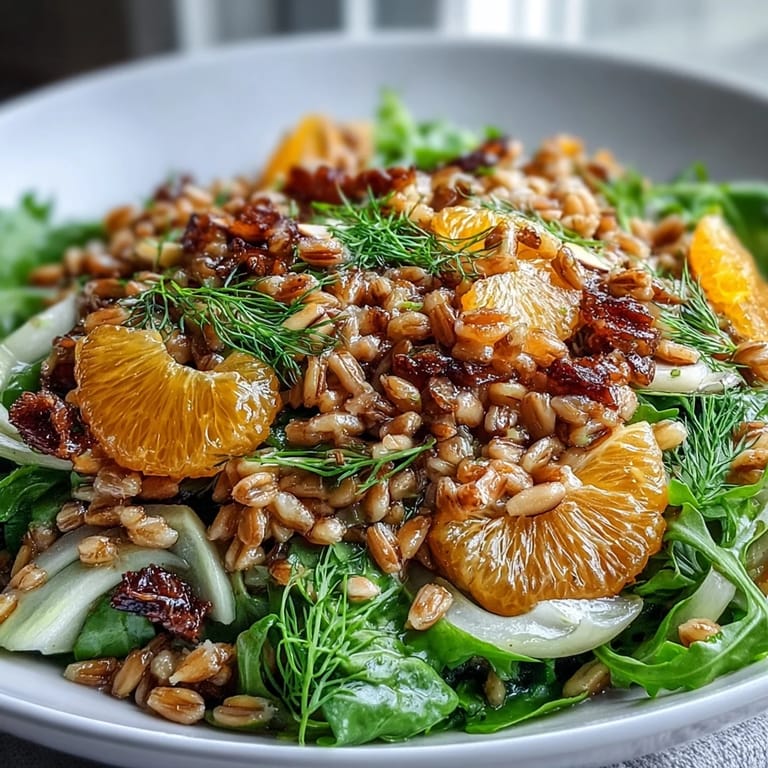
- Once the farro has cooled just enough to handle, toss it in a large bowl with the paper-thin fennel slices, orange segments, red onion, and your greens. Drizzle the vinaigrette over everything and toss gently so you don't bruise the greens or crush the delicate fennel.
- Finish and serve:
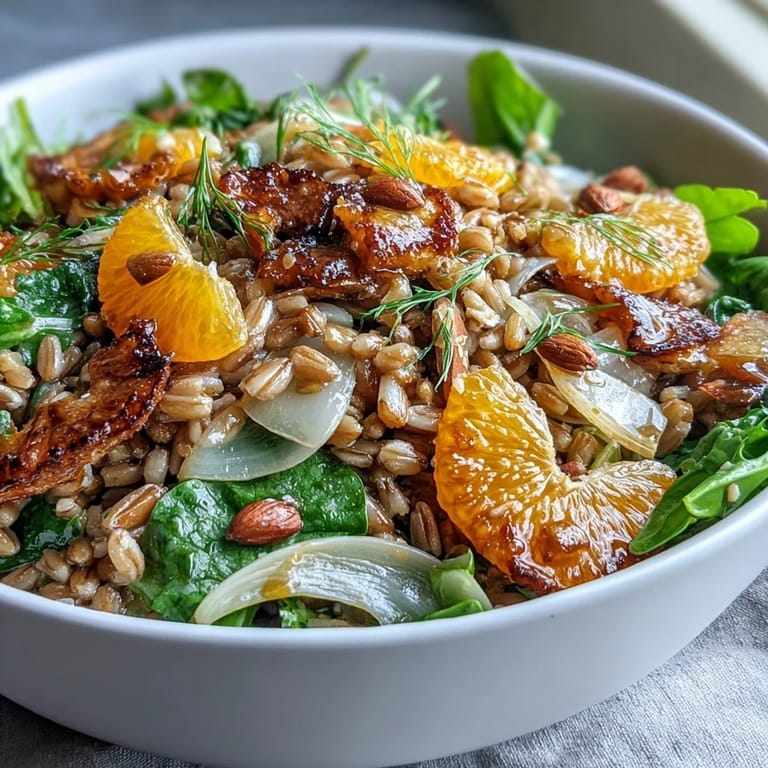
- Scatter the warm toasted almonds across the top, garnish with those reserved fennel fronds, and serve immediately while the warmth of the farro still mingles with the cool, crisp vegetables.
 Pin it
 A friend once told me that good food is really just proof that you're paying attention—to ingredients, to timing, to people at the table. This salad feels like that to me. It's straightforward enough that a beginner can make it without stress, but it rewards anyone who remembers to toast the almonds with intention, squeeze fresh orange juice, and taste the vinaigrette before it touches the bowl.
The Art of Building a Grain Salad
Grain salads teach you something important: texture is everything. When I first started making them, I'd throw everything together immediately and end up with something that felt monotonous by the third bite. Now I understand that the contrast between chewy farro, crisp fennel, juicy orange segments, and the pop of toasted almonds is what makes each spoonful interesting. The warmth of the just-cooked grain also helps the vinaigrette meld into it in a way that cold grain never quite achieves.
Why Fennel Deserves Your Attention
Fennel is one of those vegetables that people either avoid or absolutely love, and I think it's because most people haven't had it fresh and sliced paper-thin in a salad. When you do it right, you get this delicate, slightly sweet anise flavor that whispers rather than shouts. The fronds—those feathery green tops that come on the bulb—are often discarded, but they're actually the most elegant garnish, adding a hint of sophisticated flavor at the very end.
Vinaigrette Wisdom and Seasonal Swaps
The beauty of this vinaigrette is that it's built on a simple premise: acid, oil, and an emulsifier that brings them together. Once you understand that framework, you can swap the orange juice for lemon juice in winter, or add a touch of balsamic if you want deeper notes. I've made it with pomegranate juice in fall and found it equally stunning. The Dijon mustard and honey aren't just flavoring agents—they're actually holding the whole thing together, which is why skipping them would be a real loss.
- Always taste your vinaigrette before it meets the salad; this is your chance to adjust salt and acidity.
- If you're making this ahead, dress it lightly and let people add more vinaigrette at the table so the greens don't become weighed down.
- The salad is best served within an hour of assembly, when everything still has its individual character.
 Pin it
 Make this salad when you want to feel like you're taking care of yourself without the weight of something heavy. It's the kind of dish that proves vegetables and grains belong in the main event, not as an afterthought.
Recipe FAQs
- → Can I make this farro bowl ahead of time?
Absolutely. The flavors actually improve after sitting for a few hours. Store the cooked farro and dressing separately, then combine with fresh vegetables just before serving for the best texture.
- → What other grains work in this salad?
Spelt, barley, or wheat berries make excellent substitutes. Each brings a slightly different texture and cooking time, but all maintain that satisfying chewy quality that pairs beautifully with the citrus and fennel.
- → How do I prevent the farro from getting mushy?
Cook until tender but still with a slight chew to the center—typically 20-25 minutes. Drain immediately and spread on a baking sheet to cool quickly, stopping the cooking process and preserving texture.
- → Can I use bottled orange juice for the vinaigrette?
While fresh squeezed provides the brightest flavor, high-quality not-from-concentrate juice works in a pinch. You might need slightly more honey to balance the acidity if using bottled juice.
- → What protein additions complement these flavors?
Grilled chicken, shrimp, or even chickpeas pair wonderfully. The citrus and fennel enhance seafood particularly well, while chickpeas make it a complete vegetarian protein bowl.