 Pin it
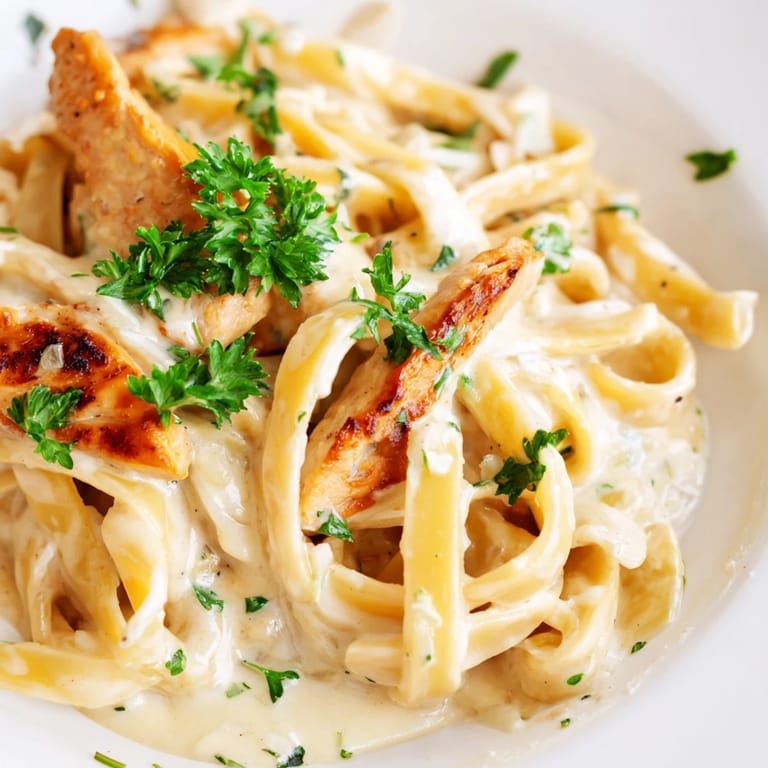
 My roommate once challenged me to make restaurant-quality pasta without leaving the apartment, and this skillet chicken Alfredo was my answer. The sound of garlic hitting warm butter filled our tiny kitchen, and by the time I tossed everything together, we both agreed it tasted better than our usual takeout spot. It's the kind of recipe that looks impressive but secretly comes together in one pan with barely any fuss. I've made it on rushed Tuesday nights and lazy Sunday evenings, and it never disappoints. There's something deeply satisfying about watching cream and Parmesan melt into a glossy sauce that clings to every strand of pasta.
I made this for my parents during a visit, and my dad, who usually critiques everything, went quiet after the first bite. He asked for seconds before anyone else had finished their plate. My mom kept asking what the secret was, convinced I had added something fancy, but it was just good Parmesan and a little patience while the sauce simmered. That night, it became the dish they request every time they come over. It's funny how a simple skillet of pasta can turn into a family tradition without you even planning for it.
Ingredients
- Boneless, skinless chicken breasts: Slicing them into strips helps them cook faster and stay tender, plus every piece gets coated in that creamy sauce.
- Fettuccine or penne pasta: Fettuccine is classic, but penne holds the sauce in its ridges beautifully if you want something a little heartier.
- Unsalted butter: It adds richness and helps build the base of the sauce without making things too salty.
- Olive oil: Keeps the butter from burning and gives the chicken a golden, flavorful crust.
- Garlic cloves: Fresh garlic makes all the difference here, the smell alone will make everyone wander into the kitchen.
- Heavy cream: This is what makes the sauce luxurious and smooth, coating the pasta like a silky blanket.
- Parmesan cheese: Freshly grated melts better and tastes sharper than the pre-grated stuff, it's worth the extra minute of effort.
- Low-sodium chicken broth: It thins the sauce just enough and adds a savory depth without overpowering the cream.
- Nutmeg: A tiny pinch brings warmth and a subtle complexity that most people can't quite place but always love.
- Salt and black pepper: Season the chicken well before cooking, it makes a huge difference in the final flavor.
- Fresh parsley: A bright, herbaceous finish that cuts through the richness and makes the whole dish feel lighter.
Tired of Takeout? 🥡
Get 10 meals you can make faster than delivery arrives. Seriously.
One email. No spam. Unsubscribe anytime.
Instructions
- Boil the pasta:
- Bring a large pot of salted water to a rolling boil and cook your pasta until it still has a little bite, al dente is key because it will finish cooking in the sauce. Don't forget to save half a cup of that starchy pasta water before draining, it's your secret weapon for a silky sauce.
- Sear the chicken:
- Heat olive oil and butter in a large skillet over medium-high heat, then season your chicken strips generously with salt and pepper. Cook them for five to six minutes, flipping once, until they're golden and no longer pink inside, then set them aside on a plate.
- Sauté the garlic:
- Lower the heat to medium and add the remaining butter and oil to the same skillet, then toss in the minced garlic. Let it sizzle for about a minute until it smells sweet and nutty, but watch it closely so it doesn't burn.
- Build the sauce:
- Pour in the chicken broth and bring it to a gentle simmer, scraping up all those tasty browned bits stuck to the pan. Stir in the heavy cream and a pinch of nutmeg, then let it bubble softly for two to three minutes until it starts to thicken just a little.
- Add the cheese:
- Turn the heat down to low and gradually stir in the Parmesan, letting each handful melt completely before adding more. The sauce should turn glossy and smooth, if it looks grainy, your heat was too high.
- Combine everything:
- Add the drained pasta and cooked chicken back into the skillet, tossing everything together so each piece is coated in sauce. If it looks too thick, add the reserved pasta water a splash at a time until it reaches a creamy, clingy consistency.
- Finish and serve:
- Taste and adjust the salt and pepper if needed, then sprinkle with fresh parsley and extra Parmesan. Serve it straight from the skillet for that cozy, homemade feel.
 Pin it
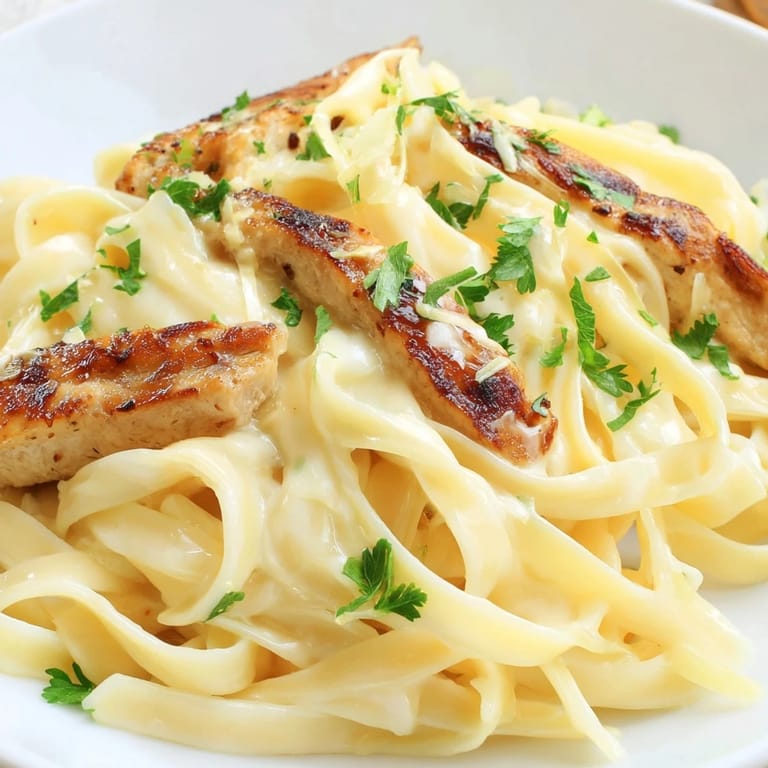
 One evening, I made this for a friend going through a rough week, and we ate it straight from the skillet on the couch with a bottle of wine. She said it was the first time in days she'd felt calm enough to actually taste her food. We didn't talk much, just twirled pasta and listened to music, and somehow that simple meal became one of my favorite memories. Sometimes the best thing you can offer someone is a warm plate and no pressure to be anything but present.
Making It Your Own
This recipe is forgiving and loves a little improvisation. I've stirred in handfuls of baby spinach right at the end, letting it wilt into the sauce for a pop of green and a bit of extra nutrition. Mushrooms are another favorite, sauté them with the garlic and they soak up all that buttery flavor. If you want a lighter version, swap the heavy cream for half-and-half, though the sauce won't be quite as thick. You can also use rotisserie chicken instead of cooking your own, just shred it and toss it in with the pasta to save even more time.
Storing and Reheating
Leftovers keep well in an airtight container in the fridge for up to three days, though the sauce will thicken as it sits. When you reheat it, add a splash of cream, milk, or even chicken broth to the pan and warm it gently over low heat, stirring often. The microwave works in a pinch, but stovetop reheating brings the sauce back to life much better. I've even eaten it cold straight from the fridge during a late-night snack raid, and honestly, it's still pretty good.
Pairing and Serving Ideas
This skillet Alfredo feels complete on its own, but a simple side salad with lemon vinaigrette cuts through the richness nicely. Garlic bread is an obvious choice, perfect for soaking up every last bit of sauce left in the bowl. A crisp white wine like Pinot Grigio or Sauvignon Blanc balances the creaminess without overwhelming your palate.
- Serve it family-style in the skillet for a casual, cozy dinner vibe.
- Top with red pepper flakes if you like a little heat threading through the cream.
- Double the garlic if you're cooking for garlic lovers, it only makes things better.
 Pin it
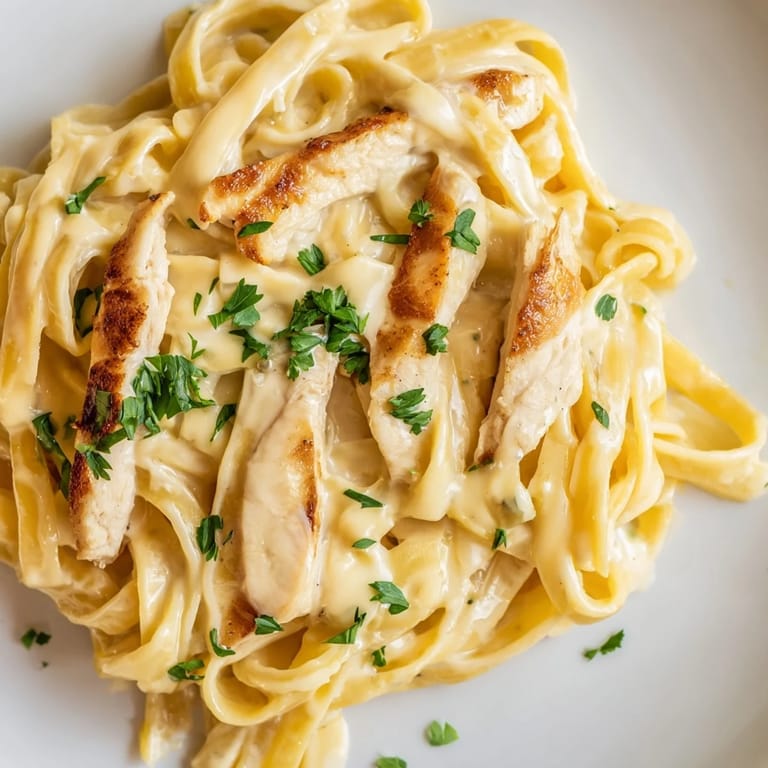
 This skillet chicken Alfredo has become my go-to when I want comfort without complications, and it never lets me down. I hope it finds a spot in your weeknight rotation and brings you as much ease and satisfaction as it's brought me.
Recipe FAQs
- → Can I use a different pasta shape?
Yes, fettuccine and penne work best, but you can substitute with linguine, tagliatelle, or even rigatoni. Wider pasta shapes hold the creamy sauce better than thin varieties.
- → How do I prevent the sauce from breaking?
Keep the heat low when adding cheese and cream. Avoid boiling, which can cause the sauce to separate. Add cheese gradually while stirring constantly. If the sauce becomes too thick, thin it with reserved pasta water one tablespoon at a time.
- → Can I make this dish ahead?
Prepare components separately: cook pasta, sear chicken, and make sauce up to 2 hours before serving. Store in separate containers in the refrigerator. Combine and warm gently over low heat just before serving, adding pasta water as needed.
- → What wine pairs well with this dish?
Crisp white wines like Pinot Grigio, Sauvignon Blanc, or Vermentino complement the creamy sauce and rich Parmesan flavors beautifully. Serve chilled alongside for the best pairing.
- → How can I lighten this dish?
Substitute half-and-half for heavy cream to reduce fat content. Use boneless, skinless chicken breasts (already specified) and reduce butter by half. Adding sautéed vegetables like spinach, mushrooms, or broccoli increases nutrition without adding many calories.
- → Is this suitable for dairy-free diets?
Traditional Alfredo relies on butter, cream, and Parmesan, making it unsuitable for dairy-free diets. You can attempt substitutions with plant-based cream alternatives, nutritional yeast, and dairy-free butter, though the flavor and texture will differ significantly.