 Pin it
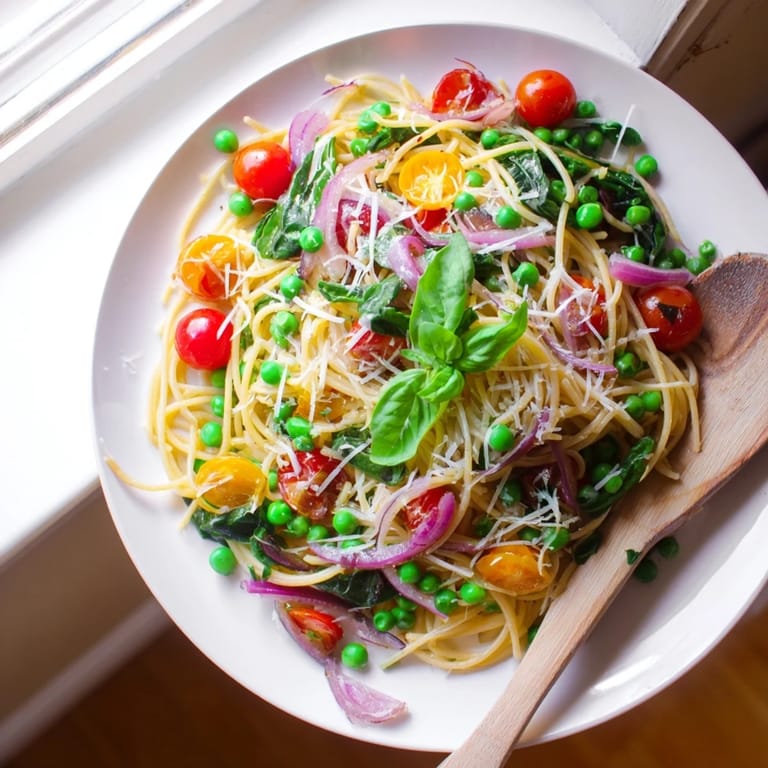
 The first time I made this pasta, it was a Tuesday evening when I had zero energy for multitasking. I ended up throwing everything in one pot because I couldn't face washing multiple dishes, and that happy accident completely changed how I cook weeknight meals. The way the starch from the spaghetti thickens the vegetable broth into a silky sauce still feels like magic.
Last month, my friend Sarah dropped by unexpectedly while I had this bubbling away on the stove. She kept asking what smelled so incredible and couldn't believe it was just simple vegetables and pasta. We ended up eating straight from the pot while standing in the kitchen, laughing about how the best meals often come from the most unplanned moments.
Ingredients
- Spaghetti: The starch releases into the broth as it cooks, creating a naturally creamy sauce that clings to every strand
- Frozen or fresh peas: They add sweet pops of color and hold their shape beautifully in the simmering broth
- Baby spinach: Wilts into the pasta in the final minutes, adding nutrition without any bitter taste
- Cherry tomatoes: Halved tomatoes release their juices into the cooking liquid, building layers of flavor
- Garlic and red onion: Slicing them thin helps them melt into the dish rather than staying chunky
- Vegetable broth: The cooking liquid becomes the sauce, so use a good quality one you would drink on its own
- Olive oil: Coats the pasta strands and carries the aromatics throughout the dish
- Salt and black pepper: Season the broth well since the pasta absorbs it as it cooks
- Red pepper flakes: Just a hint of warmth that makes the spring vegetables pop
- Lemon zest: The essential oils wake up all the other flavors and cut through the richness
- Parmesan: Adds umami and saltiness that ties the vegetables and pasta together
- Fresh basil: Torn right before serving for an aromatic finish that makes the dish feel special
Tired of Takeout? 🥡
Get 10 meals you can make faster than delivery arrives. Seriously.
One email. No spam. Unsubscribe anytime.
Instructions
- Build your flavor base:
- Heat olive oil in a large pot over medium heat, then add the sliced garlic and red onion, cooking them until they're fragrant and starting to turn translucent
- Bring everyone to the party:
- Add the spaghetti, peas, spinach, and cherry tomatoes to the pot, then pour in the vegetable broth and bring everything to a gentle boil
- Season and stir:
- Sprinkle in the salt, black pepper, and red pepper flakes, then stir occasionally to keep the pasta from sticking together as it cooks
- Let it work its magic:
- Cook uncovered for 10 to 12 minutes until the pasta is al dente and most of the liquid has been absorbed into a glossy sauce, then stir in the lemon zest
- Finish and serve:
- Remove from heat, divide among four plates, and top each serving with grated Parmesan and fresh basil leaves
 Pin it
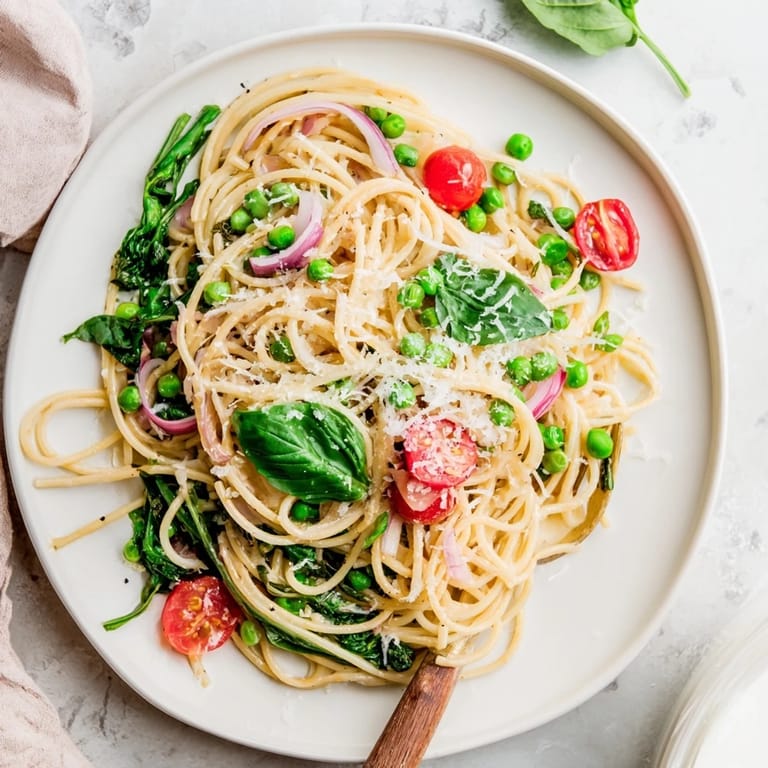
 This recipe became my go-to when I moved into my first apartment and realized I owned exactly one pot. Now, even with a fully stocked kitchen, I still choose this method because the pasta actually absorbs more flavor cooking directly in the broth. Some traditions you keep because they work, not because you're lazy.
The Beauty of One-Pot Cooking
There is something deeply satisfying about cooking pasta directly in its sauce. The traditional method of boiling separately creates clean, separate flavors, but this way everything mingles and intensifies. I have found that dishes cooked this way often taste better the next day because the flavors have even more time to get acquainted.
Seasonal Swaps
This recipe works because it is built on a template, not a strict rulebook. In summer, swap the peas for corn and add zucchini. Fall calls for butternut squash and kale. Winter wants frozen vegetables that have been waiting in the freezer for just this moment. The method stays the same while the ingredients rotate.
Making It Your Own
Once you have made this a few times, you will start seeing opportunities to make it yours. A dollop of ricotta stirred in at the end adds creaminess. A can of chickpeas makes it substantial enough for dinner parties. A drizzle of good balsamic vinegar right before serving adds depth.
- Reserve a splash of pasta water before it fully absorbs if you like a looser sauce
- Add the spinach in the last two minutes if you prefer it brighter green
- Toast some pine nuts and sprinkle them on top for extra texture
 Pin it
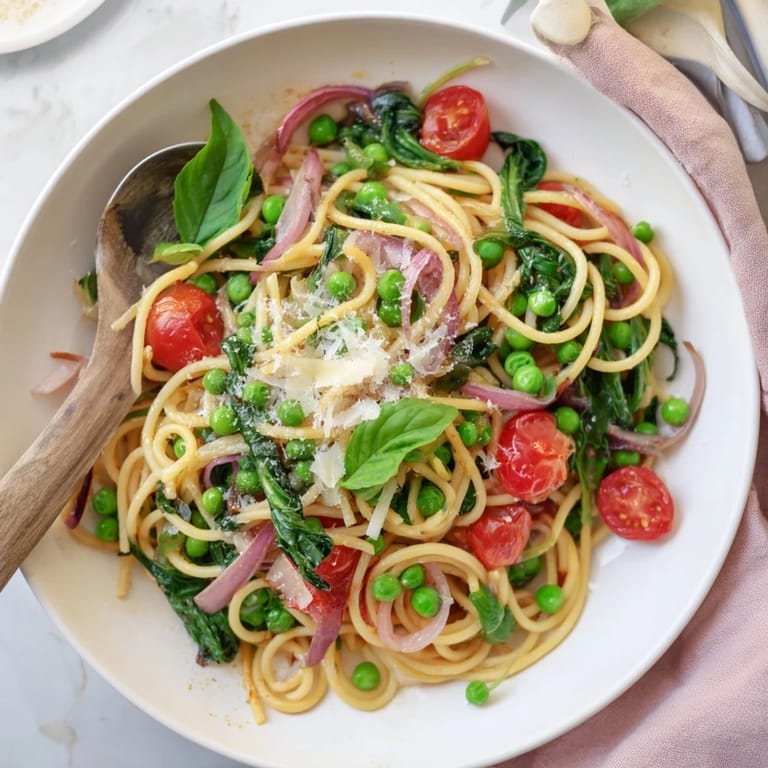
 Some of the best meals come from the simplest ideas executed with care. This pasta has fed me through busy weeks, unexpected guests, and nights when I just needed something warm and comforting.
Recipe FAQs
- → Can I use fresh vegetables instead of frozen peas?
Absolutely. Fresh peas work beautifully and may cook slightly faster. Add them at the same time as the frozen peas. Freshly shelled peas will provide a sweeter, more delicate flavor.
- → What if I don't have vegetable broth on hand?
Water works as a substitute, though you'll want to add extra seasoning for depth. Consider using pasta water mixed with a vegetable bouillon cube, or chicken broth if you prefer a richer base.
- → How do I prevent the pasta from sticking together?
Stir frequently throughout cooking, especially in the first few minutes after adding the pasta. The continuous stirring helps distribute heat evenly and prevents clumping as the broth reduces.
- → Can this dish be made vegan?
Yes. Simply omit the Parmesan or substitute vegan cheese. The dish is naturally vegetarian, and using plant-based alternatives keeps it completely vegan-friendly without compromising flavor.
- → What's the best way to store leftovers?
Store in an airtight container in the refrigerator for up to 3 days. When reheating, add a splash of broth or water to restore moisture, then warm gently on the stovetop over medium heat.
- → Can I add protein to this dish?
Definitely. A drained can of chickpeas adds heartiness and protein. White beans or cannellini beans also work well. Add them in step 2 when you pour in the broth.