 Pin it
 I was standing at the butcher counter on a gray December afternoon when the idea hit me. Four enormous lamb shanks, marbled and magnificent, sat behind the glass like they were waiting for someone bold enough to claim them. I'd never slow-roasted lamb before, but something about the weight of them in my hands and the scent of rosemary still clinging to my coat from the farmers market made me certain this was the dish I needed to master. That evening, my kitchen filled with a smell so rich and warm it felt like the house itself was exhaling comfort.
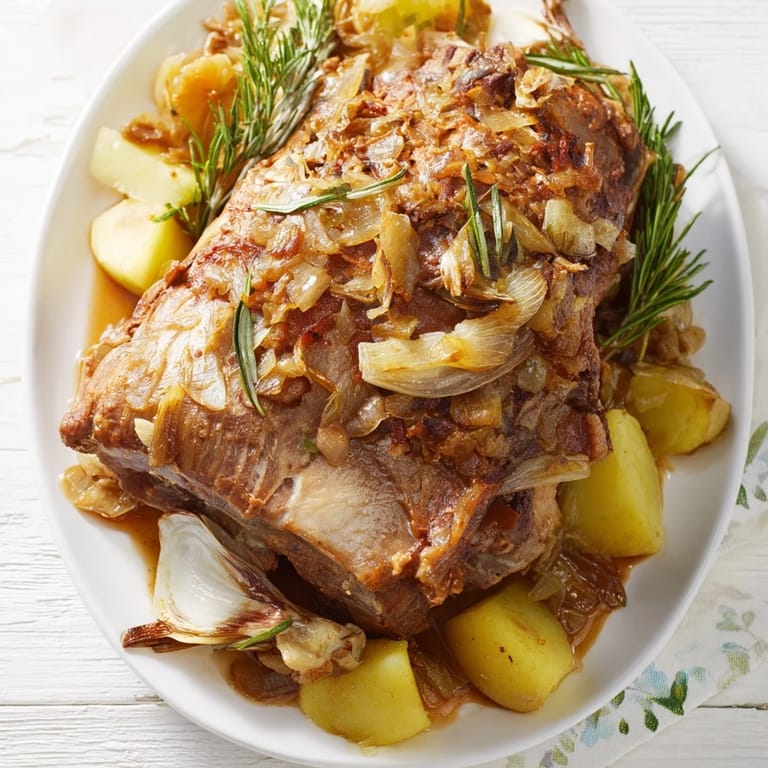
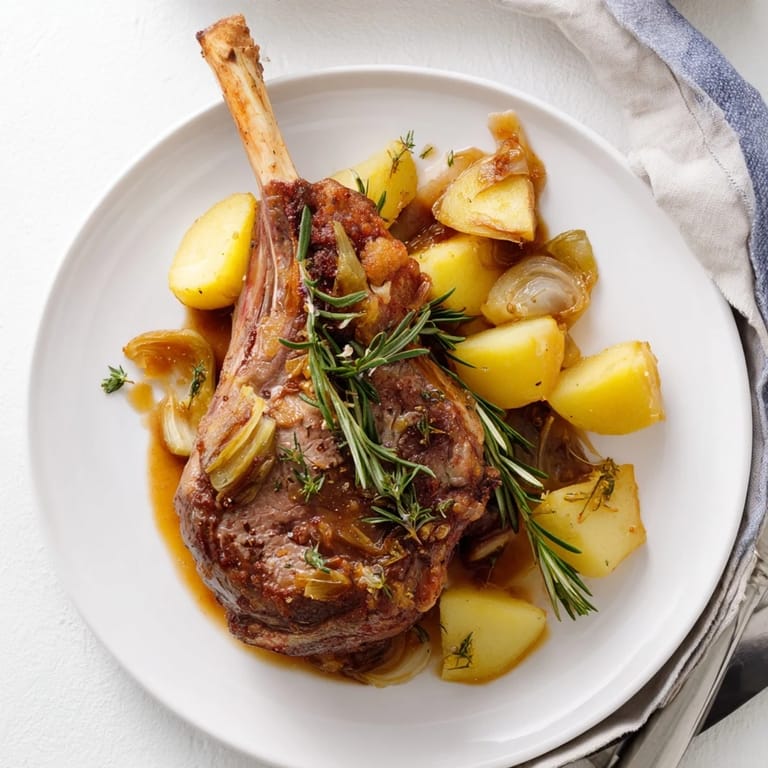
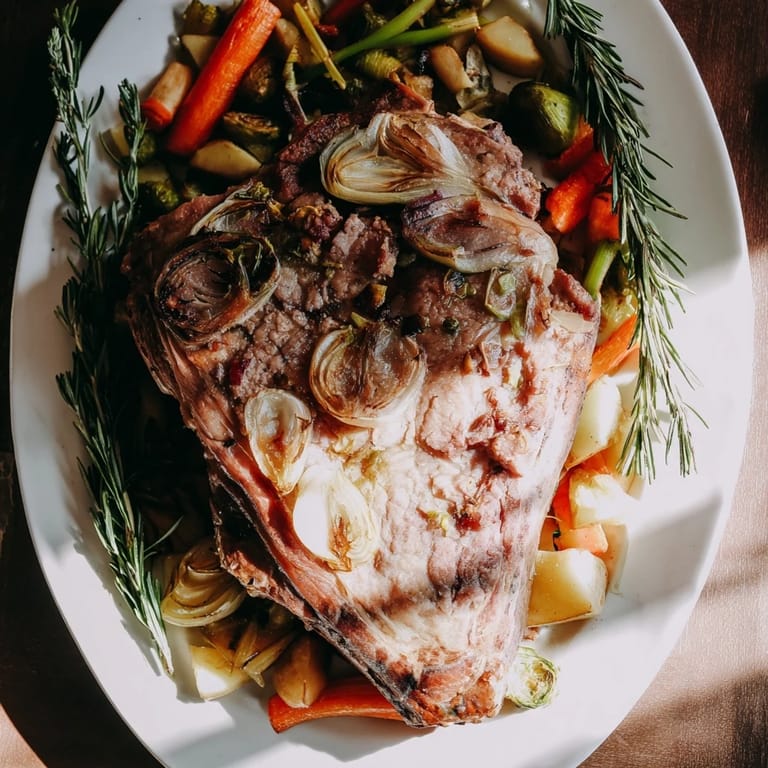
The first time I served these shanks, I placed them on a wide platter surrounded by the caramelized vegetables and watched my guests go quiet for a moment. One friend later told me it reminded her of her grandmother's Sunday dinners in Crete. I hadn't been aiming for nostalgia, just something honest and filling, but that's what slow-roasted lamb does: it holds memory even when you didn't know you were making one.
Ingredients
- 4 lamb shanks (about 350–400 g each), trimmed of excess fat: Look for shanks with a deep red color and a small cap of white fat; they'll render down beautifully and keep the meat moist during the long roast.
- 2 large carrots, peeled and cut into chunks: These sweeten as they braise and soak up all the savory drippings, becoming almost jammy.
- 2 celery stalks, cut into chunks: They add a subtle herbal bitterness that balances the richness of the lamb.
- 1 large onion, sliced: Yellow or white onions work best; they melt into the sauce and add natural sweetness.
- 4 garlic cloves, smashed: Don't bother peeling them perfectly, just smash them with the flat of your knife to release their oils.
- 3 sprigs fresh rosemary: This is the star herb; its piney aroma clings to the meat and perfumes the entire dish.
- 3 sprigs fresh thyme: Use fresh if you can, the dried stuff just doesn't have the same floral warmth.
- 2 bay leaves: They lend a quiet, earthy depth that you'd miss if they weren't there.
- 500 ml (2 cups) beef or lamb stock: Homemade is beautiful, but a good quality store-bought stock works perfectly if it's all you have.
- 250 ml (1 cup) dry red wine: Something you'd actually drink, a Merlot or Cabernet Sauvignon, nothing too tannic or sweet.
- 2 tbsp olive oil: For searing; it can take the high heat without burning.
- 1 ½ tsp kosher salt: Season generously, the meat needs it to come alive.
- ½ tsp freshly ground black pepper: Crack it fresh for a sharper, more aromatic bite.
Tired of Takeout? 🥡
Get 10 meals you can make faster than delivery arrives. Seriously.
One email. No spam. Unsubscribe anytime.
Instructions
- Preheat and Prep:
- Set your oven to 160°C (320°F) and give it time to fully heat while you ready the lamb. Pat each shank completely dry with paper towels; moisture is the enemy of a good sear.
- Season the Shanks:
- Rub the salt and pepper all over the lamb, pressing it into the meat so it sticks. Don't be shy, these are big cuts and they need bold seasoning.
- Sear Until Golden:
- Heat the olive oil in your Dutch oven over medium-high heat until it shimmers. Add the shanks and let them sit untouched for 2–3 minutes per side until they develop a deep, caramelized crust; this step builds the flavor foundation for everything that follows.
- Sauté the Vegetables:
- Remove the lamb and set it aside, then toss in the onions, carrots, celery, and garlic. Stir them around in the remaining oil and browned bits for 4–5 minutes until they soften and start to color at the edges.
- Nestle and Layer:
- Place the seared shanks back into the pot, tucking the rosemary, thyme, and bay leaves around and beneath them. It should look crowded and aromatic.
- Add the Liquid:
- Pour in the red wine first, letting it sizzle and steam, then add the stock. Use a wooden spoon to scrape up any stuck-on bits from the bottom; that's pure flavor you don't want to waste.
- Slow Roast:
- Cover the pot tightly with its lid or a double layer of foil and slide it into the oven. Let it cook undisturbed for 1 ½ hours, then carefully turn each shank over and return it for another 1 to 1 ½ hours until the meat is so tender it nearly falls apart when you lift it.
- Rest and Finish the Sauce:
- Transfer the lamb and vegetables to a warm platter and tent loosely with foil. Skim the fat from the braising liquid, then simmer it on the stovetop for a few minutes if you want it thicker and glossier.
- Serve:
- Spoon the rich, herb-scented sauce generously over the shanks and vegetables. Serve immediately while everything is steaming and fragrant.
 Pin it
 There was a night when I reheated the leftovers and ate them alone at the kitchen counter with a piece of crusty bread. The flavors had deepened overnight, the sauce thicker and even more savory, and I realized this dish didn't need an occasion to be special. It made the moment special all on its own.
What to Serve Alongside
Creamy mashed potatoes are the classic choice, soaking up every drop of that glossy braising liquid. Polenta works beautifully too, especially if you stir in a little butter and Parmesan. I've also served these shanks over buttered egg noodles or alongside roasted root vegetables when I wanted something earthier and less rich.
Make-Ahead Magic
This is one of those rare dishes that actually improves if you make it a day ahead. Let everything cool, then refrigerate the lamb in its sauce overnight. The next day, skim off the solidified fat from the top, reheat gently in a covered pot at 160°C (320°F) for about 30 minutes, and serve. The flavors will have melded into something even more cohesive and delicious.
Flavor Variations and Tweaks
If you want a brighter, more complex sauce, tuck a strip of orange zest into the pot before roasting; it adds a subtle citrus note that cuts through the richness. A splash of balsamic vinegar stirred in at the end brings a gentle tang and a hint of sweetness. I've also added a handful of pitted olives or a spoonful of tomato paste when I wanted a more robust, Mediterranean flavor.
- Try swapping thyme for oregano if you want a more rustic, Greek-style profile.
- Add a pinch of smoked paprika to the seasoning for a subtle smoky undertone.
- Stir in a handful of fresh parsley or mint just before serving for a pop of color and freshness.
 Pin it
 This is the kind of dish that makes you feel capable and generous, like you've given your table something real. Serve it with confidence and watch how it turns a simple dinner into something people remember long after the plates are cleared.
Recipe FAQs
- → What is the best way to ensure tender lamb shanks?
Slow roasting at low temperatures breaks down connective tissues, making the meat tender and flavorful.
- → Can I prepare this dish ahead of time?
Yes, flavors deepen when made a day ahead; simply reheat gently before serving.
- → What herbs complement lamb shanks in this dish?
Fresh rosemary, thyme, and bay leaves enhance the aroma and taste of slow-cooked lamb.
- → What sides pair well with slow-roasted lamb shanks?
Creamy mashed potatoes or polenta balance the rich meat and sauce beautifully.
- → How can I thicken the sauce after roasting?
Simmer the braising liquid after skimming fat until it reduces slightly to a richer consistency.
- → Is red wine necessary for cooking lamb shanks?
Red wine adds depth and acidity, but stock alone can be used for a milder flavor.