 Pin it
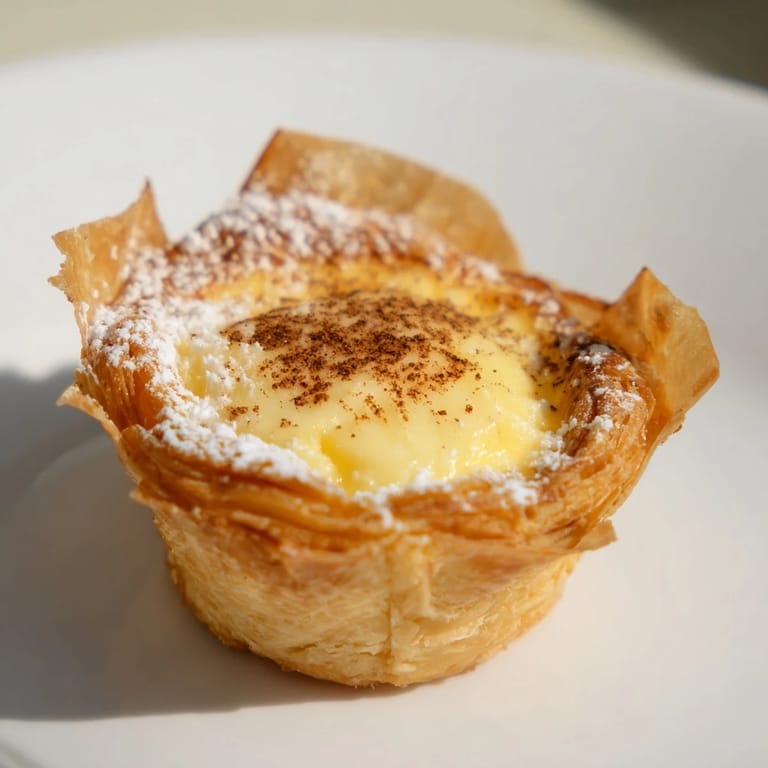
 My first Portuguese egg tart arrived on a ceramic plate at a small Lisbon café, steam still rising from the crispy phyllo cup. The moment I bit through that delicate, butter-kissed pastry into the silky cinnamon custard, I understood why these humble treats have been beloved for centuries. Years later, I decided to recreate that exact memory in my own kitchen, and what started as a weekend experiment became something I now make whenever I want to transport myself back to those cobblestone streets.
I made these for my neighbor's book club on a rainy Tuesday evening, and watching them close their eyes on that first bite—that perfect moment of quiet joy—made me realize food really is a love language. They barely made it to the next morning; one guest asked for the recipe and admitted she'd already started planning her version.
Ingredients
- Phyllo pastry: Twelve sheets of this paper-thin wonder are your canvas for crispness; keep them under a slightly damp towel while working so they don't dry out and crack.
- Unsalted butter, melted: Sixty grams brushed between each layer creates those shattered, golden layers that make people gasp.
- Whole milk: One cup forms the base of your custard and keeps it from becoming too heavy.
- Cornstarch: Two tablespoons is the secret to a custard that's silky rather than grainy or too thin.
- Heavy cream: Half a cup adds luxury and richness without overwhelming the delicate cinnamon notes.
- Granulated sugar: One hundred grams sweetens the custard to that perfect balance where cinnamon sings.
- Egg yolks: Four large yolks create that velvety texture that makes these tarts legendary.
- Pure vanilla extract: One teaspoon adds depth without competing with the cinnamon.
- Ground cinnamon: Half a teaspoon in the custard plus one teaspoon for topping is the flavor heart of this dessert.
- Salt: Just a pinch heightens all the other flavors and keeps sweetness from feeling flat.
- Powdered sugar: Two tablespoons for a final snowy finish that catches the light beautifully.
Tired of Takeout? 🥡
Get 10 meals you can make faster than delivery arrives. Seriously.
One email. No spam. Unsubscribe anytime.
Instructions
- Get Your Oven Ready:
- Preheat to 200°C (400°F) and let it reach full temperature; this ensures your phyllo cups crisp properly without overcooking.
- Build Your Pastry Cups:
- Brush each phyllo sheet lightly with melted butter—you want coverage without pooling. Stack three sheets per cup, rotating them slightly so layers are staggered, then cut into squares and press gently into your muffin tin, letting corners peek out for texture.
- Pre-Bake the Shells:
- Bake for 8 to 10 minutes until they turn pale gold and feel crispy to the touch. Set them aside and don't worry if they look delicate; they'll firm up as they cool.
- Build Your Custard:
- Whisk milk and cornstarch together until absolutely smooth—lumps will haunt you, so take your time. Add cream, sugar, egg yolks, vanilla, cinnamon, and salt, whisking until everything is combined.
- Cook the Custard:
- Pour into your saucepan and whisk constantly over medium heat for 5 to 7 minutes; you'll feel it transform from pourable liquid to something with gentle body. Stop the moment it coats the back of a spoon in a thin, silky layer.
- Fill and Bake:
- Divide warm custard among your phyllo cups while it's still warm, then bake for 8 to 10 minutes until the custard sets with just a slight jiggle at the center. The tops should be lightly golden.
- Finish with Drama:
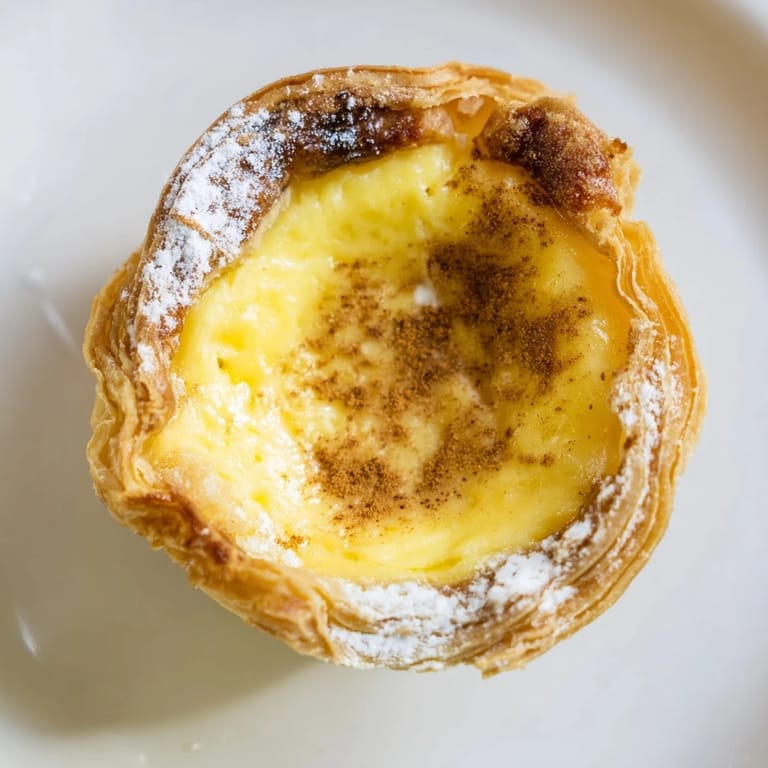
- Cool briefly, then dust with cinnamon and powdered sugar; serve while still warm for that magical contrast between crispy pastry and soft custard.
 Pin it
 There's a moment near the end of baking when the kitchen fills with cinnamon-scented warmth and you hear the gentle sizzle of custard setting, and that's when you know this recipe isn't just about dessert—it's about creating a sensory memory someone will remember forever.
Why These Tarts Feel Special
Portuguese egg tarts exist at the crossroads of practicality and indulgence; they were born from cooks making the most of simple ingredients, yet somehow they feel fancy enough for celebrations. The cinnamon is never overpowering—it whispers rather than shouts, which is what makes you keep reaching for another. They've survived centuries and countless variations because the core formula is honest: buttery pastry, creamy custard, warmth, and restraint.
Timing and Temperature Tips
Temperature matters deeply here; a slow oven won't crisp your phyllo, and a too-hot oven will burn it before the custard sets. The sweet spot is medium-high heat that's been properly preheated. If you notice the tops browning too fast, tent loosely with foil during the final bake, and always use an oven thermometer because ovens lie more than you'd think.
Storage and Serving Wisdom
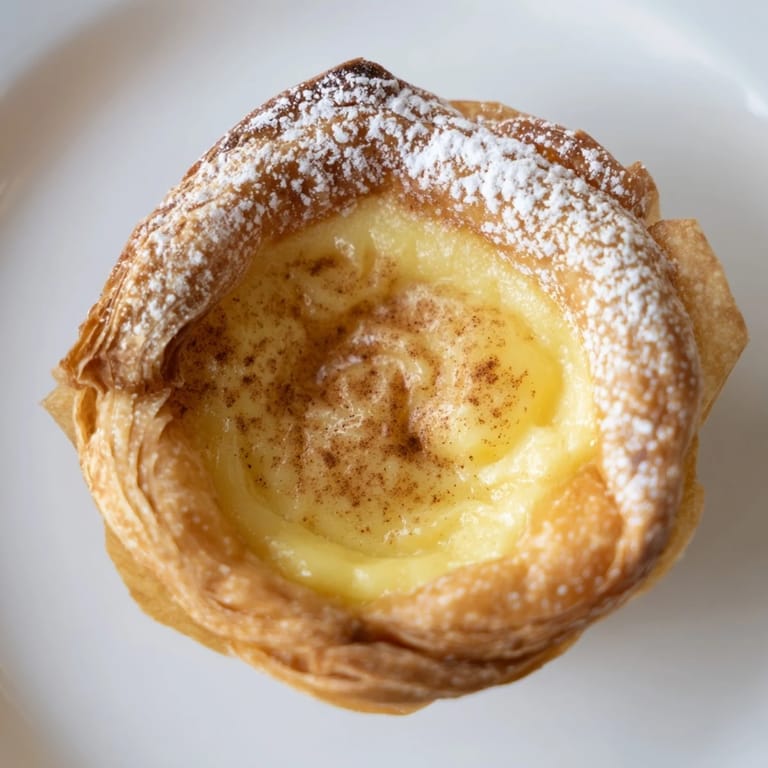
These tarts are best enjoyed slightly warm, when the custard is still soft and the pastry still holds a crackle, but they're also delicious chilled as a next-morning treat. Store them in an airtight container in the refrigerator for up to three days, and briefly reheat in a 160°C oven to restore crispness. They pair beautifully with espresso for an afternoon treat, or with a chilled glass of white port if you want to lean into tradition.
- Serve them within a few hours of baking if you want maximum contrast between crispy and creamy.
- A light dusting of cinnamon right before serving is more elegant than pre-dusting ahead of time.
- If guests ask for the recipe, confidently tell them it's easier to make than it looks—because it genuinely is.
 Pin it
 These Portuguese egg tarts taught me that simplicity is sometimes the deepest form of sophistication. Make them, share them, and let someone else experience that small moment of pure joy you felt in that Lisbon café.
Recipe FAQs
- → What phyllo pastry do I use?
Use thin, flaky phyllo sheets that crisp nicely when baked. Stacking three sheets ensures sturdy cups.
- → How do I prevent phyllo from drying out?
Brush each sheet lightly with melted butter before stacking to keep layers tender and golden.
- → Can I flavor the custard differently?
Yes, adding a pinch of lemon zest enhances brightness, balancing the cinnamon and vanilla notes.
- → What’s best for serving temperature?
Serve slightly warm for optimal creamy texture and crisp pastry contrast, though room temperature works too.
- → How to store leftovers?
Keep refrigerated and briefly reheat in the oven to restore crispness before serving.