 Pin it
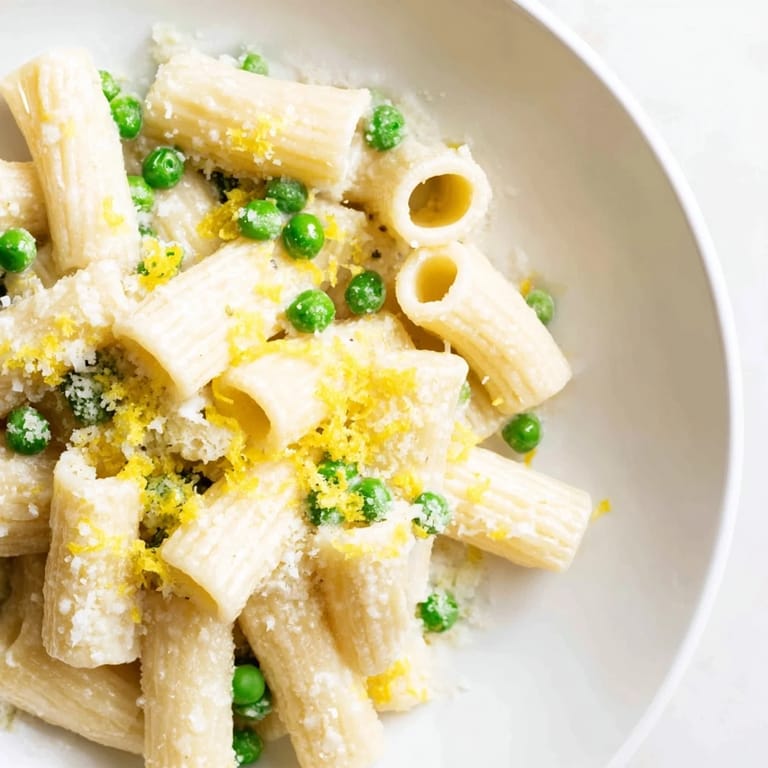
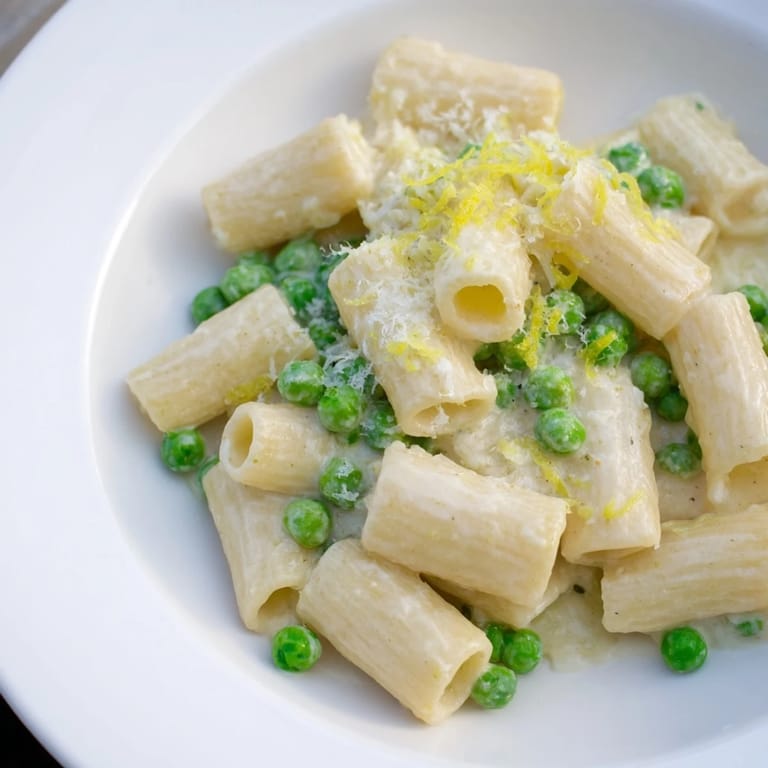
 The first time I made this pea and lemon ricotta pasta, it was completely by accident. I had bought ricotta for lasagna that never happened, and a bag of peas was taking up valuable freezer space. What came out of that desperate pantry raid has since become my go-to when I need something that feels special but only takes twenty minutes.
Last March, my sister came over feeling completely defeated by work deadlines. I put on a pot of water, zested a lemon, and within twenty minutes we were sitting at the kitchen table with steaming bowls of this bright green-speckled pasta. She took three bites, put down her fork, and said this was exactly what she needed but had not known to ask for.
Ingredients
- 400 g rigatoni: The ridges and tube shape catch the creamy ricotta sauce perfectly
- 250 g ricotta cheese: Whole milk ricotta gives the silkiest results, though part skim works too
- 1 lemon, zested plus 2 tbsp juice: Use a microplane to avoid the bitter white pith
- 2 tbsp extra-virgin olive oil: Adds richness and helps the sauce coat the pasta
- 1 small garlic clove, finely grated: Grating releases more flavor than mincing
- 40 g grated Parmesan cheese: Adds umami depth to balance the bright lemon
- 200 g green peas: Frozen peas work beautifully and are often sweeter than fresh
- Salt and black pepper: Taste as you go, since the ricotta and Parmesan are already salty
Tired of Takeout? 🥡
Get 10 meals you can make faster than delivery arrives. Seriously.
One email. No spam. Unsubscribe anytime.
Instructions
- Boil the pasta:
- Bring a large pot of salted water to a rolling boil and cook the rigatoni until al dente. Before draining, scoop out about 120 ml of that starchy cooking water, then drain the pasta.
- Blanch the peas:
- If using fresh peas, add them to the boiling water for the last 2 minutes of pasta cooking time. Frozen peas can go in during the final 2 minutes as well, just until bright green and tender.
- Make the ricotta sauce:
- In a large mixing bowl, whisk together the ricotta, lemon zest, lemon juice, olive oil, grated garlic, Parmesan, salt, and pepper until smooth and creamy. Add a splash of the reserved pasta water if it seems too thick.
- Combine everything:
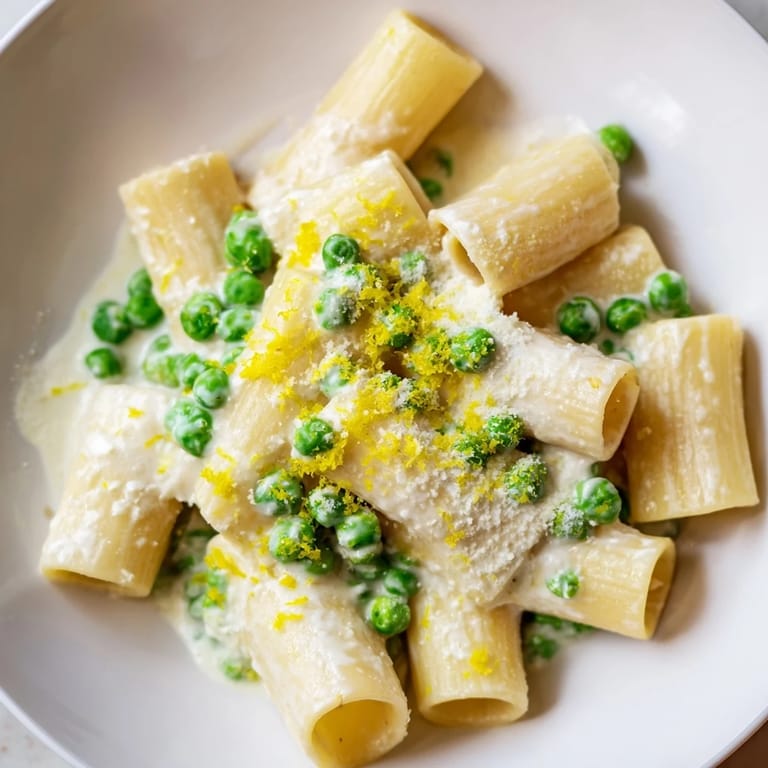
- Add the hot drained pasta and peas directly into the bowl with the ricotta mixture. Toss vigorously, adding more pasta water as needed until you have a silky sauce coating every piece of rigatoni.
- Serve it up:
- Plate immediately while steaming hot, topped with extra Parmesan, fresh basil or mint leaves, and an additional sprinkle of lemon zest if you want extra brightness.
 Pin it
 What started as a desperate use-up-ingredients dinner has evolved into a recipe I make at least once a month. There is something about the combination of sweet peas and bright lemon that feels impossibly fresh, like eating sunshine.
Perfecting the Sauce Consistency
The ricotta mixture might look thick and almost curdled in the bowl, but do not panic. That hot pasta water and the heat from the noodles work magic together. I keep a ladle in the pasta water so I remember to reserve some before draining, which sounds obvious but I have definitely forgotten and regretted it.
Getting the Balance Right
Lemon can be tricky because intensity varies so much. Start with half the juice, taste the sauce, then add more from there. You want brightness that makes your mouth water slightly, not something that makes you pucker. The same goes for garlic, grated it is potent stuff.
Making It Your Own
This pasta is endlessly adaptable based on what you have or what you are craving. I have made countless variations and some of my favorite accidents have turned into regular rotations.
- A handful of fresh mint leaves torn on top makes it sing even louder
- Toast some pine nuts or walnuts in a dry pan until golden for crunch
- A pinch of red pepper flakes cuts through the richness beautifully
 Pin it
 Sometimes the simplest recipes are the ones that stick around the longest, and this bright, creamy pasta has earned its permanent place in my weekly rotation.
Recipe FAQs
- → Can I use frozen peas instead of fresh?
Absolutely. Frozen peas work wonderfully and actually save time. Simply blanch them in the boiling pasta water for 2-3 minutes during the final minutes of cooking, then drain with the pasta. They thaw instantly and absorb flavors beautifully.
- → What makes the sauce creamy without heavy cream?
Ricotta cheese provides natural creaminess while remaining light. The reserved pasta cooking water adds starch that helps create a silky coating, and olive oil enriches the texture. This combination produces a luxurious sauce that feels indulgent but stays fresh and bright.
- → Can I prepare this dish ahead of time?
This pasta is best served immediately while hot, as the sauce coats the pasta perfectly. However, you can prep components in advance: combine the ricotta mixture earlier and cook the pasta fresh when ready. The flavors won't develop the same way if left sitting after tossing.
- → What pasta shapes work best as substitutes?
Penne and fusilli are excellent alternatives to rigatoni. Both have ridges or texture that trap the creamy sauce effectively. Short pasta shapes generally work better than long noodles for this style of sauce, ensuring even coating in every bite.
- → How do I make this vegan-friendly?
Replace ricotta with cashew cream or store-bought vegan ricotta for a plant-based version. Use nutritional yeast or vegan Parmesan alternative for the same savory depth. The lemon and peas remain naturally vegan, making this an easy adaptation without sacrificing flavor or creaminess.
- → What enhances this dish with additional flavors?
Red chili flakes add gentle heat and complexity to balance the brightness. Toasted pine nuts provide crunch and richness. Fresh mint offers a cool contrast to the warm pasta, while additional lemon zest brightens each forkful. Experiment with what appeals to your palate.