 Pin it
 There's a particular afternoon in late August when my kitchen smelled like roasting eggplant and I realized why Sicilians never apologize for simplicity. A friend had just returned from Palermo with stories about eating this exact dish at a tiny trattoria near the harbor, where an elderly woman stirred the sauce like she was conducting an orchestra. That conversation planted something in my head, and now whenever I make Pasta alla Norma, I'm back in that kitchen with the oven door cracked open, watching the eggplant turn golden while the tomato sauce bubbles quietly beside it.
I made this for my neighbor once when she was going through a rough patch, and she sat at my kitchen counter watching the whole process unfold. She asked why I didn't just use jarred eggplant or skip straight to delivery, and I realized I couldn't explain it—some dishes just ask to be made with your own hands. When she took the first bite, her shoulders actually relaxed, and she asked for the recipe before she'd even finished the bowl.
Ingredients
- Eggplant (1 large, about 400 g, cut into 2 cm cubes): Cut it uniform so it roasts evenly; smaller pieces cook faster but larger ones hold their shape better—find your own balance.
- Extra-virgin olive oil (3 tbsp total): This is not the place to compromise; good oil flavors the whole dish, so use something you'd actually enjoy on bread.
- Canned whole peeled tomatoes (800 g): Crush them by hand into the sauce—it takes an extra minute but gives you better texture and a connection to what you're cooking.
- Garlic cloves (2, finely chopped): Chop them small so they dissolve into the sauce rather than sitting there as little hard bits.
- Medium onion (1, finely chopped): The onion is your foundation; cook it slowly so it becomes sweet and builds flavor without scorching.
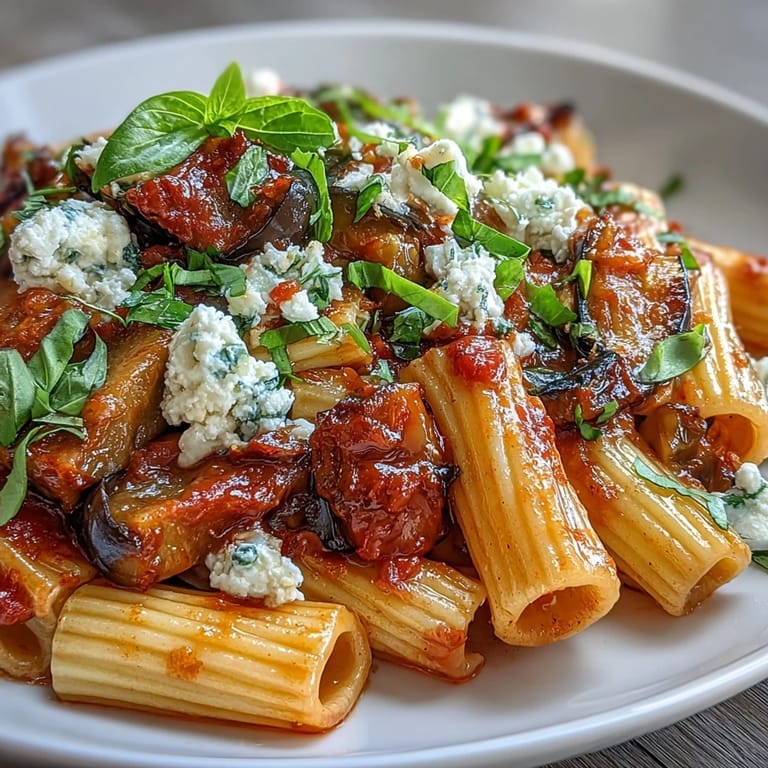
- Rigatoni or penne pasta (400 g): The ridges and tubes catch sauce beautifully; you want something that holds onto every bit of flavor.
- Ricotta salata (80 g, grated or crumbled): This is what separates this from any other pasta pomodoro—salty, sharp, almost tangy, it's the final grace note.
- Fresh basil (1 small bunch, leaves picked): Add it at the very end so it stays vibrant; basil loses its magic if you cook it too long.
- Dried chili flakes (1/2 tsp, optional): Even if you don't use it, have it nearby—sometimes a dish whispers that it wants a tiny bit of heat.
- Salt and freshly ground black pepper: Taste as you go; this sauce builds seasoning gradually, not all at once.
Tired of Takeout? 🥡
Get 10 meals you can make faster than delivery arrives. Seriously.
One email. No spam. Unsubscribe anytime.
Instructions
- Heat your oven and prep the eggplant:
- Set the oven to 220°C (430°F) and let it come to temperature. While it's warming, toss your eggplant cubes with 2 tablespoons of olive oil and a good pinch of salt, making sure each piece gets coated—this is how they'll turn golden instead of steaming.
- Roast the eggplant until golden:
- Spread the eggplant on a baking tray in a single layer and slide it into the oven. After about 15 minutes, give everything a gentle stir or turn, then let it keep roasting for another 10-15 minutes until the edges are caramelized and the centers are completely tender. You'll know it's ready when a fork slides through without any resistance.
- Build the tomato sauce base:
- While the eggplant roasts, warm 1 tablespoon of olive oil in a large skillet over medium heat. Add your chopped onion and let it soften for about 5 minutes, stirring occasionally—you want it to become translucent and sweet, not browned. Stir in the garlic and chili flakes (if using) and cook for just a minute until the smell hits you, then you'll know it's done.
- Add tomatoes and let them simmer:
- Crush your canned tomatoes by hand or with the back of a spoon—this breaks them into the sauce rather than leaving big chunks. Pour everything into the skillet with its juice and season with salt and pepper. Let it simmer uncovered for 15-20 minutes, stirring now and then, until the sauce thickens and the raw tomato taste mellows into something deeper.
- Cook the pasta to al dente:
- Bring a large pot of salted water to a boil and cook your pasta according to package instructions, but taste it a minute or two before the package says to pull it out. It should have just a tiny bit of resistance in the center—not soft, not hard, just right. Before you drain it, scoop out about 1/2 cup of the starchy cooking water; you'll need this later to help everything come together.
- Combine eggplant and sauce:
- By now your roasted eggplant should be golden and waiting. Add it to the tomato sauce along with most of your fresh basil and stir gently so nothing breaks apart. Simmer everything together for just 2 minutes—this lets the flavors get to know each other.
- Toss pasta with sauce:
- Add your drained pasta to the skillet and toss everything together with a wooden spoon or tongs, using some of that reserved pasta water to create a silky, cohesive sauce that coats each piece. Add water gradually—you can always add more, but you can't take it out.
- Serve with ricotta salata and fresh basil:
- Divide the pasta among bowls and top each one with a generous handful of ricotta salata and a few more fresh basil leaves. Serve immediately while everything is still hot and the basil is still bright.
 Pin it
 Years later, that friend still texts me photos from her garden when her eggplants are ready, and we've become the kind of people who coordinate harvests and cooking nights. This dish taught me that the simplest meals often mean the most because there's nowhere to hide—every ingredient has to pull its weight, and somehow that honesty makes people want to sit at your table a little longer.
Why Roasting Makes All the Difference
Roasting eggplant instead of frying it or leaving it raw changes everything about how it tastes and feels. The high heat caramelizes the outside, concentrating natural sugars and creating texture that's almost crispy at the edges while staying tender within. I used to boil it thinking that would make it softer, but roasting is what actually gives it dignity—it becomes a proper ingredient instead of just taking up space on the plate.
The Sauce That Does the Work
This sauce isn't complicated, but it asks you to be patient with it. The onion needs time to soften and turn sweet, the tomatoes need to break down and lose their sharp edge, and the whole thing needs those 15-20 minutes of gentle simmering to transform from separate ingredients into something cohesive. I've learned not to rush it by turning up the heat; the sauce will tell you when it's ready by becoming darker, thicker, and deeper in flavor.
Finishing Touches That Matter
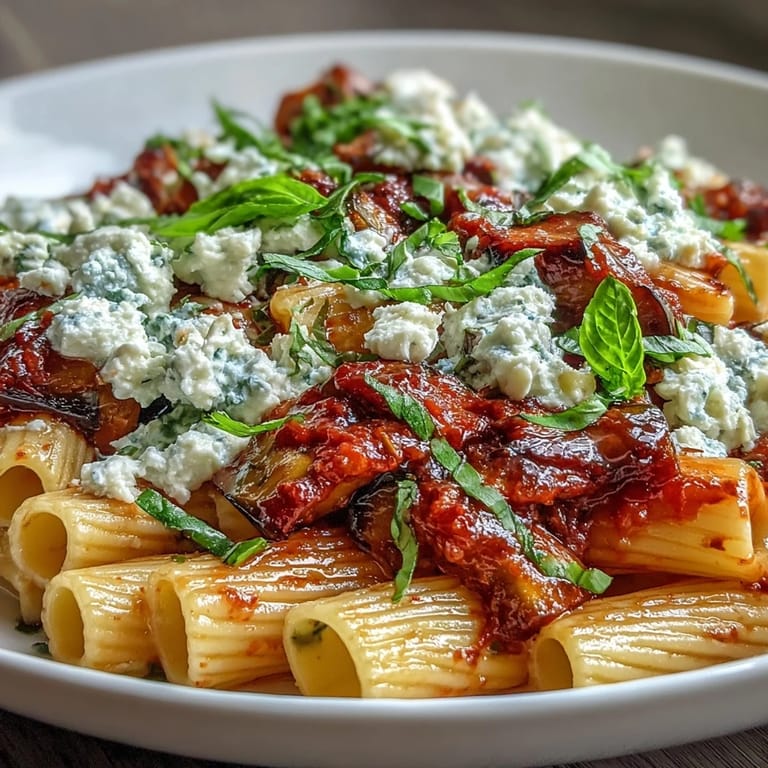
This is a dish that rewards attention in the final moments. Fresh basil added too early loses its brightness and turns dark; added at the very end, it's alive on your tongue. The ricotta salata needs to be generous, crumbled or grated right over the top so the heat slightly softens it and releases its salty, tangy flavor across every bite.
- Always reserve pasta water before draining—it's the difference between a dry dish and a silky one.
- Grate or crumble the ricotta salata fresh over the top rather than mixing it in, so you get pockets of salty intensity.
- Serve immediately while everything is hot and the basil is still fragrant.
 Pin it
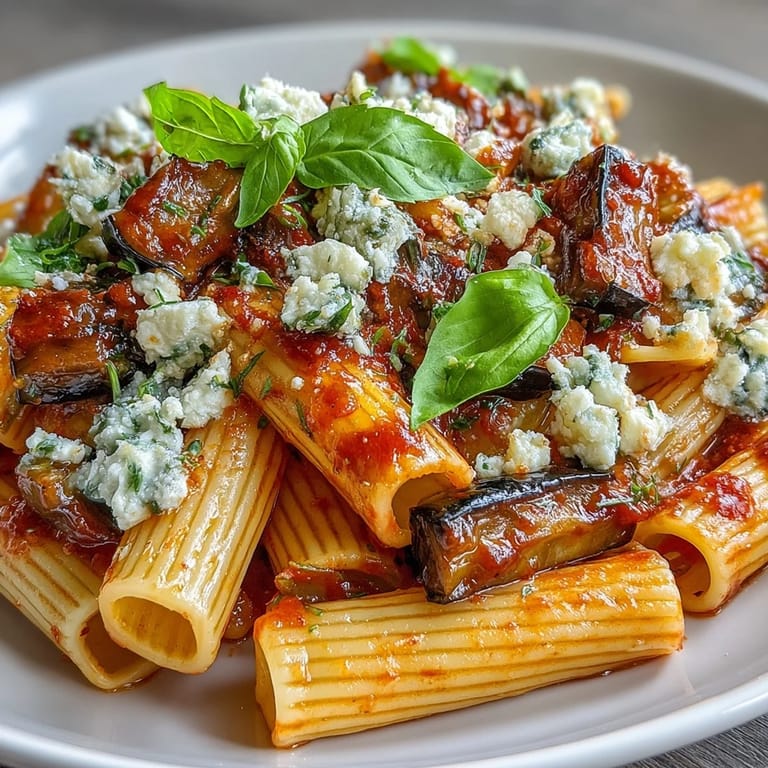
 This is the kind of food that reminds you why cooking matters—not because it's complicated, but because it's genuine. Every time you make it, you're choosing to spend time on something real.
Recipe FAQs
- → What does Pasta Alla Norma mean?
The dish originates from Catania, Sicily, and is named after the opera 'Norma' by Vincenzo Bellini. Legend says a chef compared the creation to the opera's perfection, though the exact historical origin remains a beloved part of Sicilian culinary folklore.
- → Can I substitute ricotta salata?
Yes. Pecorino Romano provides a similar salty kick, while feta offers a tangier alternative. For a vegan version, omit the cheese entirely or use a plant-based crumbly cheese substitute.
- → Do I need to salt the eggplant before cooking?
Traditional methods often call for salting and draining eggplant to remove bitterness, but modern varieties are typically mild enough that roasting directly works perfectly well, saving time without sacrificing flavor.
- → What pasta shapes work best?
Rigatoni and penne are ideal because their ridges and hollow centers catch the sauce. Paccheri or ziti also work beautifully. The key is choosing a shape with enough surface area to hold the chunky eggplant and tomato sauce.
- → Can I make this ahead?
The sauce and roasted eggplant actually improve after a day in the refrigerator, allowing flavors to meld. Store separately and reheat gently before tossing with freshly cooked pasta for the best texture.