 Pin it
 The first time I tasted harissa properly was at a crowded market stall in a friend's kitchen while she was experimenting with North African spices. She had this small red paste that smelled like both comfort and danger, and when she mixed it into a simple tomato base with chickpeas, something clicked. I remember thinking how a single ingredient could transform an ordinary weeknight dinner into something that tasted like an adventure. Now whenever I make this pasta, that same magic happens in my own kitchen.
I made this for a friend who had just gone vegetarian and was nervous about it, convinced pasta would taste boring from now on. When she took that first bite, her whole face changed. She asked for seconds before finishing her first bowl, and I watched her realize that eating plant-based didn't mean sacrificing flavor or satisfaction. That moment mattered more to me than any recipe rating ever could.
Ingredients
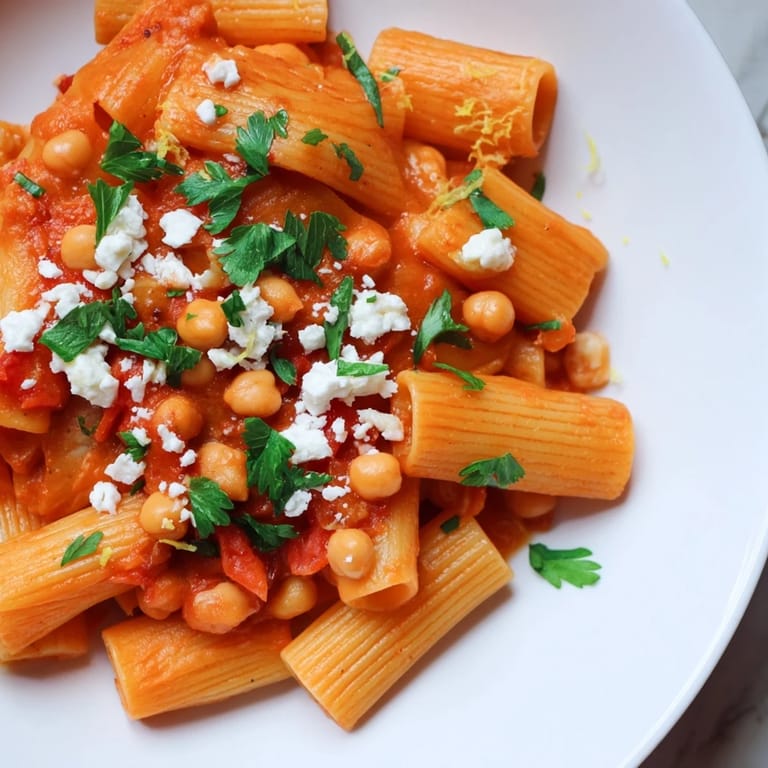
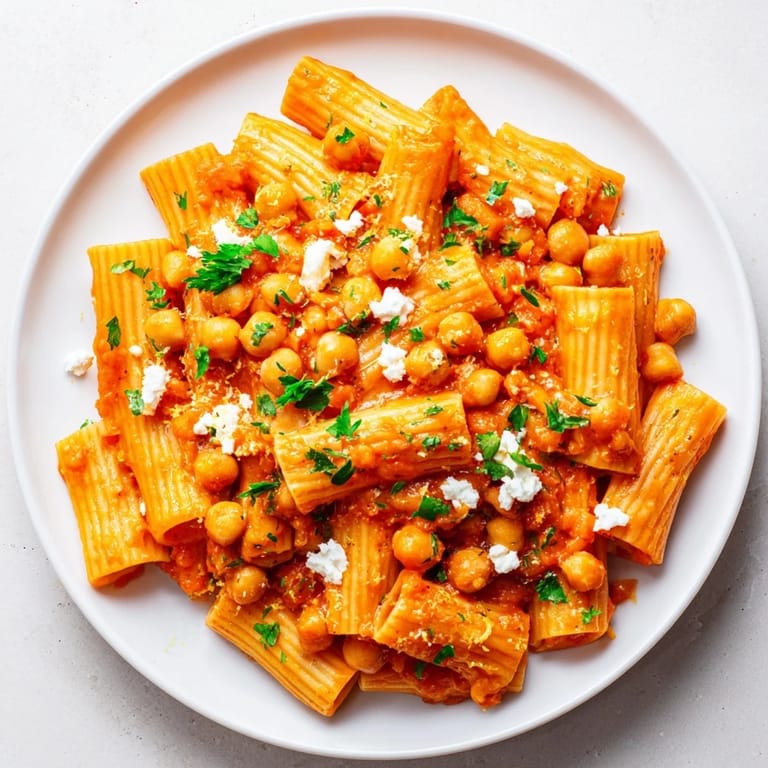
- Dried short pasta (350 g): Penne, rigatoni, or fusilli all work beautifully because their shapes catch and hold the sauce instead of letting it slide off.
- Olive oil (2 tbsp): This is your base for building flavor, so don't skip it or use something with a weak character.
- Medium onion, finely chopped: The sweetness here balances the spice in a way that makes people ask what your secret is.
- Garlic cloves (3), minced: Three is the magic number—enough to matter, not so much that it bullies the other flavors.
- Harissa paste (2 tbsp): This is the star, so taste yours first because some brands pack more heat than others, and you can always add more.
- Ground cumin (1 tsp) and smoked paprika (1/2 tsp): These two create warmth and depth that makes you forget this dish is completely vegetarian.
- Canned diced tomatoes (1 can, 400 g): Don't drain them—those juices are part of your sauce.
- Chickpeas (2 cans, 400 g each), drained and rinsed: Rinsing them matters because it removes the starchy liquid that would make your sauce gluey.
- Vegetable broth or water (1/2 cup): This lets the sauce breathe and prevents it from turning into paste.
- Lemon zest and juice: This is what wakes everything up at the end—don't skip it.
- Fresh parsley or cilantro (2 tbsp), chopped: Cilantro brings a brightness that parsley can't match, but use what you love.
- Feta cheese, crumbled (optional): If you add it, it softens slightly from the heat and creates these little pockets of tang.
Tired of Takeout? 🥡
Get 10 meals you can make faster than delivery arrives. Seriously.
One email. No spam. Unsubscribe anytime.
Instructions
- Get the pasta water boiling:
- Fill a large pot with salted water—it should taste like the sea. This is where your pasta absorbs its flavor, so don't be timid with the salt.
- Cook your pasta:
- Follow the package timing but pull it out about a minute before it says al dente, because it'll keep cooking slightly when you toss it with the hot sauce. Always save that pasta water; it's liquid gold for adjusting your sauce.
- Build your flavor base:
- Heat olive oil in a large skillet over medium heat, then add your chopped onion. You'll know it's ready when it turns translucent and smells sweet, which usually takes about 5 minutes.
- Wake up the spices:
- Add garlic, harissa, cumin, and paprika all at once, stirring for exactly one minute so the heat releases their essential oils without burning anything. Your kitchen should smell incredible right now.
- Build the sauce:
- Pour in the tomatoes with their juice, add the rinsed chickpeas and broth, then let it all simmer gently for 10 to 12 minutes while the flavors get to know each other. Stir occasionally so nothing sticks to the bottom.
- Bring it together:
- Add your drained pasta directly to the skillet, tossing everything together so every piece gets coated. If it looks too thick, splash in some of that reserved pasta water a little at a time.
- Finish with brightness:
- Remove from heat, stir in the lemon zest, lemon juice, and fresh herbs. Taste it now and adjust salt, pepper, or harissa until it sings.
- Serve:
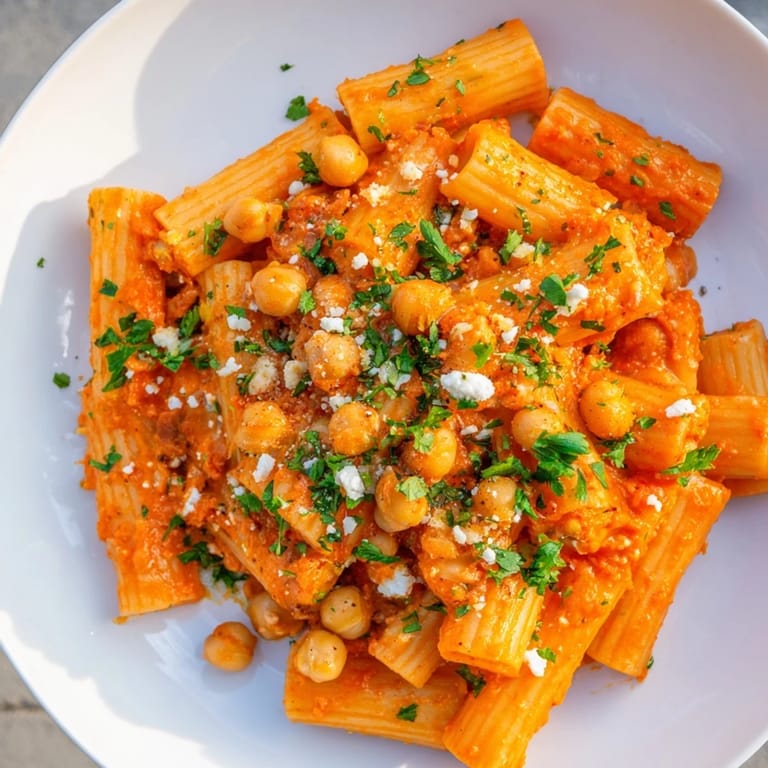
- Divide into bowls while everything's still steaming, then scatter more herbs and crumbled feta on top if you're using it.
 Pin it
 My partner brought home a bottle of harissa one winter when everything felt a bit gray, and suddenly our dinners became reasons to sit at the table and actually talk instead of just eating. This dish became our default when we wanted something that felt special without complicated technique. It turned Tuesday nights into something we looked forward to.
The Secret Life of Harissa
Harissa is a North African paste made from roasted red peppers, spices, and heat, and once you understand it, you'll start sneaking it into everything. It's not just a condiment; it's a flavor multiplier that makes simple ingredients taste like they've been simmering for hours. The best harissa has complexity underneath the spice—you'll taste rose, coriander, and caraway if you listen for them. Some versions come smoky, some bright and fresh, and some that hit like a wall of heat. The way to know what you have is to taste a tiny smear on your finger before committing to a full measurement.
Why This Works As a Vegetarian Dish
Chickpeas might seem like the safe vegetarian choice, but they're actually meaty in the best way—they have enough body and texture that your brain doesn't notice the absence of anything else. The spices do most of the heavy lifting by creating that depth usually provided by long-cooked meat, and the lemon at the end adds the kind of brightness that makes everything feel alive. When you watch people eat this, you see them slow down and actually taste it instead of just fueling up.
Making It Your Own
This recipe is a foundation, not a rulebook, and the beauty of it is how forgiving it is when you improvise. Some nights I add roasted vegetables like bell peppers or zucchini, other nights I swap the chickpeas for white beans or add a handful of spinach at the end. The harissa-tomato base holds everything together, so you can really only make mistakes if you forget to taste and adjust as you go.
- If you want to dial up the heat, add extra harissa or a pinch of fresh chili flakes, but taste after each addition so you don't accidentally make it unpleasantly fiery.
- Leftovers transform beautifully—cold the next day it's almost like a different dish, more like a salad, especially if you stir in an extra squeeze of lemon.
- A splash of good red wine stirred into the sauce while it simmers adds a subtle depth that people won't be able to name but will definitely notice.
 Pin it
 This pasta has become my answer when someone asks what I cook on nights when I want something that feels like caring about myself. It's simple enough that you won't dread making it, but interesting enough that you'll actually enjoy eating it.
Recipe FAQs
- → Can I adjust the spice level in this dish?
Absolutely. You can reduce the harissa paste or add extra chili flakes for more heat to suit your preference.
- → What pasta types work best here?
Short pasta shapes like penne, rigatoni, or fusilli are ideal as they hold the sauce well.
- → Is there a way to make this dish gluten-free?
Yes, simply substitute regular pasta with your preferred gluten-free version.
- → Can I swap chickpeas for another ingredient?
White beans or roasted vegetables can be used as alternatives for variation in texture and flavor.
- → How should I store leftovers?
Keep leftovers in an airtight container in the fridge for up to 3 days. Reheat gently on the stove or microwave.
- → What wines pair well with this dish?
This dish pairs nicely with crisp white wines or a chilled rosé to complement its spicy, vibrant flavors.