 Pin it
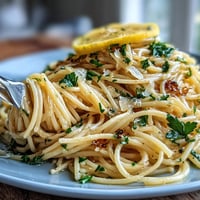
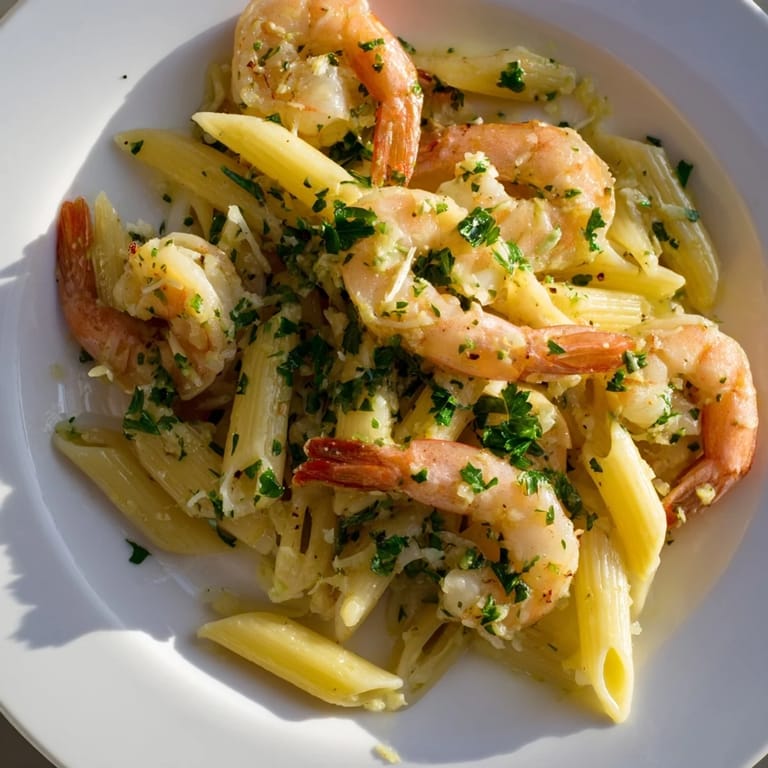
 There's something about the smell of garlic hitting hot butter that makes you forget how tired you are. I discovered this dish on a Thursday night when I had exactly thirty minutes before guests arrived and a vague memory of a Roman trattoria. The shrimp went in, turned pink almost instantly, and suddenly the kitchen smelled like a proper meal instead of panic.
My partner asked for seconds before I'd even sat down to eat my first bite, and I realized this wasn't just quick dinner—it was the kind of food that disappears from plates without comment, which somehow says everything.
Ingredients
- Large shrimp, 400 g peeled and deveined: Buy them frozen if fresh feels intimidating—they thaw quickly and cook more evenly than you'd think.
- Penne pasta, 350 g: The tubes catch the sauce better than thin strands would, which is the whole point here.
- Garlic, 4 cloves finely minced: Don't pre-mince from a jar for this one; the fresh version matters more than you might expect.
- Shallot, 1 small finely chopped: It adds sweetness that straight onion can't quite manage.
- Fresh parsley, 2 tbsp chopped: Add it at the end so it stays bright green instead of turning sad and dark.
- Lemon zest and juice: The zest gives you flavor without the sourness; the juice adds the actual zing.
- Unsalted butter, 60 g: This is your sauce base, so quality matters—use real butter, not margarine.
- Parmesan cheese, 2 tbsp grated plus more: Freshly grated, not the kind in the shaker can.
- Extra-virgin olive oil, 2 tbsp: It prevents the butter from browning too fast and tastes better too.
- Salt, pepper, and red pepper flakes: The flakes are optional but they whisper the word spicy without shouting.
Tired of Takeout? 🥡
Get 10 meals you can make faster than delivery arrives. Seriously.
One email. No spam. Unsubscribe anytime.
Instructions
- Get the pasta started:
- Fill a large pot with salted water and bring it to a rolling boil—don't be shy with the salt, it seasons the pasta from the inside. While you wait, everything else can happen at the same time.
- Prep the shrimp:
- Pat them completely dry with paper towels and give them a small pinch of salt and pepper. Moisture is their enemy when you're trying to get them golden.
- Sear the shrimp fast:
- Heat a large skillet over medium-high and add 1 tablespoon each of oil and butter. When it shimmers, lay the shrimp flat in a single layer and don't touch them—let them sit for a minute or two until the bottoms turn opaque and golden. Flip carefully and give them another minute.
- Build the sauce:
- Move the shrimp to a clean plate and add the remaining oil and butter to the same skillet. Toss in your shallot first for about sixty seconds, then add the minced garlic and let it toast just until it becomes fragrant—don't burn it or everything tastes bitter.
- Add the bright notes:
- Drop in your red pepper flakes if you want them, then the lemon zest and juice. Give everything a quick stir so it all gets to know each other.
- Bring it together:
- Drain your pasta and add it straight to the skillet, tossing it through the garlicky butter. Add splashes of that pasta water you reserved until you get a sauce that looks like it's coating everything instead of drowning it.
- Finish and serve:
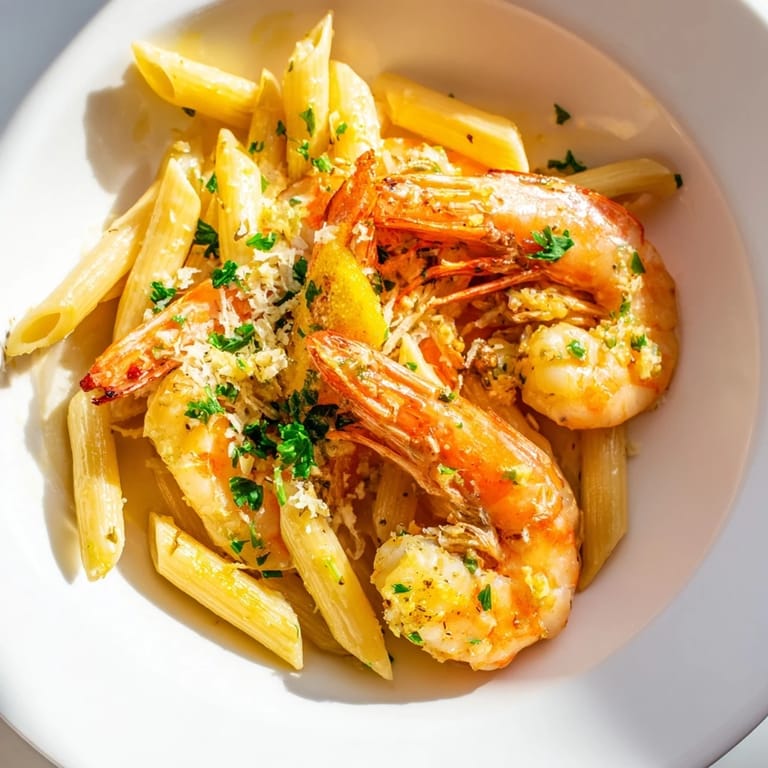
- Return the shrimp to the skillet along with the parsley and Parmesan. Toss gently so you don't break the shrimp into pieces, taste for salt and pepper, and serve immediately while it's still warm and the butter is still glossy.
 Pin it
 My neighbor smelled it cooking through our shared wall and showed up at my door with wine. We ended up making another batch and eating on the balcony while it got dark, and that's when I understood why simple food cooked well creates these small moments.
Why Fresh Garlic Changes Everything
I used jarred garlic once out of convenience and the dish tasted flat, like someone had whispered the recipe instead of singing it. Fresh garlic hits the hot butter and releases this sharp, sweet fragrance that pre-minced versions can't deliver. It's one of those ingredients where spending an extra thirty seconds makes a real difference.
The Timing Game
Everything in this dish needs to happen in roughly the same window—the pasta reaches al dente just as the shrimp finish cooking, and the sauce comes together while everything's still hot. It taught me that some of the best meals aren't about complexity but about rhythm. If you get scattered with your prep work, the pasta sits there getting soft while you're still hunting for the lemon.
Variations That Actually Work
I've made this with linguine when penne wasn't around, and the sauce coats it differently but tastes just as good. I've added a splash of cream when I wanted something richer, and it changes the mood without changing the core of the dish. A friend made it with scallops instead of shrimp and somehow it became their signature.
- Try finishing it with fresh chili instead of red pepper flakes for a different kind of heat.
- A small splash of dry white wine in the butter adds depth without making it taste boozy.
- Swapping in tarragon for parsley gives you a completely different flavor that somehow still works.
 Pin it
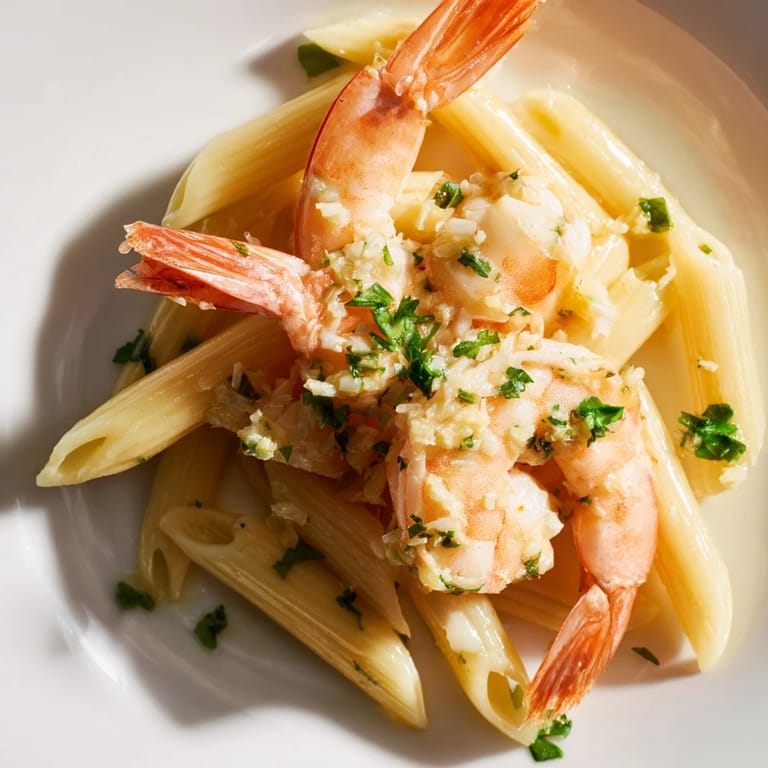
 This is the kind of recipe that becomes your go-to because it works, because it feels effortless once you've made it twice, and because good food doesn't have to be complicated to be worth eating. Make it for someone you like.
Recipe FAQs
- → What type of shrimp is best for this dish?
Large, peeled, and deveined shrimp work best for even cooking and easy eating. Fresh or thawed frozen shrimp both suit well.
- → Can I substitute the penne with other pasta types?
Yes, linguine, spaghetti, or fusilli can be used depending on your texture preference. Adjust cooking times accordingly.
- → How can I make the sauce creamier?
Add a splash of cream or reserved pasta water to the pan when tossing the pasta, creating a richer, silky sauce.
- → What wines pair well with this dish?
Crisp white wines like Sauvignon Blanc or Pinot Grigio complement the garlic butter and seafood flavors beautifully.
- → Is it possible to make this gluten-free?
Yes, use gluten-free pasta varieties instead of traditional wheat penne to accommodate gluten sensitivities.