 Pin it
 There's something magical about throwing together a charcuterie board at the last minute—no recipes to follow, no stress, just instinct and whatever's in your fridge. My best evenings have started this way: a Tuesday night when a friend texted that they were stopping by, or when I realized I'd rather graze than actually cook. This board became my answer to the question that hits around 6 PM: what do we eat without spending two hours in the kitchen? It turns out, the best meals are sometimes the ones you assemble rather than cook.
I remember my mom rolling her eyes the first time I called this "dinner," until she bit into a piece of aged cheddar paired with a grape and suddenly understood. There's an elegance to a well-made board that has nothing to do with effort and everything to do with intention—choosing your cheeses like you're introducing friends, placing the prosciutto so it drapes just right, making sure someone gets a little honey with their brie. It became the thing I made when I wanted to feel put-together without the performance of it.
Ingredients
- Brie cheese (50 g): This is your creamy anchor—the one that melts on your tongue and makes everyone slow down between bites.
- Sharp cheddar cheese (50 g): It cuts through the richness with a little tang, which is why it's essential rather than decorative.
- Goat cheese (50 g): The wildcard that adds texture and a subtle funk that people either love immediately or ask about.
- Prosciutto (50 g): Paper-thin and salty, it's the bridge between the cheeses and everything else—don't skip the quality here.
- Salami (50 g): The familiar comfort that makes people feel at home on the board.
- Seedless grapes (1/2 cup): They provide sweetness and a refreshing break, plus they're visually generous without taking up much space.
- Apple slices (from 1/2 apple): Tart and crisp, they're perfect against creamy cheese and salty meat in ways that feel naturally balanced.
- Mixed berries (1/4 cup): Use whatever's in season or looks good—strawberries, blueberries, raspberries all work because you're after pops of color and tartness.
- Crackers or baguette slices (12–16): The foundation that holds everything together; slightly toasted baguette is lovely if you have time.
- Mixed nuts (1/4 cup): They add crunch and earthiness—almonds and walnuts are classics, but cashews or candied pecans work too.
- Honey or fig jam (2 tbsp): This is the secret flourish that makes people wonder if you somehow planned this more than you did.
- Olives (6–8): Briny and bold, they anchor one corner and remind everyone this isn't just dessert dressed up as dinner.
- Fresh herbs like thyme or rosemary (optional): A small sprinkle of something green makes the whole thing feel intentional rather than thrown together, even though it is.
Tired of Takeout? 🥡
Get 10 meals you can make faster than delivery arrives. Seriously.
One email. No spam. Unsubscribe anytime.
Instructions
- Set your stage:
- Pull out your board or plate and give yourself some breathing room—this is easier when you're not cramped. If you have time, chill the board for five minutes; everything stays fresher and looks more inviting.
- Anchor with cheese:
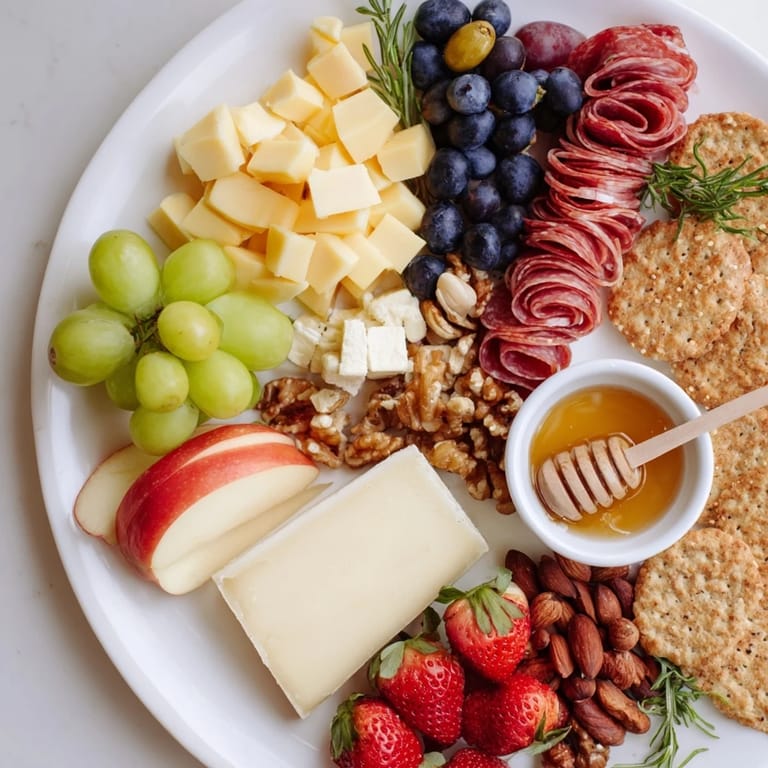
- Place each cheese in its own area of the board, spacing them like they're meeting new people at a party. You want someone to be able to easily cut from each without mixing flavors.
- Drape the meats:
- Fold or loosely roll the prosciutto and salami so they catch the light and look a little elegant. Nestle them next to the cheese in a way that makes you smile.
- Scatter the fruits:
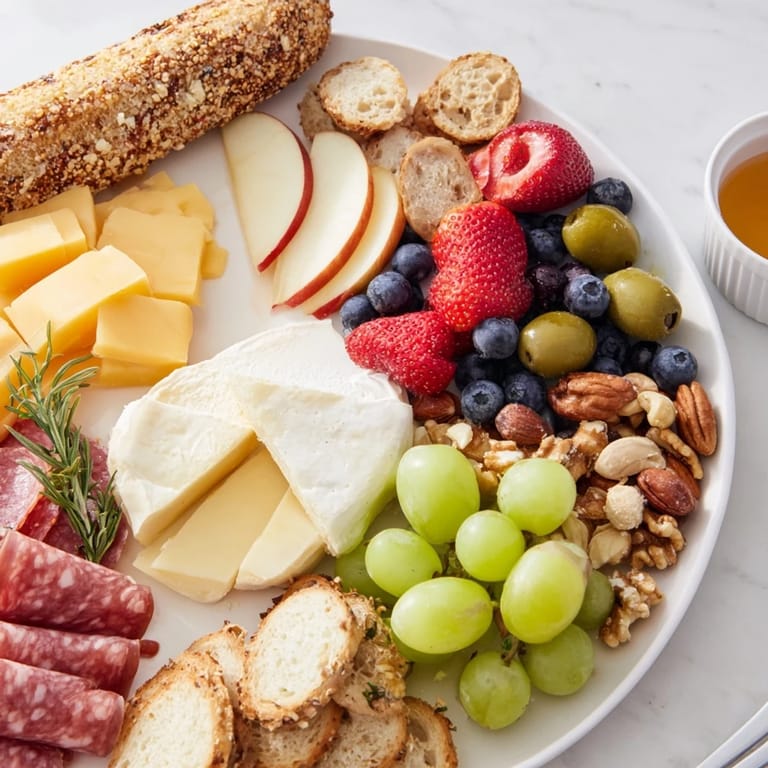
- Group the grapes, apple, and berries in small clusters rather than spreading them evenly—it looks more abundant that way, and people naturally reach for grouped things.
- Fill the gaps:
- Tuck crackers, nuts, and olives into the spaces, making sure no ugly wood shows through if you're using a board. This is where you use your eye rather than follow a recipe.
- Add the finish:
- Pour honey or jam into a small bowl and nestle it somewhere accessible, then shower a little thyme or rosemary on top if you're feeling fancy. Serve right away while everything is still cold and crisp.
 Pin it
 The moment I knew this was something special was when someone who'd never been interested in food spent twenty minutes just talking and snacking, forgetting to pull out their phone. A charcuterie board is less about the food and more about permission—permission to eat without a plan, to try something new next to something safe, to sit and talk without the performance of a formal meal. It became my secret weapon for turning a regular evening into something that felt intentional.
The Art of Pairing
Once you understand that a board is really just a conversation between flavors, you can trust your instincts. Salty meat needs sweet fruit. Creamy cheese needs something crisp. Sharp cheddar whispers to a tart apple, while brie calls for honey like they were always meant to find each other. The olives remind you that not everything needs to be pretty or sweet—some things just need to be true.
Building Your Personal Signature
The beauty of a board is that it changes every time you make it, which means it's never boring and always reflects what you love right now. In winter I lean toward roasted grapes and candied nuts. In summer I'm all about fresh berries and light cheeses. It's the easiest recipe to make your own because there are no rules except the one rule: make something you'd actually want to eat.
Serving and Storage Wisdom
A charcuterie board is meant to be eaten fresh, ideally within an hour of assembly, when everything is still cold and the textures are crisp. If you're making it ahead, keep the components separate and assemble right before guests arrive—it takes ten minutes and looks so much better than something that's been sitting out.
- Cheese and meats can be left out for up to two hours, but your guests probably won't let it last that long.
- Store leftover cheeses wrapped in parchment (not plastic) in the fridge, and eat within a few days for best flavor.
- Extra nuts and crackers belong in airtight containers where they'll stay crisp and ready for the next impromptu gathering.
 Pin it
 This board became my answer to the question of what hospitality looks like when you don't have much time or energy. It's proof that the most meaningful meals aren't always the ones you cook for hours—sometimes they're the ones you assemble with intention and share without pretense.
Recipe FAQs
- → What cheeses work best for this board?
Brie, sharp cheddar, and goat cheese provide a nice balance of creamy, sharp, and tangy flavors that complement cured meats and fruits.
- → Can I replace the meats with vegetarian options?
Yes, simply omit cured meats and add marinated vegetables or extra cheeses for a flavorful vegetarian variation.
- → How should I arrange the components on the board?
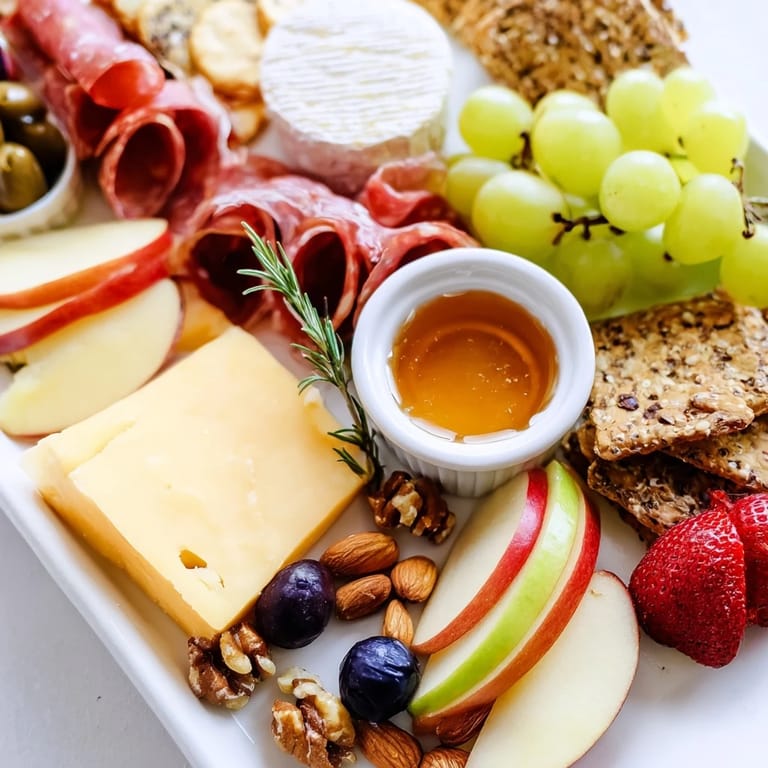
Space cheeses evenly, fold or roll meats nearby, cluster fresh fruits around, then fill gaps with crackers, nuts, and olives for visual appeal.
- → What are good accompaniments to serve with this board?
Honey or fig jam adds sweetness, while mixed nuts and olives provide texture and savory contrast.
- → Can I prepare this snack board ahead of time?
It's best served fresh but you can prep ingredients in advance and assemble just before serving to maintain freshness.