 Pin it
 My kitchen smelled like butter and onions for three days straight once because I couldn't stop tweaking this soup. It started as a simple weeknight rescue after I grabbed too many leeks at the farmers market, not really knowing what to do with them. The first batch turned out thinner than I wanted, so I made it again the next night with more potatoes. By the third attempt, I had it just right: silky, rich, and comforting enough to make me forget I was originally just trying to use up vegetables.
I made this for my sister when she came over feeling defeated after a long week, and she sat at my counter in silence, just eating bowl after bowl. She didn't say much, but she texted me two days later asking for the recipe, which is the highest compliment I've ever gotten. Now every time she visits, she half-jokingly asks if I have any of that leek soup around, and sometimes I do, because it freezes beautifully and I've learned to always make extra.
Ingredients
- Unsalted butter: This gives the soup its foundational richness and helps the leeks soften without browning, which would make the flavor too sharp.
- Olive oil: Mixed with butter, it keeps the fat from burning and adds a subtle fruity note that balances the sweetness of the leeks.
- Leeks: Use only the white and light green parts, and wash them thoroughly between the layers because they trap dirt like nothing else.
- Yellow onion: Adds a deeper, rounder sweetness that leeks alone can't quite achieve, making the base more complex.
- Garlic: Just enough to add warmth without overpowering the delicate leek flavor, which is easy to do if you're heavy-handed.
- Yukon Gold potatoes: These break down into the creamiest purée and give the soup body without needing flour or a roux.
- Celery: A small addition that adds a grassy, aromatic note and keeps the soup from tasting one-dimensional.
- Vegetable broth: Low-sodium is key because you want control over the salt, especially if you're adding bacon or seafood later.
- Whole milk: Stir this in at the end for a velvety finish, or swap for cream if you want something truly indulgent.
- Bay leaf: It adds an earthy, almost floral background note that you'd miss if it weren't there, even if you can't name it.
- Fresh thyme: Bright and herbaceous, it cuts through the richness and makes the whole pot smell like a French bistro.
- Kosher salt and black pepper: Season in layers as you go, tasting and adjusting, because every broth and every potato batch is a little different.
- Seafood, bacon, or herbs: These are your choose-your-own-adventure toppings, turning a simple soup into something special depending on your mood or your audience.
Tired of Takeout? 🥡
Get 10 meals you can make faster than delivery arrives. Seriously.
One email. No spam. Unsubscribe anytime.
Instructions
- Start with the aromatics:
- Melt the butter with the olive oil in a large pot over medium heat, then add the leeks and onion. Let them cook slowly for 5 to 6 minutes, stirring now and then, until they're soft and fragrant but not turning golden.
- Add the garlic and celery:
- Toss in the minced garlic and diced celery, stirring for about 2 minutes until the kitchen smells warm and inviting. Don't let the garlic brown or it'll taste bitter.
- Build the base:
- Add the diced potatoes, bay leaf, thyme, salt, and pepper, stirring everything together so the potatoes get coated in the buttery vegetables. Pour in the broth and bring the whole pot to a rolling boil.
- Simmer until tender:
- Lower the heat, cover the pot, and let it simmer gently for 20 to 25 minutes. The potatoes should be so soft they practically fall apart when you press them with a spoon.
- Purée the soup:
- Fish out the bay leaf, then use an immersion blender to purée the soup right in the pot until it's smooth and creamy. If you like a little texture, stop blending when it's still slightly chunky.
- Finish with milk:
- Stir in the milk or cream and gently reheat the soup without letting it boil. Taste it now and add more salt or pepper if it needs it.
- Optional seafood upgrade:
- If you're adding cooked shrimp, scallops, or fish, fold them in gently and let them warm through for 2 to 3 minutes. Don't overcook or the seafood will turn rubbery.
- Serve and garnish:
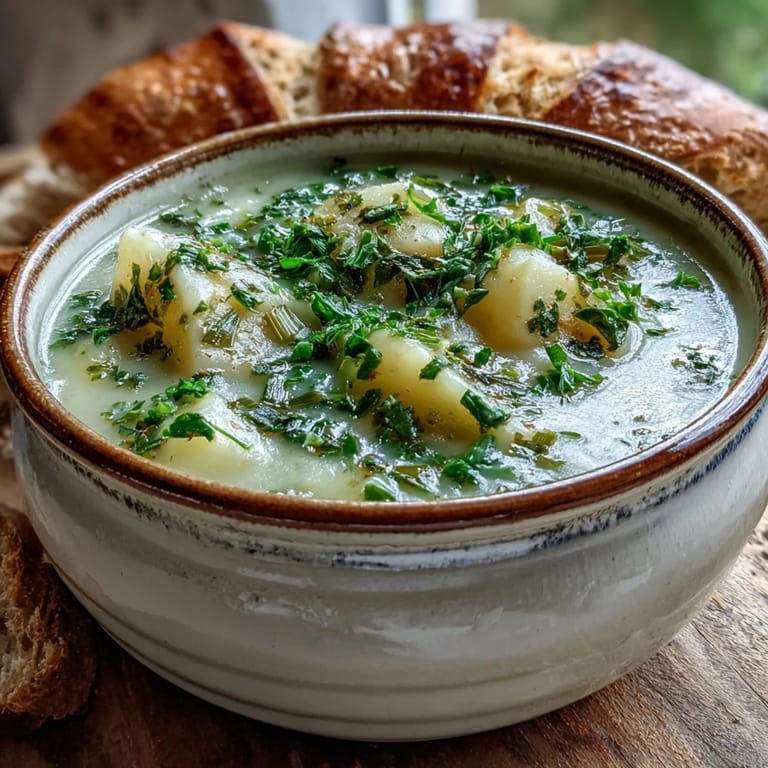
- Ladle the soup into bowls and top with crumbled bacon, fresh chives, or parsley. Serve it hot with crusty bread on the side.
 Pin it
 One winter evening, I made this soup and served it with a loaf of sourdough I'd baked earlier that week. My neighbor stopped by unexpectedly, stayed for a bowl, and ended up sitting at my table for two hours talking about everything and nothing. The soup went cold in our bowls, but neither of us minded, and I realized that's what good food does: it gives people a reason to stay a little longer.
Making It Your Own
This soup is a blank canvas, and I've learned to treat it that way. Sometimes I stir in a handful of frozen corn or peas just before serving for color and sweetness. Other times I roast the potatoes first for a deeper, caramelized flavor, which takes longer but makes the soup taste like it simmered all day. If I'm feeling indulgent, I swirl in a spoonful of crème fraîche at the end, and if I want it lighter, I skip the milk entirely and let the potatoes do all the thickening.
What to Serve Alongside
I almost always serve this with a thick slice of crusty bread, the kind with a chewy crust and an airy crumb that soaks up the soup perfectly. A simple green salad with a sharp vinaigrette balances the richness, and if I'm making it a full meal, I'll add a glass of chilled Sauvignon Blanc, which has enough acidity to cut through the creaminess. Once I served it with garlic butter crostini, and my guests couldn't stop dipping them in, so now I make extra bread just in case.
Storage and Reheating
This soup keeps beautifully in the fridge for up to four days, and I've found it tastes even better the next day after the flavors have had time to settle. I store it in a large glass container and reheat it gently on the stove, adding a splash of broth or milk if it's thickened too much. It also freezes well for up to three months, though I leave out the milk if I'm freezing it and stir that in fresh when I reheat.
- Let the soup cool completely before transferring it to airtight containers for the fridge or freezer.
- Reheat slowly over low heat, stirring occasionally, so the texture stays smooth and creamy.
- If you've added seafood, eat it within two days and don't freeze it, as seafood doesn't hold up well after thawing.
 Pin it
 This soup has become my quiet comfort, the thing I make when I need to feel grounded or when I want to share something warm with someone I care about. It's proof that simple ingredients, treated with a little patience and attention, can turn into something that feels like home.
Recipe FAQs
- → Can I make this soup ahead of time?
Yes, this soup stores beautifully in the refrigerator for up to 4 days. Prepare the base without adding seafood or bacon, then reheat gently and add your chosen protein just before serving.
- → What type of potatoes work best?
Yukon Gold potatoes are ideal for their creamy texture and buttery flavor. Russet potatoes work well too, though they create a slightly thicker consistency when blended.
- → How do I properly clean leeks?
Slice the leeks lengthwise, then rinse thoroughly under cold water, separating the layers to remove any trapped dirt or sand. Use only the white and light green parts for the best flavor.
- → Can I freeze this soup?
The soup freezes well for up to 3 months, though it's best to freeze the base before adding dairy. Thaw overnight in the refrigerator and stir in milk or cream when reheating.
- → What seafood works best for the chowder variation?
Shrimp, scallops, and firm white fish like cod or halibut are excellent choices. Add them already cooked to the hot soup and warm through for just 2-3 minutes to prevent overcooking.
- → How can I make this soup vegan?
Replace butter with additional olive oil and use unsweetened plant-based milk such as oat or cashew milk. Coconut milk adds extra richness if desired.