 Pin it
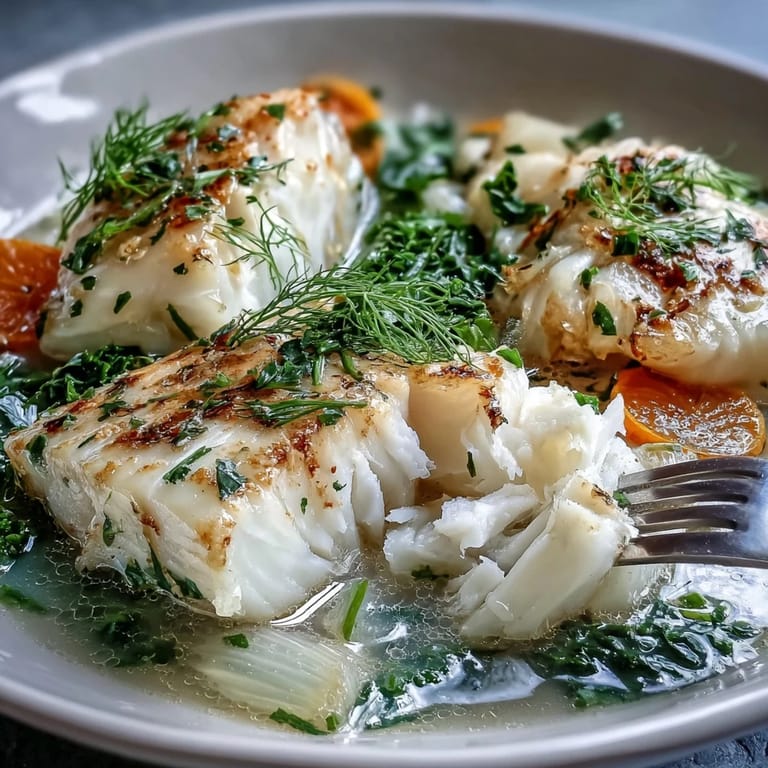
 There's something almost meditative about watching cod fillets turn from translucent to opaque in a shimmering pool of wine and stock. I discovered this dish by accident one winter evening when I had fennel from the farmers market, a lonely orange on the counter, and absolutely no appetite for anything heavy. Twenty minutes later, my kitchen smelled like a Mediterranean coastal town, and I understood why simple food done right needs no apologies.
I made this for my sister after she mentioned wanting to eat healthier, and she spent more time asking about the fennel than actually eating it. By the end of dinner, she was using bread to chase every drop of that golden broth, and I realized this wasn't health food pretending to taste good—it was just honestly delicious.
Ingredients
- Fresh cod fillets: Look for fillets that are bright white with no browning, and buy them the same day you plan to cook—delicate fish doesn't forgive age.
- Fennel bulb: The fronds are pure garnish gold, so don't discard them; they taste like anise meets fresh herbs and add serious finishing magic.
- Orange: Use a firm one with thin skin so you can slice it beautifully; the zest and juice are what make this dish sing.
- Dry white wine: Something you'd actually drink matters here; cheap wine tastes cheap in the broth.
- Fish or vegetable stock: Low-sodium is crucial because you're reducing the liquid slightly and don't want to oversalt.
- Olive oil: Extra virgin changes the flavor profile entirely, so don't skip the good stuff.
Tired of Takeout? 🥡
Get 10 meals you can make faster than delivery arrives. Seriously.
One email. No spam. Unsubscribe anytime.
Instructions
- Build your aromatics base:
- Heat olive oil until it shimmers slightly, then add fennel, shallot, and garlic. Let them soften for a few minutes until the kitchen starts smelling incredible and the fennel loses its raw crunch.
- Create the poaching liquid:
- Add orange slices, zest, bay leaf, wine, and stock, then bring to a gentle simmer—you want lazy bubbles, not a rolling boil, because we're coaxing flavor, not bullying it.
- Prepare the cod:
- Pat the fillets dry and season them lightly with salt and pepper right before they hit the liquid, which keeps the seasoning on the surface rather than washing away.
- Poach with patience:
- Nestle the cod into the simmering liquid, cover, and lower the heat to medium-low. The fillets will go from opaque at the edges and work their way through, which takes about 8 to 10 minutes depending on thickness.
- Plate with care:
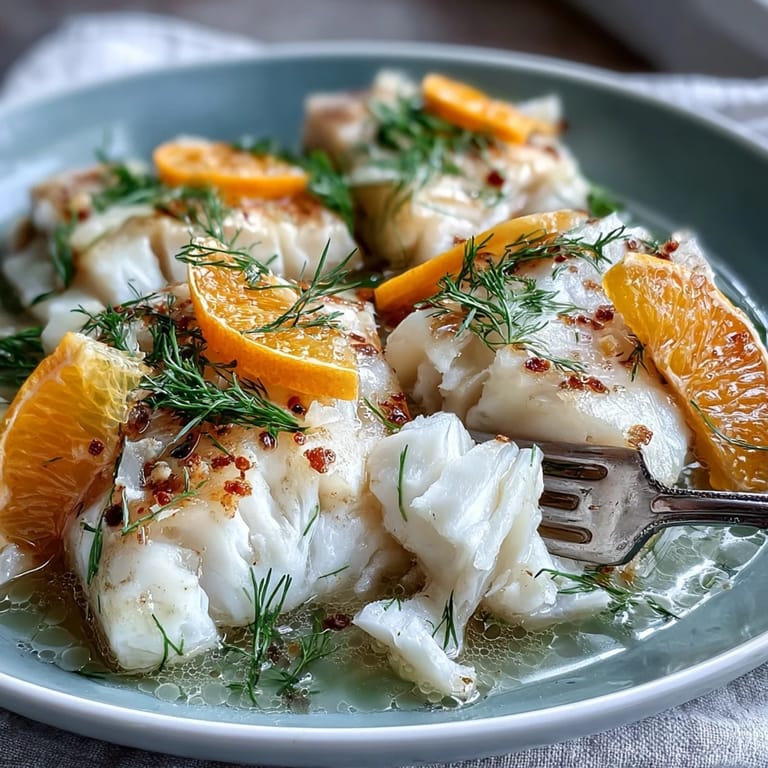
- Use a slotted spatula to transfer cod and fennel gently—these fillets will flake if you're rough with them. Spoon some of that liquid and a few orange slices over everything.
- Finish with intention:
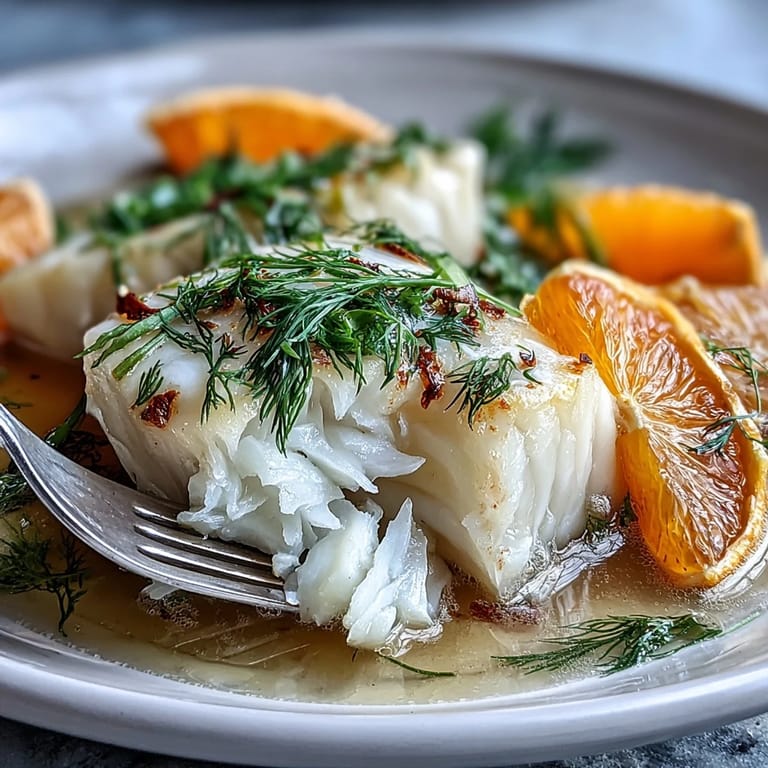
- Scatter fennel fronds (those reserved green bits) over the top, add extra orange zest for brightness, and a crack of black pepper for depth. Serve immediately while the warmth is still there.
 Pin it
 My partner came home as I was plating this, caught a whiff of orange and wine in the air, and immediately pulled up a chair without being asked. That's when I knew this wasn't just a recipe—it was the kind of food that says welcome without needing words.
The Magic of Fennel
Most people approach fennel with suspicion because it tastes intensely licorice-forward when raw, but poaching transforms it completely. The gentle heat mellows that sharpness into something almost candy-sweet and silky, making it a secret weapon for people who think they don't like fennel. Once you see this transformation happen in your own pan, you'll start finding reasons to cook with fennel constantly.
Why Poaching Works Better Than Baking
Poaching keeps cod moist because the fish is surrounded by liquid the entire time, whereas oven-baked fish can dry out if you're not watching the clock obsessively. There's also something psychologically comforting about a one-pan dinner that builds flavor as it cooks, and you can taste what's happening instead of hoping it's done.
Serving and Pairing Ideas
This dish doesn't need much because the poaching liquid does all the heavy lifting, but crusty bread or boiled potatoes are genuine friends here—they soak up that golden broth and make the meal feel complete. You could also serve it over soft polenta or alongside roasted green beans if you want to stay lighter. The beauty is that it works for a quiet weeknight dinner or feels elegant enough for when you want to impress someone without spending three hours cooking.
- Crusty bread or potatoes are essential for soaking up every last drop of that aromatic broth.
- Fresh thyme sprigs or a splash of Pernod can be stirred into the liquid if you want to add extra depth without overwhelming the dish.
- Substitute the cod with halibut, haddock, or sea bass if that's what looks fresh at your fishmonger.
 Pin it
 This is the kind of meal that reminds you why cooking matters—not because it's complicated, but because it transforms simple ingredients into something that tastes like care. Make it once and you'll find yourself reaching for it whenever you want to eat well without the fuss.
Recipe FAQs
- → What type of fish works best for poaching?
Firm, mild white fish like cod, halibut, haddock, or sea bass are ideal for poaching. They hold their shape well in the liquid and absorb flavors without becoming mushy. Cod is particularly well-suited due to its delicate texture and ability to remain flaky during gentle cooking.
- → Can I make this dish dairy-free?
Yes, this preparation is naturally dairy-free. The richness comes from olive oil and the poaching liquid rather than cream or butter. It's also gluten-free when you ensure your stock and wine are certified gluten-free.
- → How do I know when the cod is done?
The cod is ready when it turns opaque throughout and flakes easily with a fork. This typically takes 8-10 minutes of gentle poaching. Avoid overcooking, as the fish will become dry and less tender. The residual heat will continue cooking it slightly after removal from the liquid.
- → What sides complement this dish?
Steamed potatoes, crusty bread, or rice work wonderfully to soak up the aromatic broth. A simple green salad with lemon vinaigrette provides fresh contrast. Grilled asparagus or roasted vegetables also pair nicely with the Mediterranean flavors.
- → Can I prepare the poaching liquid in advance?
You can slice the fennel, orange, and shallots ahead of time and store them in the refrigerator. The broth can also be prepared partially in advance—just bring it back to a gentle simmer before adding the fish. This makes the dish convenient for entertaining.
- → What wine should I use for poaching?
A dry white wine like Sauvignon Blanc, Pinot Grigio, or a dry French white works well. Avoid overly oaky wines, as they can overpower the delicate fish. The wine should be something you'd enjoy drinking, as its flavor will concentrate slightly during cooking.