 Pin it
 There's something about assembling a Mediterranean salad that feels less like cooking and more like painting with vegetables. My neighbor once brought over a version of this one summer afternoon, and I watched her toss it together with such ease and confidence that I realized salads didn't have to be boring or apologetic. She just grabbed what was in her crisper, drizzled some olive oil and vinegar, and somehow it tasted like sunshine and salt air. That's when I started understanding that a great salad isn't about perfection—it's about letting fresh ingredients shine together.
I made this for my book club years ago on a hot June evening when no one wanted anything heavy, and somehow it became the thing people still ask me about. One friend went back for thirds while we were debating the ending of whatever novel we were supposed to read, and I remember thinking that a salad that makes people forget about the main course must be doing something right. The feta crumbles, the way the dressing pooled at the bottom of the bowl, the conversations that stretched into the evening—that salad was part of all of it.
Ingredients
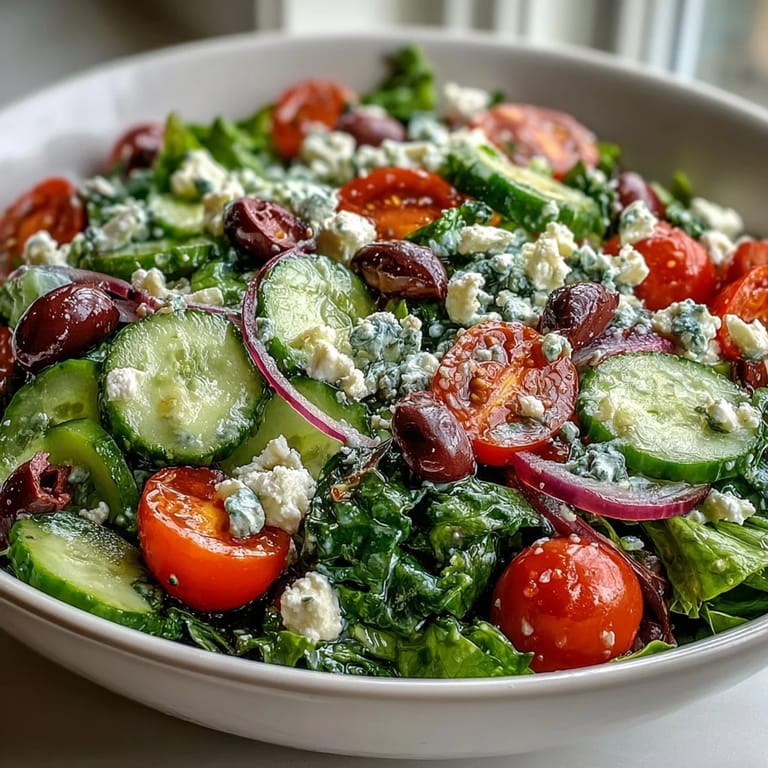
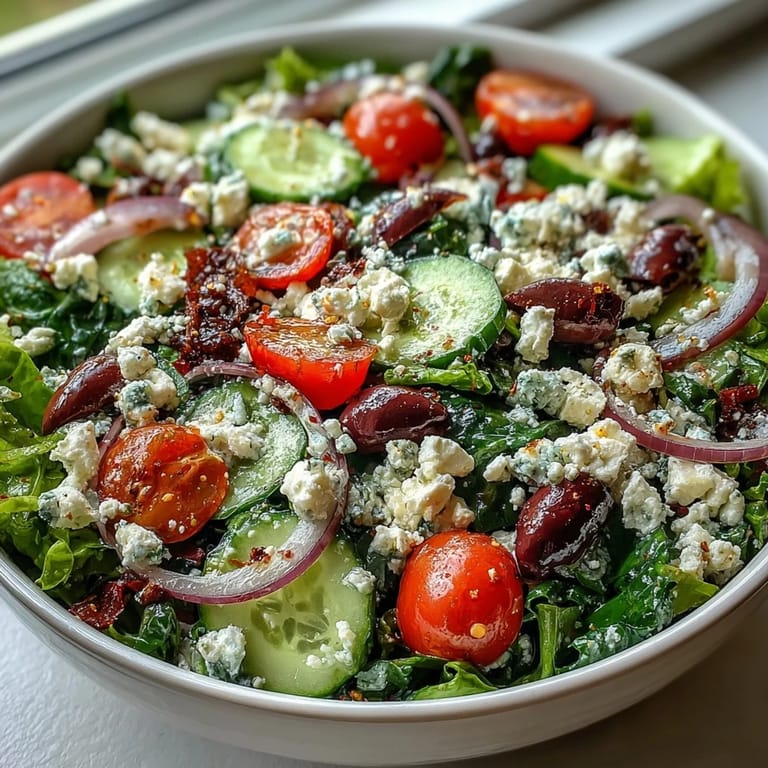
- Spring mix: Use whatever combination of baby lettuces, arugula, and spinach feels fresh in your market—the variety in textures and flavors is what makes this bowl interesting rather than monotonous.
- Cherry tomatoes: Halving them by hand instead of using a knife somehow makes them softer and juicier when they absorb the dressing.
- Cucumber: Slice it thin enough that it stays tender but thick enough that you get that satisfying bite.
- Kalamata olives: These briny little gems are non-negotiable—they're what transforms a simple salad into something with character.
- Red onion: Slice it paper-thin so it mellows slightly as it sits rather than overpowering everything with sharp bite.
- Feta cheese: Crumble it with your fingers just before serving so the pieces stay irregular and hold the dressing better than if you cube it.
- Extra-virgin olive oil: This is one place where you really taste the difference between good and mediocre—choose something you'd actually enjoy on its own.
- Red wine vinegar: The acidity brightens everything and keeps the whole bowl from feeling heavy.
- Dried oregano: It's the quiet background voice that whispers Mediterranean into every bite.
- Garlic clove: Fresh minced garlic matters here because it becomes almost sweet as the acid in the vinegar softens it.
- Dijon mustard: A tiny amount helps the dressing emulsify so it clings to the greens instead of pooling at the bottom.
Tired of Takeout? 🥡
Get 10 meals you can make faster than delivery arrives. Seriously.
One email. No spam. Unsubscribe anytime.
Instructions
- Gather your greens and vegetables:
- In a large bowl, combine the spring mix, tomatoes, cucumber, olives, and red onion—nothing fancy, just get them all in one place. If you're doing this ahead of time, keep everything dry and separate until the last moment so the greens don't start wilting.
- Build the dressing with intention:
- In a small bowl or jar, whisk together the olive oil, red wine vinegar, oregano, minced garlic, mustard, salt, and pepper until it looks thick and emulsified rather than separated. The mustard is your secret weapon here—it helps bind everything together so you get a real dressing, not just oily vinegar.
- Dress at the last second:
- Drizzle the dressing over everything and toss gently with your hands or two forks—gentle matters because you want the greens to stay crisp and intact rather than bruised. If you toss too aggressively, the delicate leaves will break down and turn soggy.
- Finish and serve immediately:
- Top everything with your crumbled feta and get it to the table right away while the contrast between cool salad and creamy cheese is still perfect. The moment feta sits in warm salad, it starts to melt and lose its crumbly charm.
 Pin it
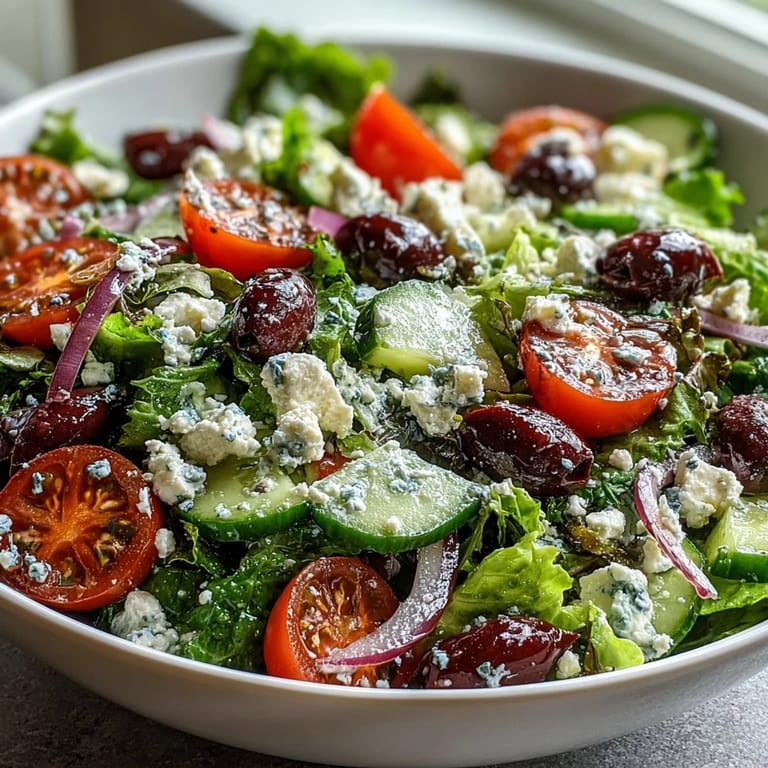
 My daughter once declared this her favorite lunch during a particularly picky phase, and I realized that healthy eating doesn't have to be something you cajole kids into—sometimes it just tastes good. She'd ask for it on the weekends, which meant I was buying fresh vegetables more often, which somehow changed our whole eating rhythm. Food has a way of doing that when you stop thinking of it as obligation.
Making It Your Own
The beauty of this salad is that it becomes a canvas for whatever you have in your kitchen and whatever your body is craving that day. Some days I add grilled chicken or shrimp for protein, and the whole thing becomes a complete meal that feels substantial without being heavy. Other times I'll toss in white beans or chickpeas if I'm cooking vegetarian, and the salad takes on an entirely different character while still feeling balanced and whole.
Variations and Add-Ons
I've learned that this salad is flexible enough to work with seasons and preferences, but not so loose that it stops being recognizable. The core combination—bright acid from vinegar, richness from olive oil and feta, the salted pop of olives—that stays consistent. Everything else can shift and adapt, which is why this has become a weeknight staple rather than something I make just occasionally for special occasions.
Kitchen Wisdom for Salad Success
After making this salad dozens of times across different seasons and circumstances, I've picked up small details that transform it from good to genuinely crave-worthy. The temperature of your bowl matters—even rinsing it under cool water before assembling makes the greens stay crisper longer. How you cut matters too; uniform pieces eat better together because the flavors distribute more evenly with each bite.
- Keep your dressing ingredients at room temperature so they emulsify properly instead of separating into frustrated oil and vinegar layers.
- Taste the dressing before it meets the salad so you can adjust seasoning without overdoing it once everything's combined.
- Remember that feta is salty, so account for that before adding more salt to the dressing itself.
 Pin it
 This is the kind of salad that makes you feel good about eating well without requiring any of the guilt or restriction that sometimes comes with salads. It's honest food that tastes like itself and asks you to show up present for whatever comes next.
Recipe FAQs
- → How long does this Mediterranean salad stay fresh?
The dressed salad is best enjoyed immediately, though the undressed components can be refrigerated in airtight containers for 2-3 days. Store the Greek dressing separately and toss just before serving to maintain the crisp texture of the greens and vegetables.
- → Can I prepare this salad in advance?
Yes! Prepare all the vegetables and whisk the dressing up to a day ahead. Keep components refrigerated separately—the salad ingredients in one container, the crumbled feta in another, and the dressing in a small jar. Assemble and toss immediately before serving for optimal freshness.
- → What protein additions work well with this bowl?
Grilled chicken breast, seasoned shrimp, or chickpeas make excellent protein additions. You could also add grilled salmon, sliced steak, or quinoa for a more substantial main dish. The bright Mediterranean flavors pair beautifully with most proteins.
- → Is there a substitute for feta cheese?
Crumbled goat cheese, halloumi, or a dairy-free feta alternative all work nicely. For a completely different but equally delicious twist, try fresh mozzarella pearls or shaved Parmesan. Each brings its own character while complementing the Mediterranean ingredients.
- → Can I use bottled dressing instead of making the Greek dressing?
While homemade dressing offers superior freshness and flavor balance, a store-bought Greek or vinaigrette dressing can work in a pinch. Look for options with olive oil, vinegar, and oregano as primary ingredients to maintain authentic Mediterranean flavors.