 Pin it
 There's something about the smell of pita crisping in the oven that instantly transports me to a small kitchen in Beirut, even though I'd never actually been there until years later. My grandmother would make fattoush on hot summer afternoons, and I'd sit on a stool watching her tear greens with her hands instead of using a knife, saying it kept them from bruising. That simple detail stuck with me more than any recipe instruction ever could.
I made this for my college roommate who'd just arrived from Damascus, and she took one bite, closed her eyes, and got quiet in a way that made me understand food differently. She told me it tasted like home, like visiting her grandmother's garden in spring. That moment changed how I approach cooking—it stopped being about following steps and became about creating comfort through flavor.
Ingredients
- Mixed greens (2 cups): Use a combination of romaine, arugula, or purslane for depth—each green brings its own personality and crunch to the party.
- Tomatoes (2 medium): Choose ones that still smell like tomatoes; mealy ones will disappoint you when you need them most.
- Cucumber (1 large): English cucumbers have fewer seeds and thinner skins, which I prefer for this salad's delicate balance.
- Radishes (4): These are your crunch insurance, providing a peppery bite that keeps everything alive on the palate.
- Red onion (1 small): Slice thin enough to see light through, and don't skip it—the sharpness is crucial to the whole composition.
- Fresh parsley (½ cup): This isn't a garnish; it's a main ingredient, so use generous handfuls of the flat-leaf variety.
- Fresh mint (¼ cup): Mint brightens everything and prevents the salad from feeling heavy, no matter how much you pile in.
- Pita bread (2 pieces): Use sturdy pita that won't turn into powder; thicker varieties crisp better than thin ones.
- Extra-virgin olive oil (3 tbsp for dressing, 2 tbsp for chips): This is where quality matters—a fruity, peppery oil makes the dressing sing.
- Fresh lemon juice (2 tbsp): Always fresh; bottled juice tastes hollow and will betray your efforts.
- Red wine vinegar (1 tbsp): The acidity here balances the oils and wakes up the greens.
- Ground sumac (1–1½ tsp): This is the soul of the dressing, bringing tartness and a beautiful burgundy hue—don't substitute it.
- Garlic clove (1): One clove is all you need; more than that and you'll overpower the delicate herbs.
- Sea salt and black pepper: Taste as you go; seasoning should enhance, not mask, the fresh flavors.
Tired of Takeout? 🥡
Get 10 meals you can make faster than delivery arrives. Seriously.
One email. No spam. Unsubscribe anytime.
Instructions
- Make your pita chips sing:
- Preheat your oven to 375°F and cut pita bread into bite-sized pieces—uneven sizes mean some crisp darker than others, which is actually ideal. Toss with olive oil and salt, spread them out on the sheet, and bake for 8–10 minutes until they're golden and smell irresistible; they'll crisp up even more as they cool.
- Build your salad base:
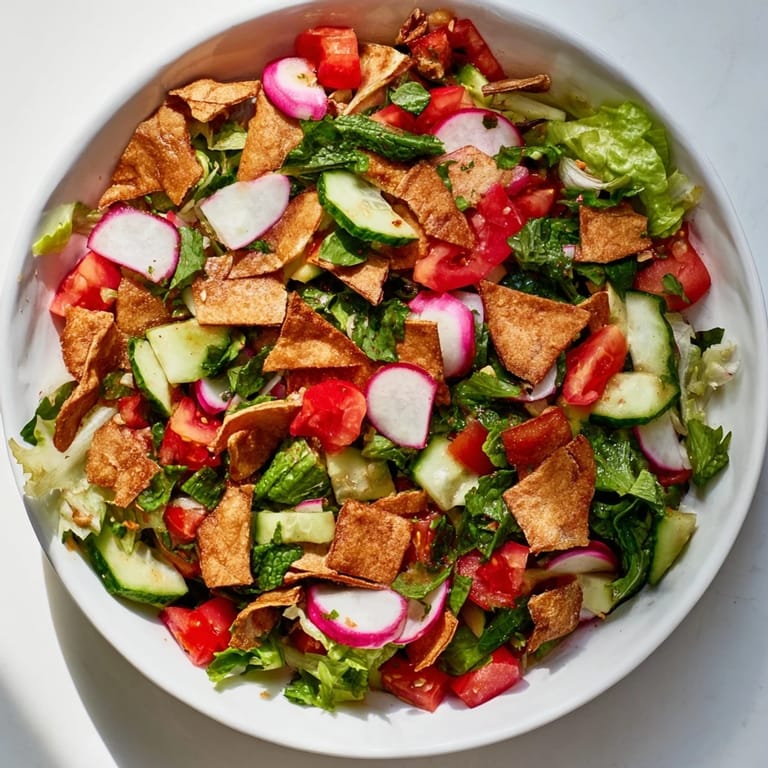
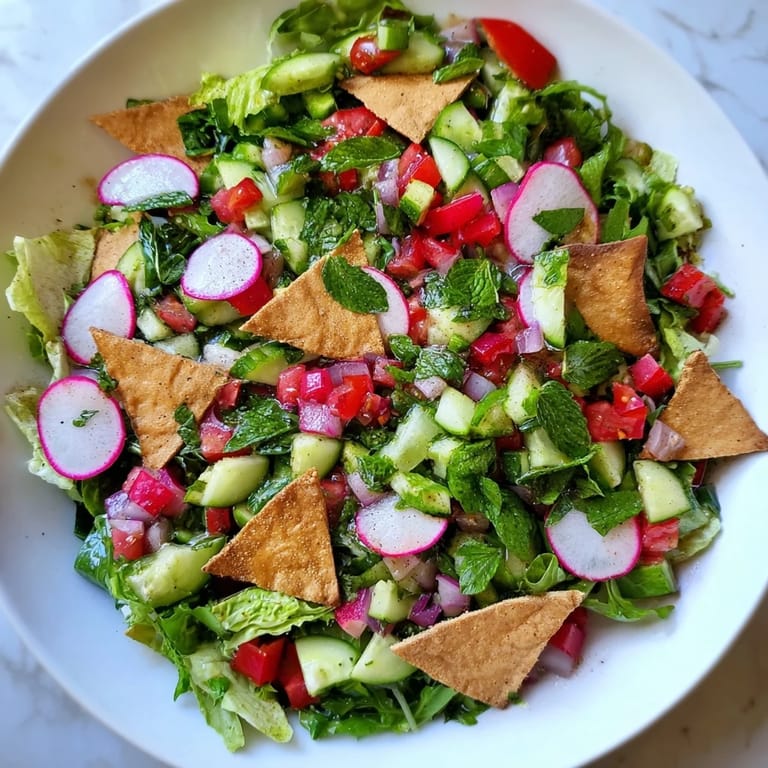
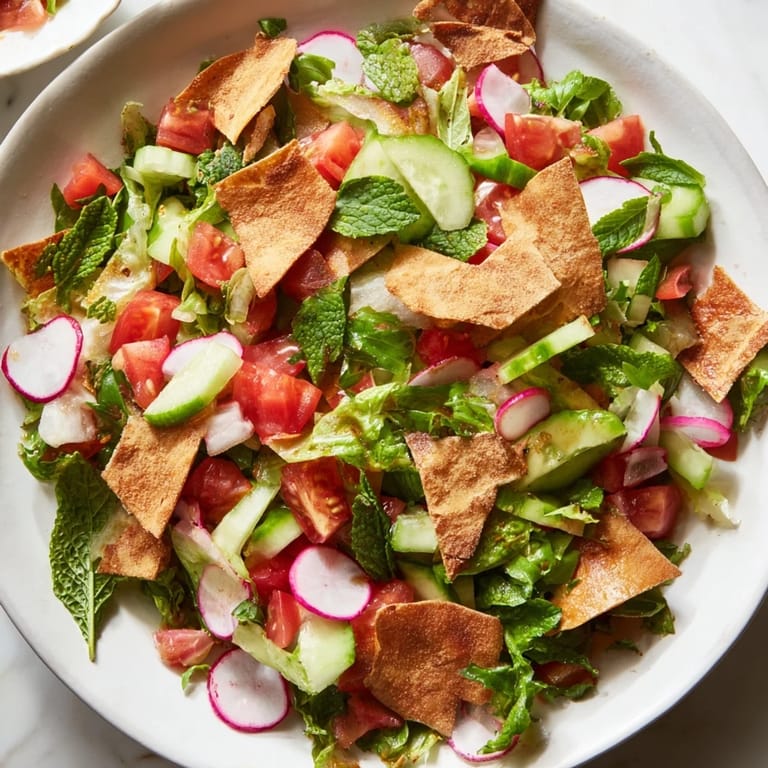
- Combine your greens, tomatoes, cucumber, radishes, red onion, parsley, and mint in a large bowl, letting everything tumble together loosely. This is the moment to appreciate how beautiful fresh vegetables are before they become part of something larger.
- Whisk the dressing:
- In a separate bowl, combine olive oil, lemon juice, vinegar, sumac, minced garlic, salt, and pepper, whisking until emulsified. You'll notice the dressing turn a deep reddish-brown from the sumac—that's how you know it's working.
- Final assembly:
- Just before serving, add the crispy pita chips to the salad and pour the dressing over everything, tossing gently to coat. Timing matters here; add the chips too early and they'll soften into sadness, so resist the urge to dress and sit.
- Taste, adjust, serve:
- Taste a bite and add more salt or lemon if needed; every fresh ingredient varies slightly in intensity. Serve immediately while the chips are still crunchy and the greens are at their brightest.
 Pin it
 My neighbor once asked why I always made this salad in summer, and I realized it's because fattoush tastes like lightness and abundance at the same time. You're eating something fresh and alive, yet you're completely satisfied, not weighed down—it's become my answer to the question of what to eat when you want to feel good about your choices.
The Sumac Secret
When I first learned about sumac, I thought it was just another spice, but it's actually the dried and ground berries of a plant, and it carries a tartness that feels almost citrusy without being acidic in the way lemon is. It turns the dressing a gorgeous burgundy color and brings a sophistication that makes people pause mid-bite and ask what exactly they're tasting. This is the ingredient that transforms a simple vegetable salad into something that feels intentional and special.
When to Make This
Fattoush belongs on your table whenever fresh vegetables are at their peak—late spring through early fall is ideal, when tomatoes taste like tomatoes and herbs smell like concentrated spring. It's equally at home as a light lunch, a side dish at a dinner party, or part of a mezze spread where it holds its own against richer foods. I've made it for potlucks, family dinners, and quiet meals alone, and it never feels out of place.
Variations and Twists
While the classic version is perfect as-is, I've learned that fattoush welcomes gentle additions without losing its identity. Bell peppers add sweetness and color, green onions bring a subtle onion flavor that's milder than raw red onion, and I've even added crispy chickpeas for extra protein and crunch. The beauty of this salad is that it's forgiving—as long as you keep the core elements and that sumac dressing, you can adjust based on what's in your garden or your mood.
- Roasted chickpeas or white beans add substance without making it feel heavy.
- A handful of pomegranate seeds brings sweetness and jewel-like pops of color.
- Grilled chicken or halloumi cheese turn it into a more substantial main course if you need it to be.
 Pin it
 Making fattoush reminds me why I fell in love with cooking in the first place: it's about taking the simplest, most honest ingredients and letting them be exactly what they are. This salad has fed my friends on hot nights, appeared on my table during transitions, and never once disappointed me.
Recipe FAQs
- → What gives the salad its tangy flavor?
The tanginess comes from a dressing made with lemon juice, red wine vinegar, and ground sumac, providing a bright and slightly citrusy note.
- → How are the pita chips prepared?
Pita bread is cut into bite-sized pieces, coated with olive oil and sea salt, then baked until golden and crisp to add crunch.
- → Can the salad be made gluten-free?
Yes, by using gluten-free pita bread or omitting the pita chips altogether, the salad can suit gluten-free diets.
- → What herbs are used in the salad?
Fresh parsley and mint are chopped and mixed into the greens to add a refreshing herbal aroma and taste.
- → Is this dish suitable for vegans?
Absolutely, the combination of fresh vegetables, herbs, olive oil, and spices makes it perfect for vegan and dairy-free diets.
- → How should the salad be served for best texture?
Adding the crispy pita chips just before serving ensures they retain their crunch and complement the freshness of the ingredients.