 Pin it
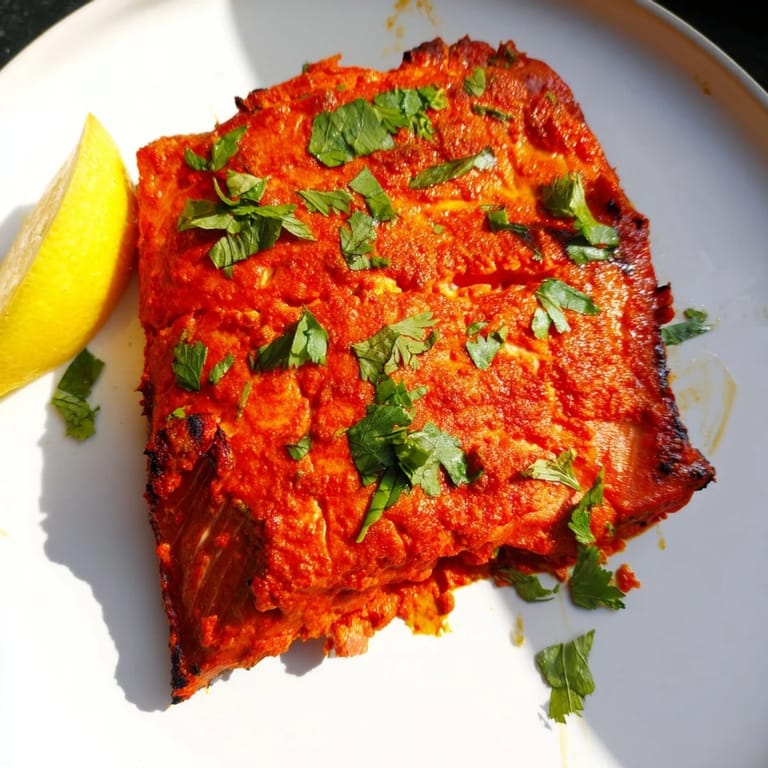
 The first time I made tikka salmon was on a Wednesday evening when I'd grabbed a beautiful fillet at the market and realized I had barely thirty minutes before dinner. I mixed together what I had in the fridge—yogurt, that jar of tikka paste sitting in the back, a squeeze of lemon—and something clicked. The salmon emerged from the oven with edges that caught the light, spiced and golden, and my kitchen smelled like something between a London curry house and my own home. It's been my go-to ever since when I want something that tastes impressive but doesn't demand much from me.
I made this for my mum last autumn when she was visiting, and she kept going back to the kitchen for more even though she'd already eaten. She said it reminded her of a restaurant we'd been to years ago but somehow tasted better because it was home. That's when I knew this recipe had staying power—when people want seconds not because they're polite, but because something about it genuinely moves them.
Ingredients
- Salmon fillets (4, about 150g each): Choose pieces that are roughly the same thickness so they cook evenly; skin-on or skinless doesn't matter, though I find skin-on holds the marinade better.
- Thick plain yogurt (3 tbsp): This is your secret weapon for tenderness—the yogurt's acidity and fat coat the fish and keep it from drying out in the oven.
- Tikka masala paste (2 tbsp): This carries all the flavor you need; if you can't find it, mix 1 tbsp tomato paste with a pinch of garam masala and some garlic instead.
- Lemon juice (1 tbsp): Brightens the whole dish and helps the marinade cling to the fish.
- Ground cumin and coriander (1 tsp each): These warm spices round out the tikka and add depth that the paste alone can't deliver.
- Smoked paprika (½ tsp): Brings a subtle smokiness that makes people ask what your secret ingredient is.
- Chili powder (½ tsp): Start here and adjust to your tolerance; I've learned the hard way that more heat at the beginning means less control later.
- Olive oil (1 tbsp): Helps everything coat evenly and prevents sticking on the tray.
- Salt and black pepper: Season generously—the fish can take it.
Tired of Takeout? 🥡
Get 10 meals you can make faster than delivery arrives. Seriously.
One email. No spam. Unsubscribe anytime.
Instructions
- Heat your oven and prep your space:
- Get the oven to 220°C (425°F) and line your tray with parchment or foil—this prevents the spiced yogurt from sticking and makes cleanup almost invisible. A hot oven is crucial; it's what creates those crispy edges while the inside stays tender.
- Build your marinade:
- Combine the yogurt, tikka paste, lemon juice, cumin, coriander, paprika, chili powder, olive oil, salt, and pepper in a bowl and stir until smooth and fully mixed. You're looking for a thick, spreadable consistency that clings to the fish.
- Dry and coat the salmon:
- Pat the salmon fillets completely dry with paper towels—any moisture on the surface stops the marinade from adhering properly. Spread the marinade generously over each fillet, making sure the sides and ends get covered, then place them on your prepared tray.
- Let it sit:
- Even ten minutes makes a difference, but if you have time, refrigerate for up to an hour; the longer the salmon sits, the deeper the spices penetrate. I usually prep this step in the morning and roast at dinner.
- Roast until golden and cooked through:
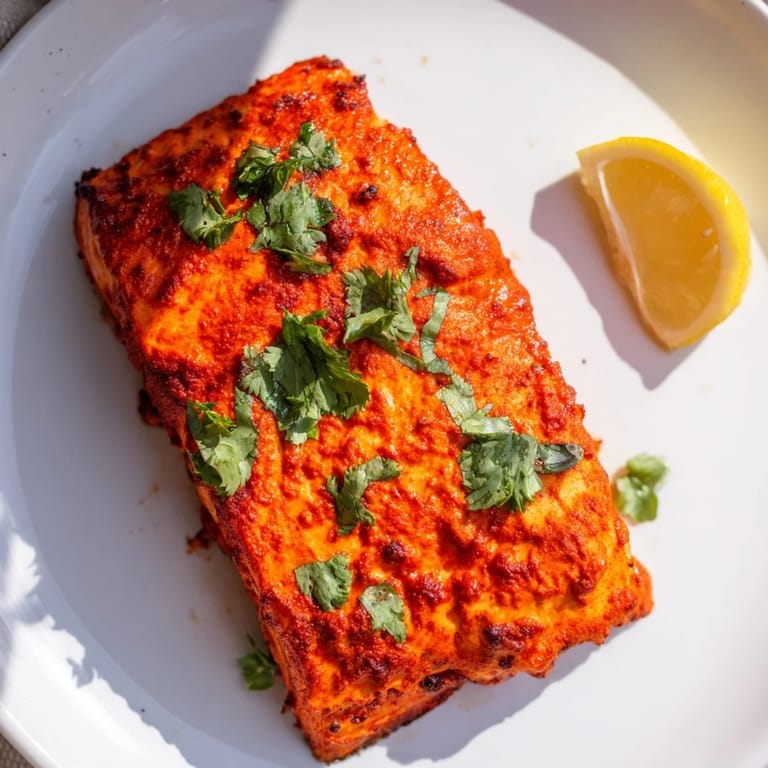
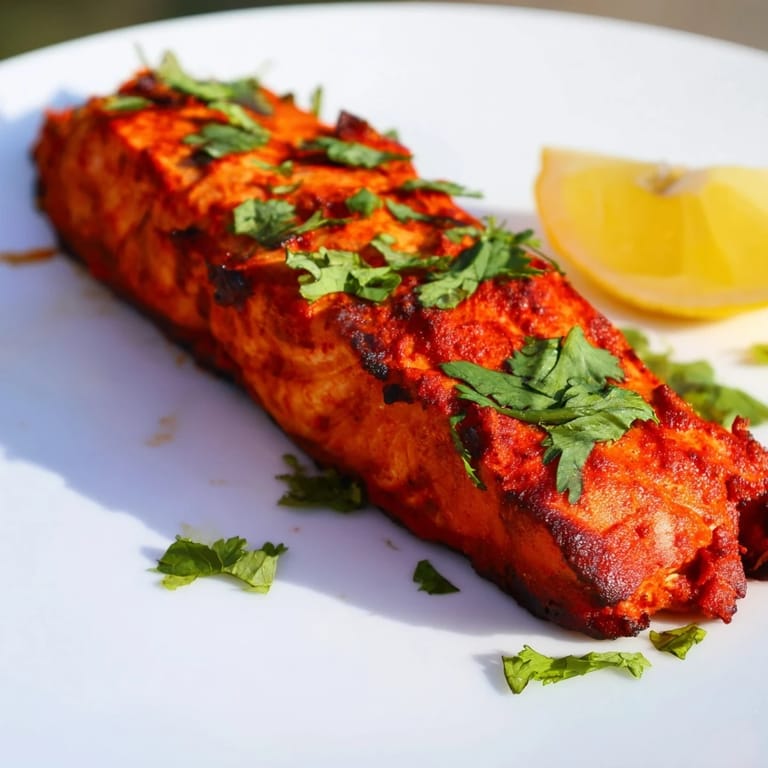
- Slide the tray into your hot oven for 15–18 minutes, depending on the thickness of your fillets. The salmon is ready when it flakes easily with a fork and the edges have turned golden brown with just a hint of char.
- Finish and serve:
- Take it straight from the oven, scatter fresh coriander leaves on top, squeeze lemon wedges over it, and add sliced red onion if you like the sharp bite. Serve immediately while the spices are still singing.
 Pin it
 There was a moment last spring when I served this to someone who'd been vegan for years and had just started eating fish again. Watching them take that first bite and smile with genuine surprise reminded me that food is sometimes about more than nourishment—it's about opening a door back to something. That's what this dish does.
Why the Marinade Works
The genius of this recipe is that yogurt and spices do something almost magical together—the yogurt's acidity tenderizes while its fat keeps everything moist, and the spices bloom when they hit the heat. I've tried this with mayo, with cream, with oil alone, and nothing compares. The yogurt is what makes salmon that could be dry in other recipes stay silky and almost buttery on the inside.
Timing and Temperature
A hot oven is non-negotiable here; 220°C (425°F) is your friend because it allows the outside to crisp and caramelize before the inside overcooks. I used to worry about the salmon drying out, but I learned that high heat and a short cooking time actually prevent that—it's the slow roasting that causes trouble. The yogurt marinade also acts as insulation, protecting the flesh underneath while the top browns beautifully.
Serving and Pairing
This salmon is equally at home on a weeknight with plain rice and a quick cucumber salad or dressed up for guests with buttered basmati and warm naan. The spiced richness pairs surprisingly well with light, cool sides because it doesn't need much to feel complete. I've also served it cold the next day, crumbled into a salad with yogurt dressing, which is proof that this recipe's cleverness extends beyond the first meal.
- Pair with basmati rice or naan to soak up the marinade flavors.
- A simple cucumber salad or cooling yogurt raita balances the spice beautifully.
- Leftovers work cold, flaked into grain bowls or layered into sandwiches the next day.
 Pin it
 This recipe is my answer to the question I ask myself most nights: what can I make that feels special but doesn't require me to become someone I'm not in the kitchen? It's straightforward, honest, and somehow manages to taste like you've worked harder than you actually have.
Recipe FAQs
- → How long should the salmon marinate for best flavor?
Marinate the salmon for at least 10 minutes, though up to an hour in the fridge deepens the tikka spice infusion.
- → Can I use skin-on salmon fillets?
Yes, skin-on fillets work well and add extra texture when roasted crisp.
- → What can I serve alongside the salmon?
Serve with basmati rice, naan, or a simple cucumber salad to complement the spices.
- → How can I adjust the spiciness of this dish?
Modify the chili powder amount in the marinade to suit your preferred heat level.
- → Are there alternatives to salmon for this marinade?
Cod, haddock, or tofu can replace salmon while still absorbing the flavorful tikka spices.