 Pin it
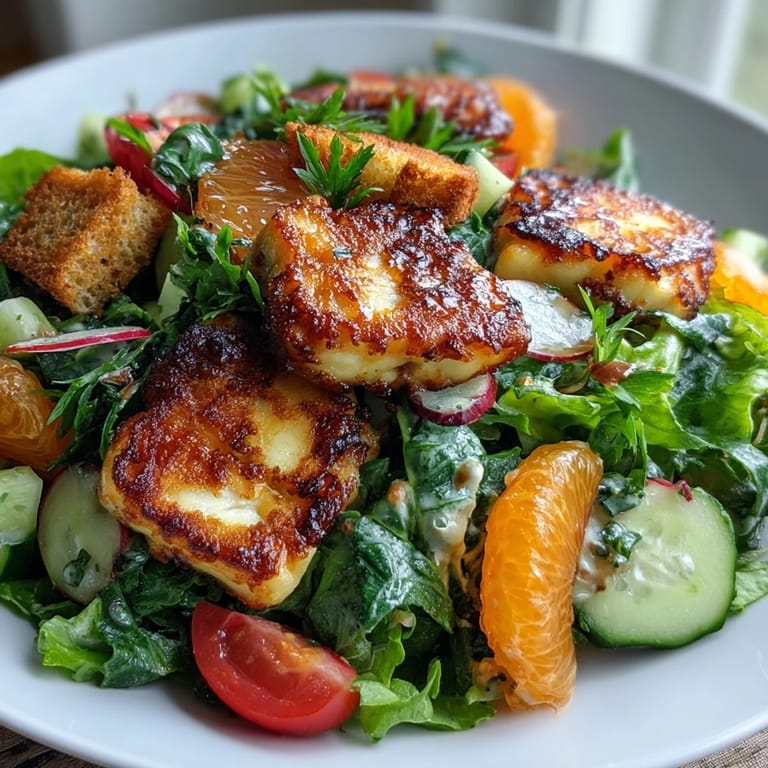
 My friend Sarah showed up one winter evening with a bag of blood oranges she couldn't resist at the market, and I suddenly remembered eating a warm halloumi salad at a tiny taverna in Cyprus years ago. We decided to marry the two memories together, and what emerged was this golden, tangy, impossibly bright salad that made us both pause between bites. The warm cheese against cool citrus felt like a small rebellion against the season outside, and we kept eating long after we should have stopped.
I made this for my coworkers' potluck last spring, and watching everyone's faces light up when they bit into that warm cheese against the cool, citrusy greens made me realize how much power there is in a salad that actually tastes like something. Someone asked for the recipe immediately, which never happens, and I felt oddly proud of this little plate of food.
Ingredients
- Halloumi cheese, sliced into 1 cm thick pieces: This is the star, and those thick slices are essential because they hold their shape when you fry them instead of melting into nothing. Look for it in the cheese section or near the feta, and don't skip this step by using something else.
- Blood oranges, peeled and segmented: The deep crimson color and subtle tang make them worth seeking out, though regular oranges work fine if you can't find them. The sweetness balances the salty cheese perfectly.
- Mixed salad greens (romaine, arugula, parsley, mint): The combination of tender and peppery leaves matters more than using exact varieties, so grab what looks fresh and vibrant at the store.
- Cucumber, diced: This adds a cooling crunch that keeps the salad from feeling too heavy once the warm cheese hits.
- Cherry tomatoes, halved: They burst slightly when you toss the salad, releasing little pockets of sweetness throughout.
- Red onion, thinly sliced: Raw and sharp, it cuts through the richness beautifully, but slice it thin so it doesn't overpower.
- Radishes, thinly sliced: These add a peppery crispness that keeps your palate awake.
- Sourdough bread, cut into cubes: The tang of sourdough echoes the citrus in the dressing, and homemade croutons taste infinitely better than store-bought.
- Olive oil for croutons: Just enough to coat the bread so it toasts evenly and gets genuinely golden, not pale or burnt.
- Extra virgin olive oil for dressing: Use one you actually like tasting on its own, because it's a main player here.
- Fresh lemon juice: Bottled juice tastes flat by comparison, so squeeze real lemons even if it takes an extra minute.
- Pomegranate molasses: This tangy syrup adds depth and a slight fruity edge that plain lemon juice can't replicate, and it's worth hunting down in specialty sections.
- Sumac: A beautiful burgundy spice that tastes lemony and slightly floral, lending authenticity and visual drama to the dressing.
- Ground black pepper and sea salt: Season to your own preference, tasting as you go.
Tired of Takeout? 🥡
Get 10 meals you can make faster than delivery arrives. Seriously.
One email. No spam. Unsubscribe anytime.
Instructions
- Toast the croutons until they're golden and calling to you:
- Preheat your oven to 200°C, toss those sourdough cubes with olive oil and salt, and spread them out on a baking tray so they have room to crisp up. After 8 to 10 minutes, they should smell nutty and toasted, with edges that shatter between your teeth.
- Fry the halloumi until it's gorgeously golden:
- Use a non-stick skillet over medium heat and listen for that satisfying sizzle as the cheese hits the pan. After 2 to 3 minutes on each side, it should be golden brown with a slight softness underneath, then drain it briefly on a paper towel to shed any excess oil.
- Build your salad base with all the fresh ingredients:
- In a large bowl, combine all your greens, cucumber, tomatoes, red onion, radishes, and blood orange segments. The colors should look like a sunset, and everything should feel cool and crisp in your hands.
- Whisk together your dressing with intention:
- In a small bowl, combine the olive oil, lemon juice, pomegranate molasses, sumac, pepper, and salt, whisking until the sumac and salt dissolve into the oil. Taste it and adjust the balance so it makes your mouth wake up a little.
- Bring it all together while the cheese is still warm:
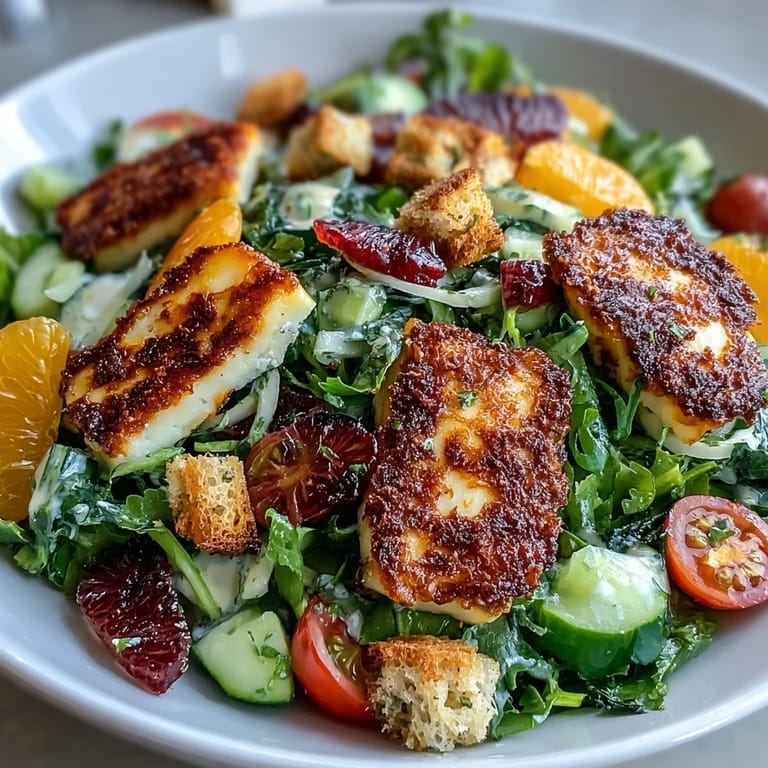
- Add the fried halloumi and croutons to the salad bowl, drizzle everything with dressing, and toss gently so the delicate greens don't break and the warm cheese gets distributed evenly. The contrast between warm and cool is the whole point here.
- Serve immediately so nothing loses its temperature:
- This salad is best the moment it comes together, while the halloumi is still radiating warmth and the croutons haven't had time to soften.
 Pin it
 There's something about warm cheese against cool citrus that feels like permission to slow down a little, to actually taste each bite instead of rushing through lunch. This salad reminds me that vegetables and cheese can be a complete meal in themselves, especially when you treat them with a little intention.
The Magic of Sumac
Sumac was a revelation to me the first time I used it intentionally in a dressing, because it tastes like lemon without actually being lemon, lending this almost fermented, complex sourness that makes people wonder what you did differently. It's also the most beautiful burgundy color, which means your dressing looks like it came from somewhere interesting, and honestly, half of cooking is making food that people want to eat with their eyes first. If you can't find sumac anywhere near you, lemon zest mixed with a tiny bit of fresh lemon juice works in a pinch, though it's worth tracking down the real thing for this particular salad.
Playing with Pomegranate Molasses
Pomegranate molasses is like having a tiny bottle of concentrated brightness on your shelf, and once you start using it, you'll find yourself reaching for it in all sorts of places. It's thick and dark, with this tart fruitiness that adds sophistication without being obvious, and it bridges the gap between the lemon juice and the sumac perfectly. A little bit goes a long way, so start with what the recipe calls for and taste as you adjust.
Why This Salad Works
The genius of fattoush is that it's not just a salad tossed with dressing, but a careful balance of temperatures, textures, and flavors that all support each other. The warm halloumi softens slightly and releases its salty richness, the cool greens provide a fresh backdrop, the croutons add a satisfying crunch, and the blood oranges tie everything together with their natural sweetness. It's the kind of dish that feels elegant without requiring any special skill or hours of prep work.
- Keep your halloumi slices uniform in thickness so they all cook at the same rate and finish at the same time.
- Don't be shy with the sea salt on the croutons while they're still hot from the oven, because it sticks better and seasons more evenly.
- If you make this in advance, keep all the components separate until the last possible moment, then assemble and serve.
 Pin it
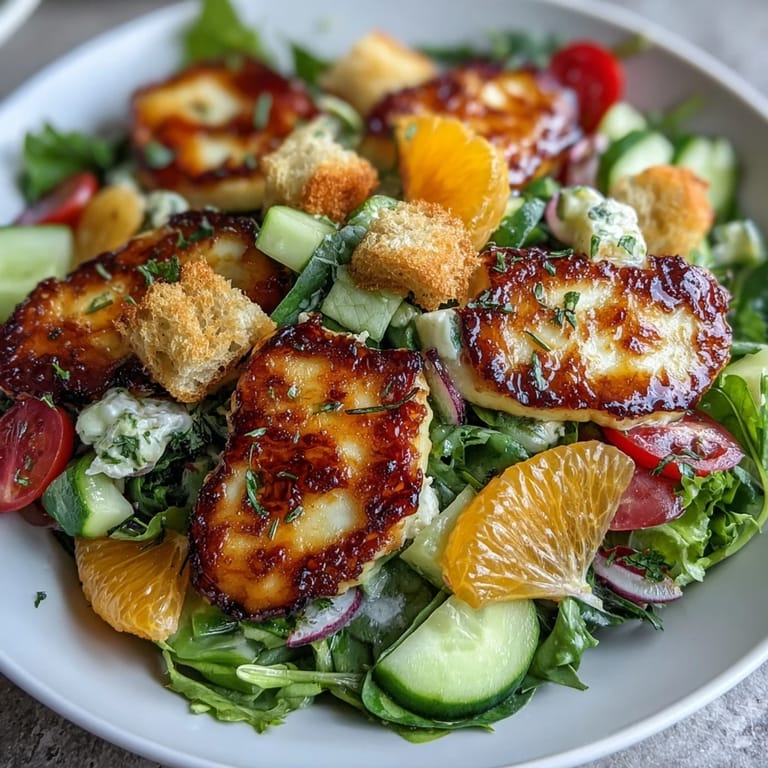
 This salad has become my go-to when I want to feel like I've made something special without spending the whole evening in the kitchen. It's the kind of meal that tastes like travel and warmth, no matter what season it is outside.
Recipe FAQs
- → What makes fattoush different from regular salad?
Fattoush is a Middle Eastern salad distinguished by its use of crispy fried or toasted bread pieces. Unlike standard green salads, fattoush incorporates sourdough croutons that add essential texture and soak up the zesty sumac dressing, making it more substantial and satisfying.
- → Can I prepare the components ahead of time?
You can make the croutons and dressing up to 2 days in advance. Store croutons in an airtight container and keep the dressing refrigerated. However, fry the halloumi just before serving to maintain its golden crust and warm, gooey interior.
- → What can I use instead of blood oranges?
Regular navel oranges, ruby red grapefruit, or even mandarin segments work beautifully as substitutes. While blood oranges offer a unique color and slightly berry-like flavor, these alternatives provide similar sweetness and citrus acidity to balance the salty halloumi.
- → Is halloumi suitable for vegetarians?
Yes, halloumi is a vegetarian cheese made from sheep's and goat's milk. Its high melting point makes it perfect for frying or grilling without losing shape, creating a delicious golden crust while remaining soft and creamy inside.
- → How do I prevent the croutons from getting soggy?
Add the croutons and halloumi just before serving, and toss gently to coat with dressing without soaking the bread completely. The sourdough's sturdy texture helps it stay crispy longer than softer bread varieties, making it ideal for this salad.
- → What pairs well with this fattoush?
This salad stands alone beautifully as a light meal. For a more substantial spread, serve alongside grilled vegetables or hummus. A crisp white wine like Sauvignon Blanc complements the citrus notes and salty halloumi perfectly.